 Save
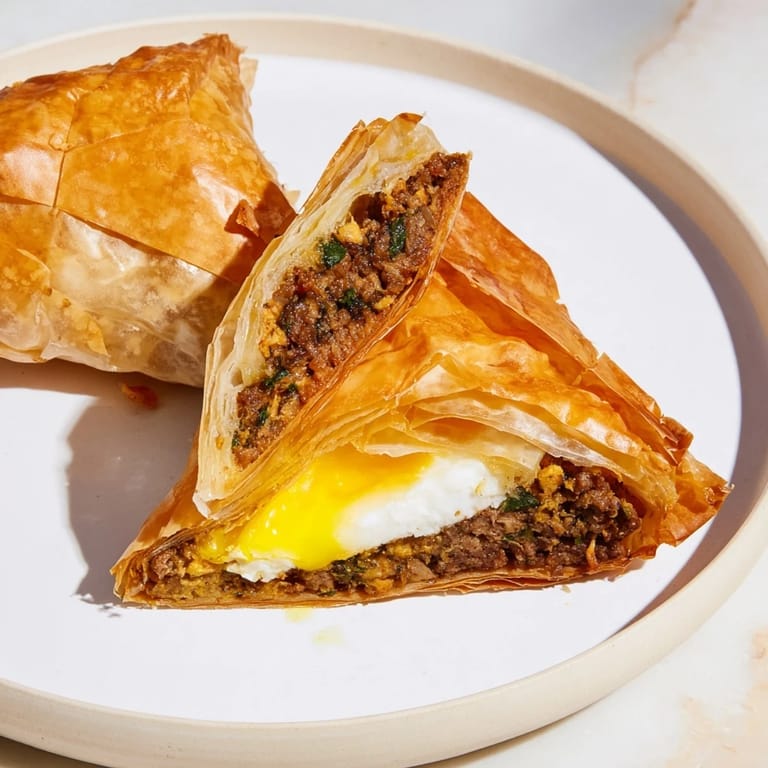
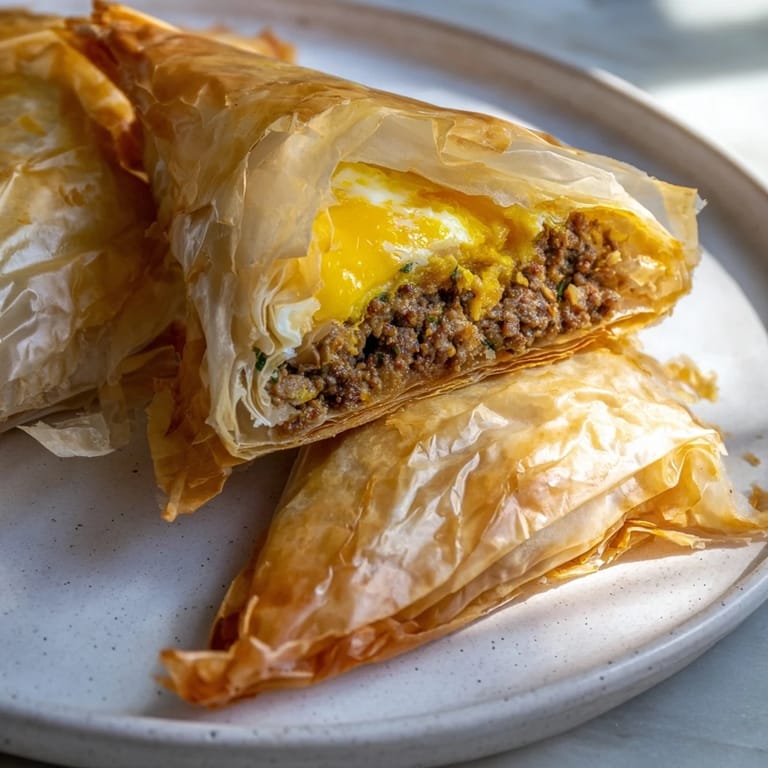
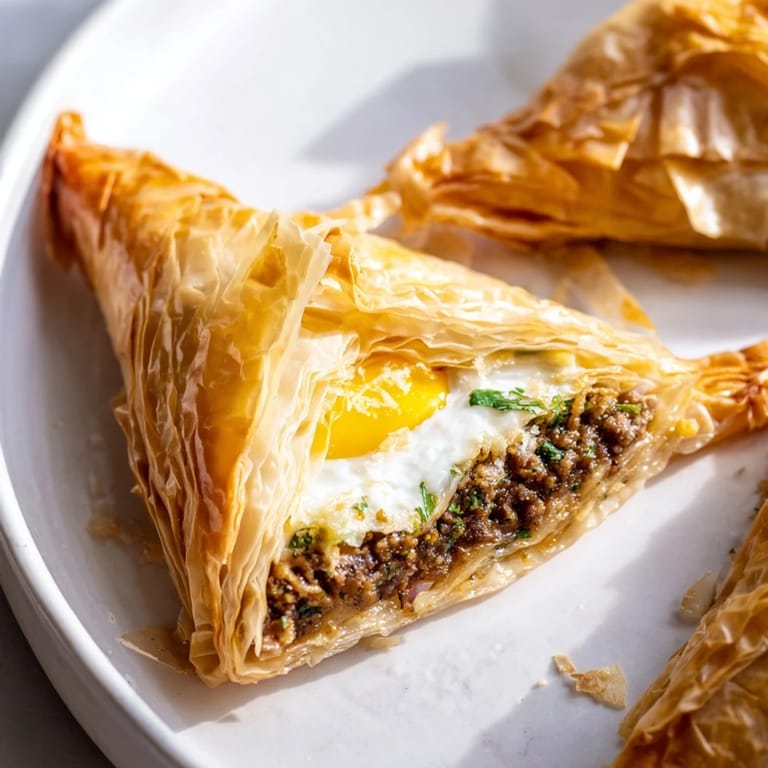
Save The first time I bit into a brik at a bustling market stall in Tunis, I was hooked instantly—that shattering golden shell giving way to a runny yolk and warm, spiced meat felt like edible magic. Years later, I learned the real secret wasn't just in the filling or the frying oil, but in that moment of courage when you crack an egg directly onto hot meat and fold it all into tissue-thin pastry without breaking. Now whenever I make these at home, I think about that vendor's practiced hands and try to channel the same unhurried confidence.
I remember making these for my neighbor one afternoon when she'd had a rough day, and watching her face light up as that warm yolk ran onto her plate felt better than any thank-you card. She ate two in a row standing up in my kitchen, barely pausing to let them cool, and suddenly I understood why this street food has survived centuries in Tunisian culture—it hits different when someone loves what you've made.
Ingredients
- Ground beef or lamb: Use whichever feels fresher to you; lamb gives a deeper, almost gamey warmth while beef stays more neutral and lets the spices shine.
- Onion: Finely chop it so it melts into the meat rather than leaving little crunchy bits that distract from the texture.
- Fresh parsley: This is your brightness—don't skip it or substitute with dried, as it adds a living green note that the cooked spices need.
- Ground cumin and coriander: These two are the soul of the filling; toasting whole seeds and grinding them yourself makes a noticeable difference if you're feeling ambitious.
- Phyllo pastry sheets: Handle them like they're precious because they are; keep unused sheets under a damp towel so they don't dry out and crack.
- Large eggs: Room temperature if possible—cold eggs crack more easily when you crack them directly into the filling.
- Gruyère or mozzarella cheese: Optional but worth it for that little melted pocket of richness; if you skip it, just use an extra splash of oil for frying.
- Oil for frying: Sunflower or vegetable oil works best; avoid olive oil as it smokes too easily and overpowers the delicate flavors.
Tired of Takeout? 🥡
Get 10 meals you can make faster than delivery arrives. Seriously.
One email. No spam. Unsubscribe anytime.
Instructions
- Brown the filling with warmth and intention:
- Heat a skillet over medium and sauté your finely chopped onion in a touch of oil until it turns translucent and sweet, then crumble in the ground meat along with cumin, coriander, salt, and pepper. Let it cook until no pink remains and the smell hits you—deep, spiced, almost intoxicating—then stir in the parsley and let it cool while you prep the pastry.
- Layer and fill with gentle precision:
- Lay a phyllo sheet on a clean, dry surface and spoon 2 to 3 tablespoons of the cooled filling into the center, leaving space around the edges. Create a small well in the filling with the back of your spoon, take a deep breath, and crack an egg directly into that well.
- Add your optional richness:
- Sprinkle the cheese over the egg if you're using it, just enough to create pockets of melted flavor without overwhelming the delicate taste of the yolk and meat.
- Fold with the confidence of practice:
- Fold the phyllo sheet up and around the filling like you're wrapping a small present, creating either a triangle or a rough rectangle shape, and seal any open edges with a tiny brush of water so they stay closed during frying.
- Achieve that perfect golden shell:
- Heat 3 to 4 centimeters of oil in a large frying pan over medium-high heat until it shimmers and dances, then carefully—without splashing—slide in your folded brik and let it fry for 2 to 3 minutes per side until it turns deep golden and sounds crispy when you tap it with your spoon.
- Rest and serve in its prime:
- Lift each one out with a slotted spoon, letting excess oil drain back into the pan, then rest them briefly on paper towels so they stay crispy rather than soggy. Serve immediately while they're still hot and the yolk is still runny inside.
 Save
Save There was a moment last winter when my teenage daughter actually put down her phone to eat one of these, and we sat together without saying much—just two people understanding silently that some foods deserve that kind of attention. That's when I realized a brik is more than just a snack; it's a little edible conversation between you and whoever taught you the recipe, and whoever you're sharing it with next.
The Art of Folding Without Fear
The most common mistake I see is hesitation—people fold too slowly or too carefully, and the pastry starts to dry out or the filling leaks. The trick is to work with gentle speed, treating the phyllo like it's both incredibly delicate and surprisingly forgiving at the same time. Once you fold and seal that first edge with water, you'll realize the pastry holds together better than you'd expect, and you'll stop worrying so much on the second and third ones.
Playing with Variations
While the egg and meat combination is traditional and absolutely worth mastering, I've had beautiful results swapping the meat for flaked tuna mixed with a little harissa, or even using a thin layer of mashed potato with crumbled feta. Each version tells a slightly different story—the tuna brik feels lighter and more coastal, while the potato version becomes something almost comforting and vegetarian. The egg always stays the same, which makes sense because that runny yolk is really the heart of what makes a brik sing.
Serving and Keeping These Special
Serve your briks immediately with lemon wedges for squeezing and a simple green salad alongside—the acidity and freshness cut through the richness beautifully. They're best eaten right away while that shell is still shattering, though I've kept extras warm in a low oven for up to ten minutes without losing too much of their magic.
- Fresh lemon juice on top brings brightness that makes the yolk and spiced meat shine even more.
- A crisp green salad with just olive oil and a pinch of salt becomes your palate cleanser between bites.
- Eat them with your hands if you can—they're too perfect for forks anyway.
 Save
Save Every time I make these, I'm reminded that sometimes the most meaningful dishes are the humble ones—the ones that fit in your hand and burst with warmth and surprise. Make these for someone you want to impress, or make them just for yourself on a quiet afternoon.
Recipe FAQs
- → What type of meat works best for the filling?
Ground beef or lamb provide a rich and savory base that pairs well with traditional spices.
- → Can I use another pastry instead of phyllo?
Phyllo offers the signature crisp texture, but very thin spring roll wrappers can be a substitute if handled gently.
- → How do I prevent the pastry from tearing?
Handle phyllo sheets carefully, and consider stacking two sheets for durability. Use water to seal the edges firmly.
- → What seasoning enhances the meat filling?
Cumin, coriander, salt, black pepper, and fresh parsley add a balanced and aromatic flavor profile.
- → Any tips for frying the pastry evenly?
Use enough oil to submerge the pastry partially and fry over medium-high heat until both sides are golden and crisp.
- → Can I add cheese in the filling?
Adding grated Gruyère or mozzarella is optional and provides a creamy contrast to the savory meat and egg.