 Save
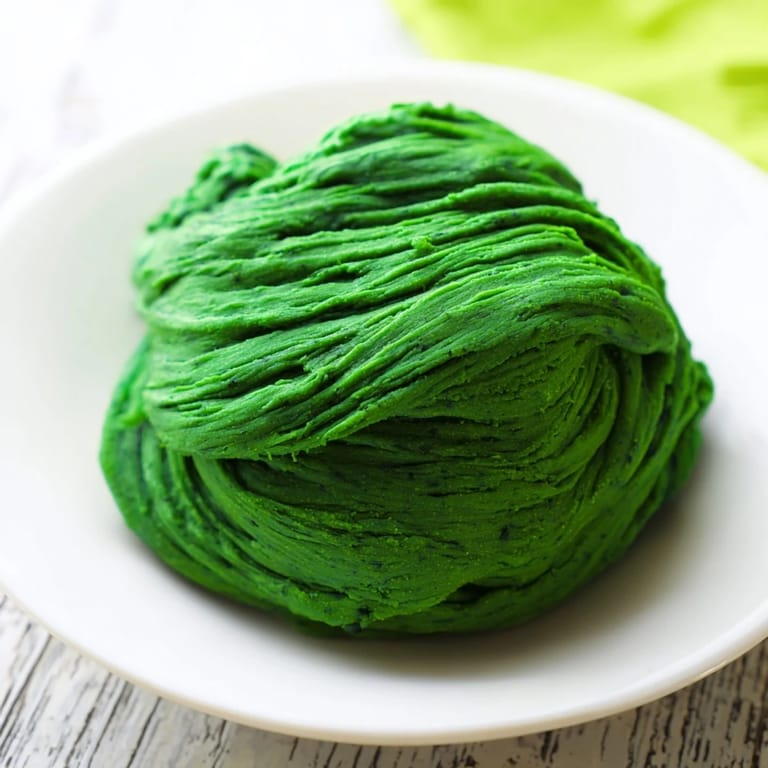
Save My kitchen smelled like spring the afternoon I decided to make spinach pasta from scratch, watching the leaves transform from vibrant green to dark emerald in boiling water. There's something magical about turning simple ingredients—flour, eggs, and vegetables—into silky ribbons of homemade pasta. I'd seen my grandmother do this countless times, but never quite understood the patience it required until my hands felt the dough shift from shaggy to smooth beneath my palms. That first batch taught me that good pasta isn't about perfection; it's about presence.
I made this for a dinner party once where someone casually mentioned they'd never had fresh pasta before, only the dried stuff from boxes. Watching their face as they twirled that first forkful—the way it clung to their fork with such tender elegance—reminded me why I love cooking for people. That single moment made all the flour-dusted surfaces and kneading worth it.
Ingredients
- Fresh baby spinach: About 100 grams of tender young leaves work best because they break down into silky puree without any grittiness, and you want them as dry as possible after blanching to keep your dough from becoming sticky.
- Italian 00 flour: This fine, soft flour creates that cloud-like texture fresh pasta should have, though all-purpose works in a pinch if that's what you've got on hand.
- Semolina flour: Optional but worth it if you like your pasta with a bit more tooth and a slight golden speckle throughout.
- Large eggs: They act as your binder and give the dough richness, so don't skimp on size or freshness here.
- Fine sea salt: This is your seasoning foundation, so taste matters more than brand.
Tired of Takeout? 🥡
Get 10 meals you can make faster than delivery arrives. Seriously.
One email. No spam. Unsubscribe anytime.
Instructions
- Blanch and squeeze the spinach:
- Boil water, add your spinach, and watch it wilt into oblivion in about 30 seconds—you're not cooking it through, just softening it enough to release moisture. Drain it well, then squeeze it between your palms until it feels almost dry; this step prevents your dough from turning into a sticky mess.
- Puree it smooth:
- Either chop the spinach very finely by hand or pulse it in a food processor until it's a bright green paste with no visible chunks. The smoother it is, the more evenly it distributes through your dough.
- Build your flour nest:
- Mound your flours and salt on a clean counter, then use your finger to carve out a well in the center—think volcano, not shallow bowl. This is your workspace for the magic.
- Bring it together:
- Crack your eggs into the well, add your spinach puree, then use a fork to gently beat everything together like you're making scrambled eggs. Slowly start pulling flour from the sides into the center, working gradually so you don't have a floury explosion.
- Knead until silky:
- Once you have a shaggy mass, get your hands in there and knead for 8 to 10 minutes until it becomes smooth, elastic, and just slightly springy to the touch. If it's sticky, dust with a bit more flour; if it cracks at the edges, add water by the drop.
- Rest and transform:
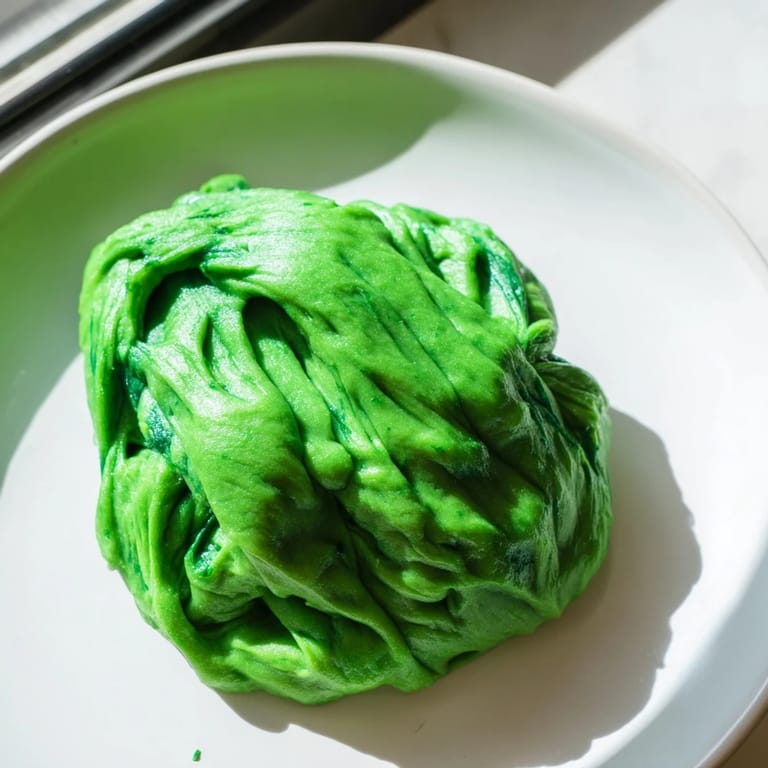
- Wrap your dough tightly and let it sit for 30 minutes—this resting period lets the gluten relax and the flavors meld together. You'll feel the difference when you unwrap it; it'll be softer and more cooperative.
- Roll and shape:
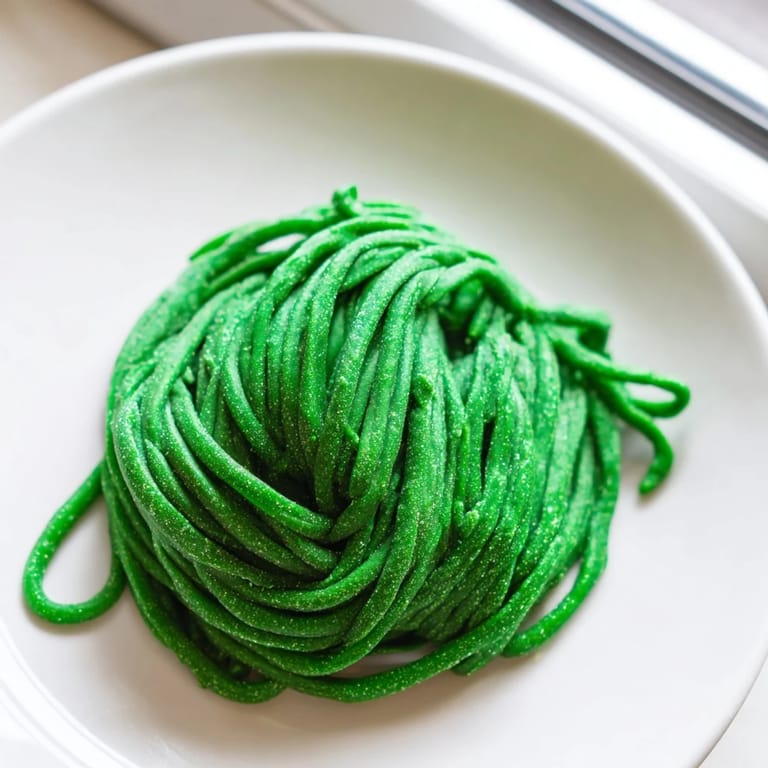
- Use a pasta machine set to its thinnest setting, or roll by hand with a pin until you can almost see your hand through it. Cut into whatever shape calls to you that day.
- Cook with intention:
- Fresh pasta cooks incredibly fast—literally one to two minutes in salted boiling water—so stay close and taste early and often. It's done when it floats and you feel just the tiniest resistance when you bite.
 Save
Save My daughter once helped me make this, and somewhere between the blanching and the kneading, she stopped being bored and got genuinely curious about how flour and water could become something stretchy and alive. We made ravioli that afternoon, and she filled each one with ricotta while I sealed the edges, and we laughed at the misshapen ones. That pasta tasted like collaboration, and I realized that homemade food sometimes matters less for how it tastes and more for the hands that shaped it.
The Spinach Question
Frozen spinach works in an absolute pinch, but you'll need to thaw it completely and squeeze out every drop of water—and I mean aggressively squeeze it in a kitchen towel until your hands hurt. Fresh baby spinach gives you brighter color and cleaner flavor, but if you're using mature spinach with thick stems, blanch it slightly longer to soften those woody bits. The goal is puree so smooth it looks almost like green butter.
Making It Ahead
You can make this dough up to 24 hours before you roll and cut it, which takes some pressure off if you're planning a dinner. Wrap it tightly in plastic wrap and refrigerate it, bringing it back to room temperature for about 10 minutes before rolling so it doesn't tear. I've also frozen shaped pasta on a baking sheet and cooked it straight from frozen—add maybe 30 seconds to the cooking time.
Flavor Variations That Actually Work
A tiny pinch of nutmeg—and I mean tiny, like a quarter teaspoon—adds a whisper of warmth that makes people ask what the secret ingredient is. Fresh lemon zest folded in right before the resting period brings brightness, especially if you're planning to serve this with a delicate butter sauce. You could also swap part of the 00 flour for whole wheat if you want earthier undertones and slightly more texture, though your dough will be a touch less silky.
- Add nutmeg so subtly that people can't quite name what they're tasting.
- Fresh ricotta filling with spinach dough feels like you've opened an Italian restaurant in your kitchen.
- Keep extra flour nearby while rolling because humidity changes everything.
 Save
Save There's something deeply satisfying about making pasta from scratch, watching your hands shape something ordinary into something that feels precious. Once you've done it, store-bought pasta will never feel quite the same.
Recipe FAQs
- → How do I remove excess moisture from blanched spinach?
After blanching spinach for 30 seconds and rinsing under cold water, place it in a clean kitchen towel or cheesecloth and squeeze firmly until no more water comes out. This step is crucial for achieving the right dough consistency.
- → Can I make this dough ahead of time?
Yes, wrap the rested dough tightly in plastic wrap and refrigerate for up to 24 hours. Bring it to room temperature for 15 minutes before rolling and shaping for best results.
- → What's the difference between Italian 00 flour and semolina?
Italian 00 flour is finely milled and creates a silky, tender dough, while semolina is coarser and adds texture and prevents sticking. Using both combines smoothness with workability, though 00 flour alone works perfectly.
- → Why is my dough too sticky or too dry?
Sticky dough needs more flour dusted gradually during kneading. Dry dough needs light sprinkles of water. The moisture content of spinach varies, so adjust based on how the dough feels rather than exact measurements.
- → How thick should I roll the dough for different pasta shapes?
For fettuccine or tagliatelle, roll to about 2mm thickness. For ravioli or tortellini, aim for 1-2mm so filling shows through. Lasagna sheets need about 3mm. A pasta machine makes consistent thickness easier than a rolling pin.
- → Can I freeze spinach pasta dough?
Yes, freeze shaped pasta on a baking sheet until solid, then transfer to freezer bags for up to 3 months. Cook directly from frozen, adding 30-60 seconds to cooking time. Unfrozen dough can also be frozen wrapped in plastic for up to 1 month.