 Save
Save I discovered Safari Stripes by accident at a gallery opening where the caterer arranged cheese and meat with such precision that guests kept photographing the platter before eating it. Watching people pause to admire their food before tasting it made me realize that visual rhythm on a plate could actually change how people experienced flavors. I went home that night determined to recreate that striped magic, and what started as a playful experiment became my go-to when I needed something that looked effortless but felt intentional.
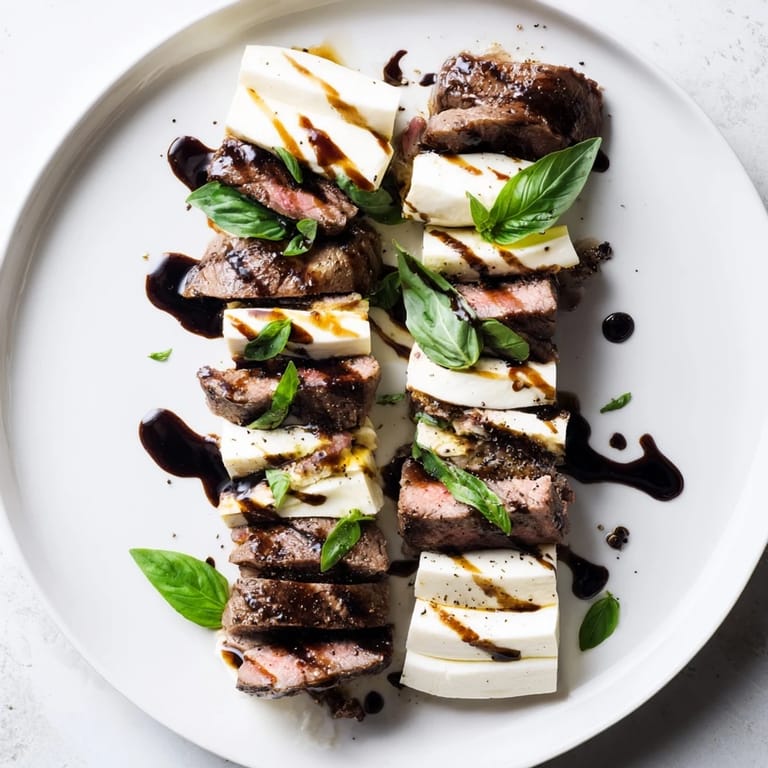
The first time I made this for friends, I worried the alternating pattern would look too geometric and cold, but the moment I drizzled that warm balsamic glaze across the stripes, something shifted. The sheen caught the light, the colors deepened, and suddenly it felt alive instead of austere. My friend Marcus grabbed a piece of mozzarella with a meat strip and said it tasted like the platter looked, which might be the best compliment I've ever received about food.
Ingredients
- Fresh mozzarella, 250 g sliced into 1 cm strips: This is the creamy anchor that lets the balsamic shine, so use the best quality you can find and slice it just before arranging to keep it tender.
- Feta cheese, 200 g sliced into 1 cm strips: The tanginess provides contrast and keeps every bite from feeling too rich or predictable.
- Beef tenderloin, 200 g cut into 1 cm strips: The leanest, most elegant beef choice that doesn't overpower the cheese or glaze.
- Chicken breast, 200 g cut into 1 cm strips: Mild enough to let the balsamic be the star while adding protein and visual balance.
- Olive oil, 2 tbsp: Use something you'd actually drizzle on bread, because it becomes part of the final flavor.
- Balsamic vinegar, 120 ml: The thickened version becomes almost sticky-sweet, so don't skimp on quality here.
- Honey, 1 tbsp: Just enough to round out the vinegar's sharp edges without making it taste like dessert.
- Fresh basil leaves and cracked black pepper for garnish: These final touches look casual but they're doing the heavy lifting for freshness and visual pop.
Tired of Takeout? 🥡
Get 10 meals you can make faster than delivery arrives. Seriously.
One email. No spam. Unsubscribe anytime.
Instructions
- Make the balsamic glaze first:
- Combine the vinegar and honey in a small saucepan and bring it to a gentle simmer over medium heat. You'll start to smell the sweetness developing as the liquid reduces, which takes about 8-10 minutes until it coats the back of a spoon and drips slowly. Let it cool completely so it doesn't wilt the cheese when you drizzle it.
- Season and sear the proteins:
- Pat the beef and chicken strips dry, then season generously with salt and pepper on both sides. Heat the olive oil in a skillet over medium-high heat until it shimmers, then sear the beef for just 1-2 minutes per side until the outside is browned but the inside stays tender, then do the same with the chicken. The key is not overthinking it—you're just looking for a golden crust.
- Build your stripes:
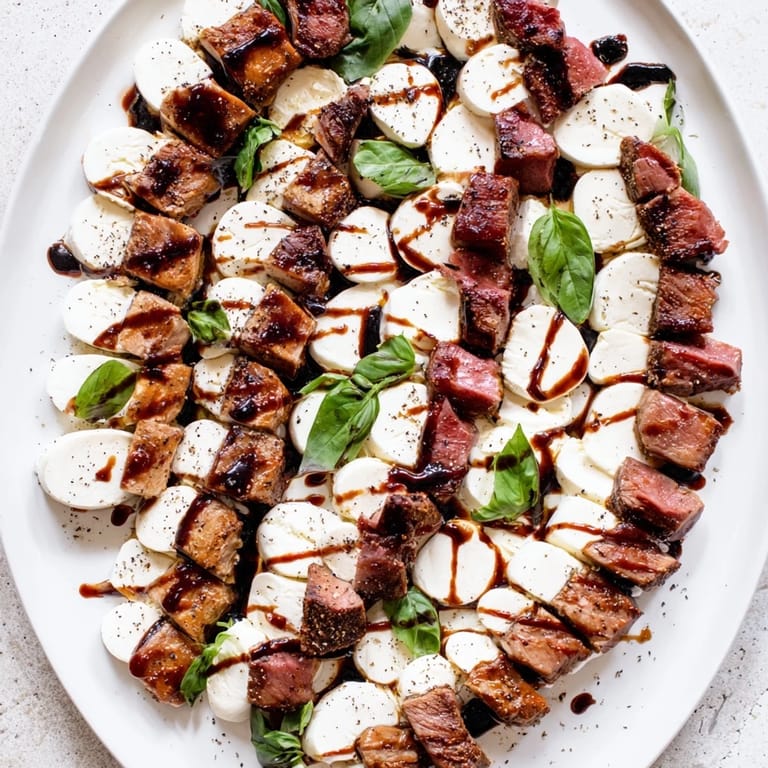
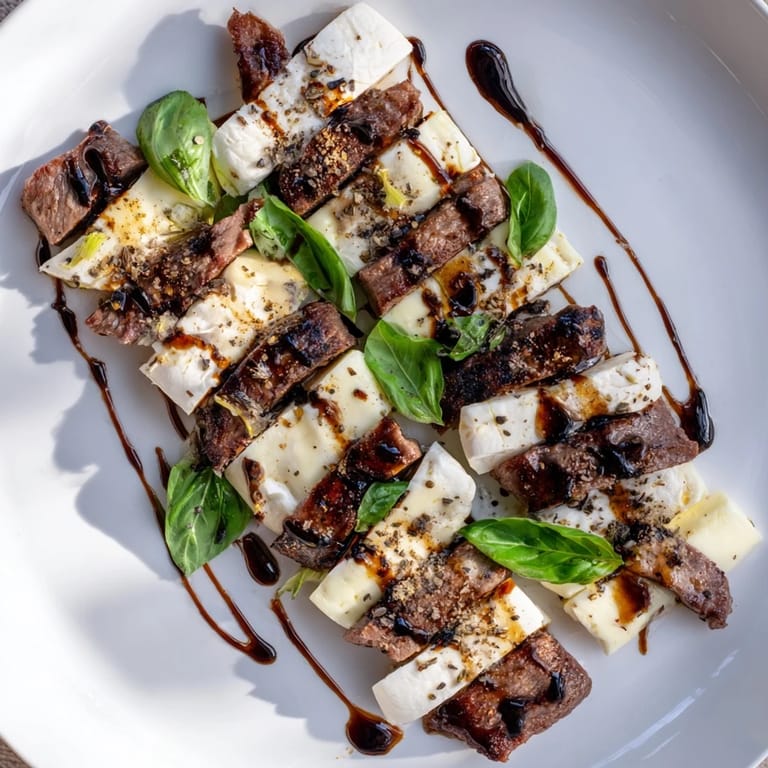
- While the meat cools slightly, start arranging on your platter by alternating cheese and meat strips in neat rows, like you're creating a visual pattern that actually matters. Let the colors and textures do the talking here, because the striped effect is what makes people stop and look.
- Finish with glaze and garnish:
- Once everything is arranged, drizzle the cooled balsamic glaze generously across the meat rows in thin lines, then scatter fresh basil leaves and cracked pepper across the whole platter. Serve at room temperature so the flavors haven't been muted by cold.
 Save
Save There was a moment during a dinner party when someone asked for the recipe and another guest said, 'Wait, you made this?' That small pause where they genuinely couldn't believe something so polished came from a home kitchen felt like vindication for all the recipe testing and failed glazes that came before it.
The Balsamic Glaze Moment
The transformation happens when that vinegar reduces down to something sticky and concentrated, which is when you know you're not just making a topping but actually engineering flavor. I learned this the hard way by timing it wrong on my third attempt, and suddenly I understood why restaurant chefs taste their glazes twice.
Working with Quality Cheese
Fresh mozzarella is temperamental in the best way, soft and willing to absorb flavors but also quick to dry out or turn rubbery if you handle it roughly. The moment I stopped treating it like something fragile and started treating it like something precious was when my platters actually looked professional instead of amateur.
Timing and Serving Strategy
This dish lives in the sweet spot between completely assembled and still fresh, so plan to build it no more than 30 minutes before guests arrive. Everything tastes better at room temperature because the cheese stays creamy and the meat stays tender instead of becoming firm and closed off.
- Prep all ingredients before you start assembling so you're not rushing once the cheese and meat are on the platter.
- If you're serving this for a crowd, build it on a platter that you can actually carry, because nothing ruins the presentation faster than a wobble halfway across the room.
- Don't be afraid to make it your own by swapping in prosciutto, smoked turkey, or grilled vegetables depending on what your guests actually want to eat.
 Save
Save Safari Stripes taught me that sometimes the most impressive dishes are just ordinary ingredients arranged with intention. It's become the appetizer I reach for when I want people to feel welcomed before they even taste anything.
Recipe FAQs
- → What cheeses are used in the Safari Stripes platter?
Fresh mozzarella and feta cheese are sliced into strips to create creamy layers.
- → How is the balsamic glaze prepared?
Simmer balsamic vinegar and honey until thickened and syrupy, then let it cool before drizzling.
- → Can the meats be substituted for other options?
Yes, prosciutto or smoked turkey can replace the beef and chicken for different flavors.
- → Is there a vegetarian version available?
Grilled eggplant or portobello mushroom strips can substitute the meats for a vegetarian option.
- → What garnishes complement the platter?
Fresh basil leaves and cracked black pepper add aromatic freshness and a gentle spice.
- → How should the meats be cooked for this platter?
Sear beef and chicken strips briefly in olive oil until just cooked through to retain tenderness.