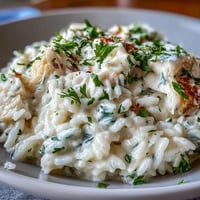
 Save
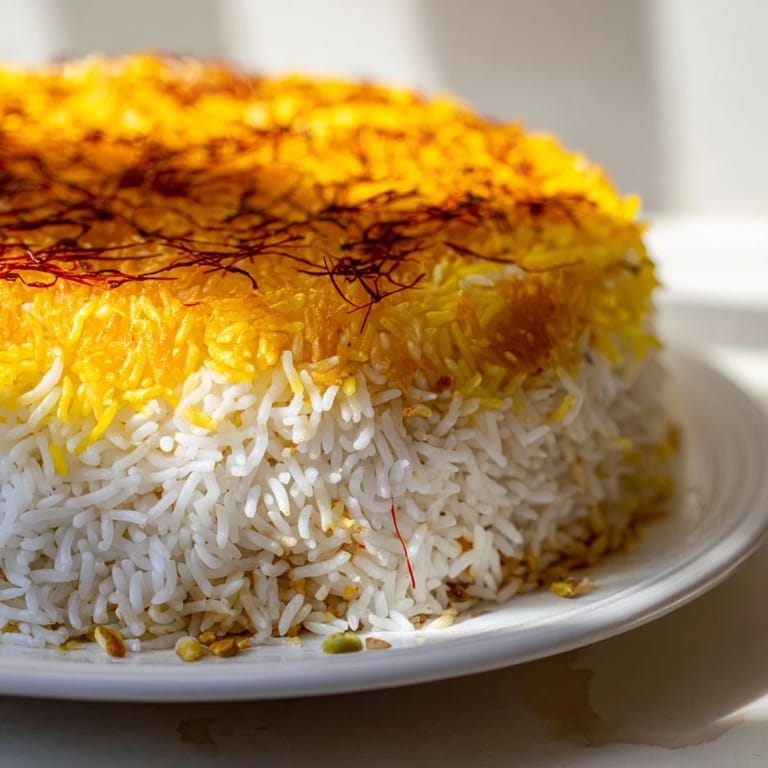
Save My neighbor Mina invited me over one afternoon and lifted the lid off a pot with such ceremony I thought something magic was about to happen. When she flipped that pot onto a platter and revealed a golden, crackling dome of rice, I actually gasped. She laughed and said, "This is tahdig, the part everyone fights over." I've been chasing that crispy, buttery crust ever since.
I made this for a dinner party once and watched grown adults negotiate over who got the corner pieces of tahdig. Someone actually suggested we make a second batch just for the crust. That's when I realized this wasn't just rice, it was a conversation starter, a memory maker, and honestly, a little bit of edible gold.
Ingredients
- Basmati rice: The long grains stay fluffy and separate, which is essential for that contrast between the crisp bottom and tender top. Rinse it well or it will turn gummy.
- Salt: Soaking the rice in salted water seasons every grain from the inside out, something I didn't understand until I skipped it once and tasted the difference.
- Saffron threads: Grinding them before steeping releases more color and flavor. A little goes a long way, and it gives the rice that signature golden hue.
- Greek yogurt: This is the secret to the tahdig crust. It creates a tangy, caramelized layer that crisps up beautifully without burning.
- Vegetable oil and butter: The combination gives you flavor and a higher smoke point. I've tried just butter and it can brown too fast.
- Turmeric and black pepper: Optional but wonderful. Turmeric adds earthiness and a deeper gold color, pepper adds a gentle warmth.
Tired of Takeout? 🥡
Get 10 meals you can make faster than delivery arrives. Seriously.
One email. No spam. Unsubscribe anytime.
Instructions
- Rinse and soak the rice:
- Run cold water over the rice until it's crystal clear, this removes excess starch that makes rice sticky. Soak it in salted water for at least 30 minutes so the grains plump up and cook evenly.
- Parboil the rice:
- Boil the drained rice for just 5 to 6 minutes until it's tender on the outside but still has a slight bite in the center. Drain it immediately or it will overcook and turn mushy.
- Prepare the saffron water:
- Grind the saffron threads with your fingers or a mortar, then steep them in hot water. The color should be deep amber, almost orange.
- Mix the tahdig base:
- Combine yogurt, saffron water, turmeric, and a cup of the parboiled rice in a bowl. This yogurt-rice mixture will form the crispy crust, so mix it until it's evenly coated and slightly golden.
- Heat the pot:
- Warm the oil and butter together over medium heat in a heavy nonstick pot. The fat should shimmer but not smoke.
- Layer the tahdig:
- Spread the yogurt-rice mixture in an even layer on the bottom of the pot. Press it down gently with the back of a spoon to create a compact base.
- Add the remaining rice:
- Spoon the rest of the rice on top in a mound shape, which helps steam circulate. Drizzle the remaining saffron water over the top and poke a few holes with a wooden spoon handle for steam to escape.
- Steam the rice:
- Wrap the lid in a clean kitchen towel to catch condensation, then cover the pot tightly. Cook on medium heat for 10 minutes, then lower to the gentlest simmer for 35 to 40 minutes until the crust forms.
- Rest and invert:
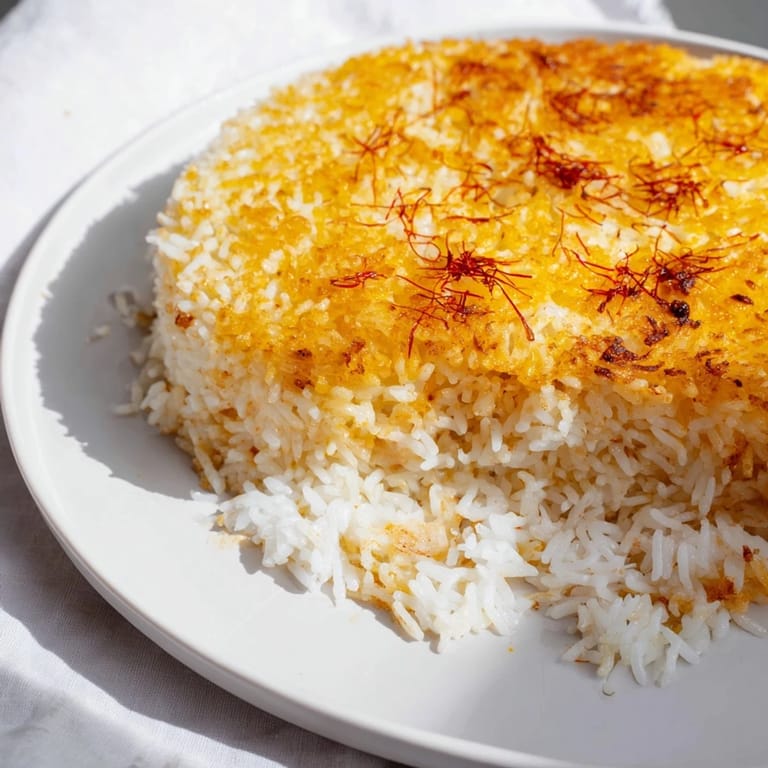
- Let the pot sit off the heat for 5 minutes, then run a spatula around the edges and flip the whole thing onto a platter. The tahdig should release in one glorious golden piece.
 Save
Save The first time I successfully inverted the pot and saw that intact golden crust, I literally cheered in my kitchen. My partner came running in thinking something was wrong, but I just pointed at the platter and said, "Look." We stood there grinning like we'd just won something. That's the tahdig effect.
Serving Suggestions
Serve this alongside grilled kebabs, stews like ghormeh sabzi, or any rich, saucy dish that benefits from fluffy, buttery rice. I've also served it with roasted vegetables and a dollop of extra yogurt on the side. The tahdig is always the first thing to disappear, so break it into shards and scatter them over the top or serve it separately for people to fight over.
Variations and Swaps
You can make tahdig with thinly sliced potatoes instead of the yogurt-rice mixture, which creates an even crunchier base. Some people use lavash or flatbread, which crisps up like a giant cracker. I've also added dried barberries or chopped herbs to the rice layers for pops of color and flavor. If you don't have saffron, turmeric alone still gives you a beautiful golden hue, though you'll miss that floral aroma.
Storage and Reheating
Store leftover rice in an airtight container in the fridge for up to 3 days. The tahdig softens a bit, but you can crisp it back up in a hot skillet with a little oil. I've reheated individual portions in a nonstick pan over medium heat, pressing the rice down gently until the bottom crisps again. It's not quite the same as fresh, but it's still delicious and worth the effort.
- Let the rice cool completely before refrigerating to avoid condensation.
- Reheat in a skillet rather than the microwave to restore some of that crispy texture.
- Freeze portions without the tahdig if you want to meal prep, the crust doesn't freeze well.
 Save
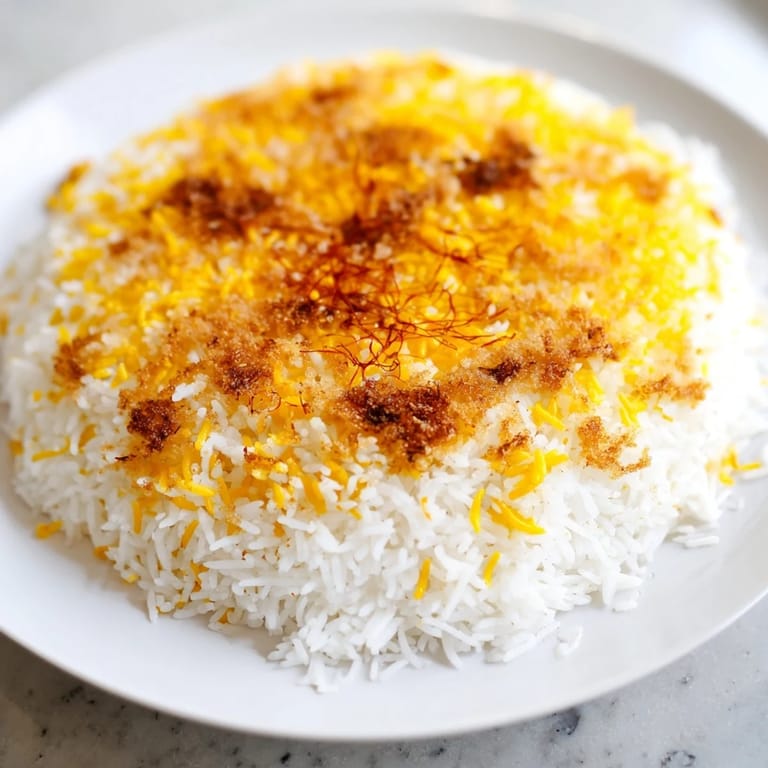
Save This rice taught me that sometimes the best part of a dish is the part that sticks to the pan. Make it once and you'll understand why people plan entire meals around it.
Recipe FAQs
- → What is tahdig in Persian cooking?
Tahdig refers to the golden, crispy crust formed at the bottom of the pot when cooking Persian rice. It adds a delightful texture contrast.
- → How is the crispy tahdig crust achieved?
The crust is created by layering yogurt mixed with saffron and turmeric under parboiled rice, then cooking slowly over low heat with butter and oil in the pot.
- → Can tahdig be made without yogurt?
Yes, tahdig can also be made using thinly sliced potatoes or flatbread layered beneath the rice for a different texture and flavor.
- → What type of rice is ideal for tahdig?
Long-grain basmati rice is preferred for its fluffy texture and ability to cook evenly, which is essential for a perfect tahdig crust.
- → How long does the cooking process take?
The rice is soaked, parboiled for about 5–6 minutes, then steamed over low heat for about 45–50 minutes to develop the tahdig crust.
- → What spices enhance the flavor of tahdig?
Saffron threads steeped in hot water, turmeric, and optionally cinnamon or cardamom added to boiling water, bring fragrant and vibrant flavors.