 Save
Save The smell of a darkening roux pulled me into the kitchen before I even knew what étouffée was. My neighbor was standing over her stove, wooden spoon in hand, muttering about patience and heat. She let me stir for exactly thirty seconds before taking it back, laughing that some things you just don't trust to beginners. That afternoon taught me more about Cajun cooking than any cookbook ever could.
I made this for my brother's birthday one year, and he went quiet after the first bite. He just nodded slowly, then asked if I'd learned to cook like this without telling him. It wasn't fancy plating or a perfect garnish that did it. It was the way the sauce clung to the rice and the shrimp tasted like they belonged in that pot from the start.
Ingredients
- Vegetable oil and all purpose flour: These two build the roux, the backbone of the dish, so don't rush the browning or you'll lose that nutty, complex flavor.
- Onion, green bell pepper, and celery: The holy trinity of Cajun cooking, they add sweetness and structure that balance the heat and richness.
- Garlic: Four cloves might sound like a lot, but they mellow into the sauce and add a warmth that ties everything together.
- Shrimp or crawfish: Fresh or frozen both work, just make sure they're peeled and deveined so they cook evenly and don't turn rubbery.
- Seafood stock: This brings a briny sweetness that chicken stock can't quite match, though chicken stock will work in a pinch.
- Worcestershire sauce: A tablespoon adds umami and a subtle tang that deepens the overall flavor without announcing itself.
- Cajun seasoning and cayenne pepper: Start with less than you think, taste as you go, because you can always add heat but you can't take it back.
- Bay leaf: One leaf simmering in the pot adds an earthy note that rounds out the spice.
- Cooked white rice: Fluffy and plain, it's the perfect backdrop to soak up all that thick, flavorful sauce.
- Green onions and fresh parsley: Chopped and scattered on top, they add a fresh bite and a pop of color that makes the dish feel complete.
Tired of Takeout? 🥡
Get 10 meals you can make faster than delivery arrives. Seriously.
One email. No spam. Unsubscribe anytime.
Instructions
- Start the Roux:
- Heat the vegetable oil in a heavy pot over medium heat, then whisk in the flour slowly until it's smooth and lump free. Stir constantly and watch it turn from pale to golden to the color of dark chocolate, which takes about 15 to 20 minutes and requires your full attention.
- Add the Holy Trinity:
- Toss in the diced onion, bell pepper, and celery, stirring them into the roux until they soften and start to smell sweet, about 5 to 7 minutes. Add the garlic and let it cook for just a minute until it releases its fragrance.
- Build the Sauce:
- Gradually pour in the seafood stock, whisking as you go so the roux blends smoothly without clumping. The mixture will thicken as it heats, turning into a rich, glossy sauce.
- Add the Shrimp and Seasonings:
- Stir in the shrimp, Worcestershire sauce, Cajun seasoning, cayenne, bay leaf, salt, and black pepper. Bring everything to a gentle simmer, then lower the heat and let it cook uncovered for 20 to 30 minutes, stirring now and then until the sauce thickens and the shrimp turn opaque and tender.
- Finish and Serve:
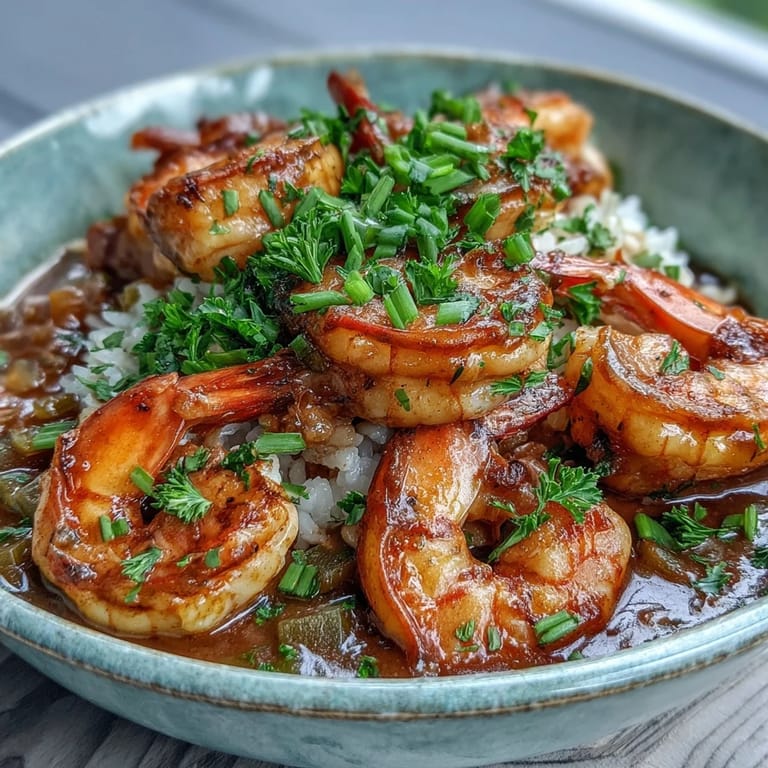
- Taste the étouffée and adjust the seasoning if needed, then pull out and toss the bay leaf. Spoon the étouffée over bowls of hot rice and top with green onions and parsley.
 Save
Save A friend once told me that étouffée is the kind of dish that makes people sit a little longer at the table. We finished a whole pot one night, and no one moved to clear the plates. We just kept talking, scraping our bowls, and pouring more wine. That's when I realized good food doesn't need an occasion, it creates one.
How to Know When Your Roux is Ready
The color is your guide, but so is the smell. A proper roux for étouffée should be deep brown, almost the color of melted chocolate, with a nutty, toasted aroma that fills the kitchen. If it starts to smell acrid or you see black specks, it's gone too far and you'll need to start over. I learned that the hard way once, and now I keep the heat at medium and never walk away.
Substitutions That Still Taste Like Home
If shrimp isn't your thing or you need to stretch the budget, this dish welcomes other proteins with open arms. Diced chicken thighs, sliced andouille sausage, or even thick slices of mushrooms all work beautifully in the sauce. I've made it with leftover rotisserie chicken on a busy Wednesday, and it tasted just as soulful. The key is to let whatever you use simmer long enough to soak up the flavors of the roux and spices.
Storing and Reheating for Maximum Flavor
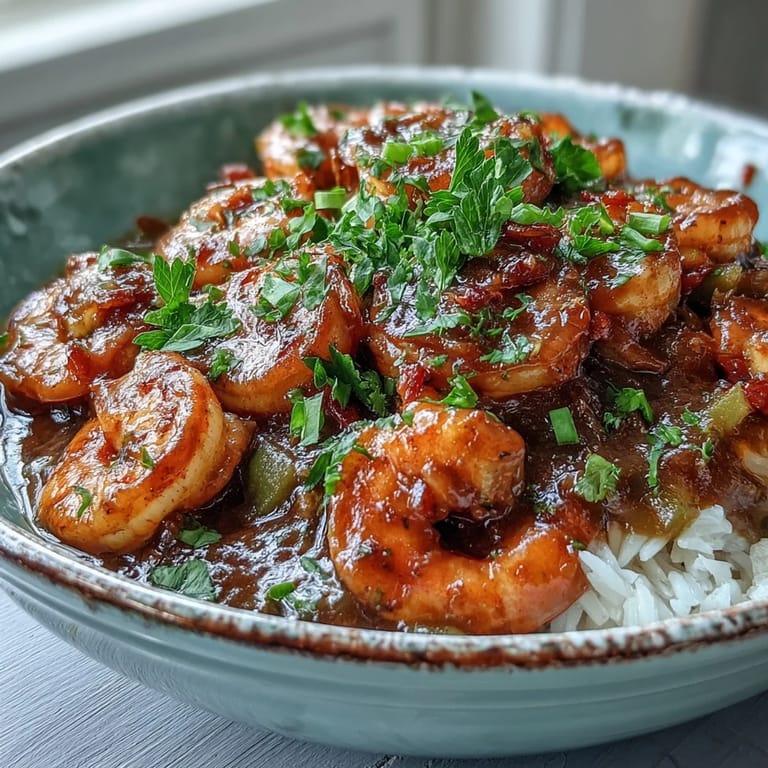
Étouffée keeps well in the fridge for up to three days, and honestly, it tastes even better after the flavors have had time to marry overnight. Store it in an airtight container and reheat gently on the stove over low heat, adding a splash of stock or water if it's thickened too much. I like to cook fresh rice when I reheat it so the contrast between the rich sauce and fluffy grains stays sharp.
- Freeze individual portions in freezer safe containers for up to three months.
- Thaw in the fridge overnight before reheating to keep the texture intact.
- Garnish with fresh herbs right before serving, not before storing, so they stay bright and fragrant.
 Save
Save This dish doesn't need a special reason or a crowd to be worth making. Sometimes the best meals are the ones you make on a random Tuesday, just because the idea of a warm bowl of étouffée sounds exactly right.
Recipe FAQs
- → What makes an authentic étouffée?
A true étouffée starts with a dark roux cooked to the color of chocolate, which provides the foundation of flavor. The holy trinity of onions, bell peppers, and celery is essential, along with garlic and quality Cajun spices. The sauce should be thick and velvety, coating the shrimp or other proteins perfectly.
- → How long does it take to make the roux?
Cooking the roux to the proper deep golden-brown color takes approximately 15–20 minutes of constant stirring over medium heat. Don't rush this step—the darker the roux, the richer the flavor. Be careful not to burn it, or you'll need to start over.
- → Can I substitute the shrimp?
Absolutely. While shrimp is traditional, you can use crawfish for a more authentic Louisiana experience. For variations, try chicken, andouille sausage, or even mushrooms for a vegetarian option. Adjust cooking times accordingly, as shrimp cooks quickly.
- → Why does étouffée taste better the next day?
Like many stews and braised dishes, étouffée benefits from sitting overnight. The spices have time to meld and deepen, the roux continues to thicken the sauce, and the flavors become more complex and harmonious. Consider making it a day ahead for the best results.
- → What should I serve with étouffée?
Classic étouffée is always served over fluffy white rice, which soaks up the rich sauce. Crusty French bread is perfect for sopping up every drop. A simple side salad with vinaigrette helps balance the richness, and cold beer or sweet tea makes an ideal beverage pairing.
- → How spicy is traditional étouffée?
Traditional étouffée offers moderate heat, coming from Cajun seasoning and cayenne pepper. It should be flavorful and warming without being overwhelmingly spicy. Adjust the cayenne to your preference, remembering that you can always add more heat but can't remove it once added.