 Save
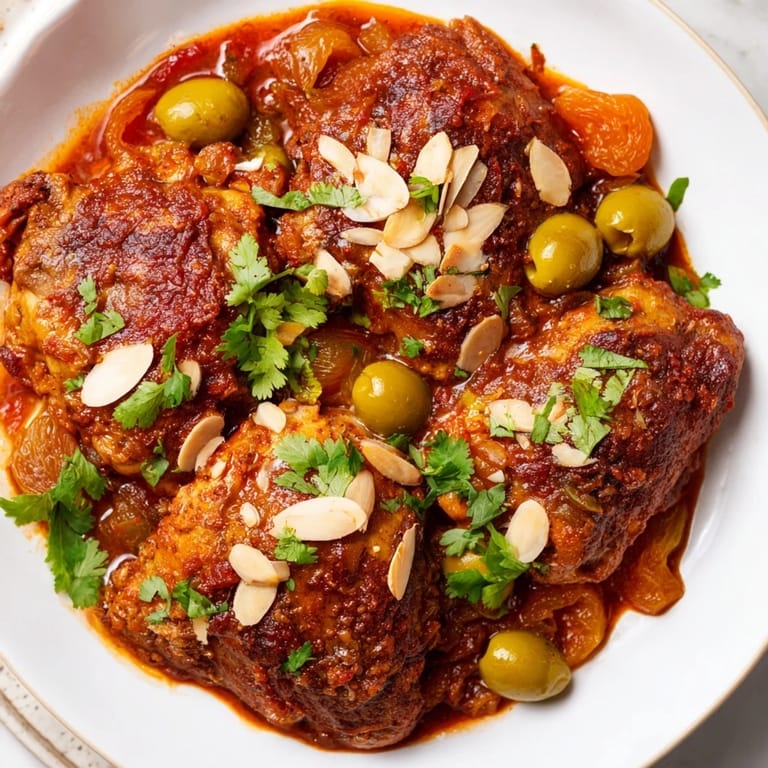
Save My first tagine didn't come from a recipe book—it came from a friend's kitchen in Marrakech, where I watched his mother layer spices into a cone-shaped pot like she was conducting an orchestra. Years later, I tried recreating that magic at home, and somewhere between the cinnamon and the apricots, I understood why this dish has survived centuries. The chicken emerges impossibly tender, the sauce glossy and complex, tasting like warmth itself.
I made this for a dinner party on a gray November evening, worried the Moroccan flavors might feel out of place. But watching my guests tear bread to soak up every drop of sauce, seeing them close their eyes on the first bite—that's when I realized some dishes speak a universal language.
Ingredients
- Bone-in, skin-on chicken thighs (1.5 lbs): The skin crisps while the bones add richness to the sauce; this cut holds up to the long simmer without drying out like breast meat would.
- Onion and garlic (1 large onion, 3 cloves): They dissolve into the sauce, becoming invisible but essential, the backbone of all the other flavors.
- Fresh ginger (1-inch piece): Grated fresh ginger gives warmth and brightness; ground ginger tastes tired by comparison.
- Dried apricots (1 cup): The sweetness isn't cloying—it balances the savory spices and adds body to the sauce as they soften.
- Preserved lemon (1 rind): If you can find it, this ingredient tastes like the entire reason tagines exist; the salt-fermented tang is irreplaceable.
- Spice blend (cumin, coriander, cinnamon, paprika, turmeric, cayenne): Toast them together in the pan and they transform from individual flavors into something unified and mysterious.
- Chicken broth (1 cup): Low-sodium lets the spices lead rather than hide behind salt.
- Green olives (½ cup): Their brininess cuts through the sweetness and adds a textural surprise.
- Toasted almonds (¼ cup): A shower of these at the end adds crunch and a subtle nuttiness that ties everything together.
Tired of Takeout? 🥡
Get 10 meals you can make faster than delivery arrives. Seriously.
One email. No spam. Unsubscribe anytime.
Instructions
- Dry and season your chicken:
- Pat the thighs completely dry with paper towels so they'll brown properly rather than steam. Salt and pepper them generously.
- Build a golden crust:
- Heat your oil until it shimmers, then let the chicken sit undisturbed for a few minutes—you want that deep, caramelized color on each side. This takes about 5-7 minutes total.
- Soften the aromatics:
- Once the chicken is out, sauté the onion and carrot with a pinch of salt, which draws out their moisture and helps them break down into the sauce.
- Bloom the spices:
- This is the moment that matters most—add your garlic, ginger, and all the ground spices, stirring constantly for about a minute until the pot smells like an open-air market. Don't skip this step.
- Add tomatoes and deglaze:
- The diced tomatoes add acidity and body; as you stir them in, scrape up those brown bits stuck to the bottom—that's pure flavor.
- Return the chicken and add fruit:
- Nestle the chicken back in, then scatter the apricots and preserved lemon around it. Pour in your broth and bring everything to a gentle simmer.
- Low and slow simmer:
- Cover and let it cook for 45 minutes, stirring occasionally. The chicken should be falling apart tender and the sauce should be cohesive but not thick yet.
- Finish with olives:
- Uncover the pot, add the olives, and simmer for 10 more minutes without the lid so the sauce reduces and concentrates. Taste and adjust salt if needed.
 Save
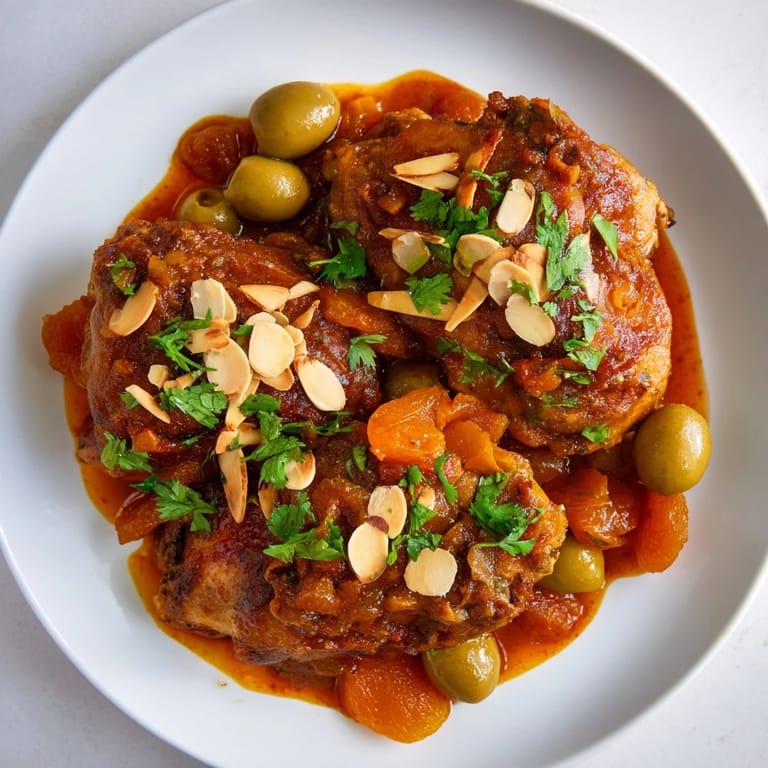
Save The moment I understood this dish was when my neighbor asked if he could smell it from his kitchen, then knocked on my door halfway through cooking. We ended up eating together, and he told me it reminded him of a trip to Casablanca forty years ago.
What to Serve It With
Couscous is the traditional choice—fluffy, absorbent, perfect for soaking up every bit of sauce. But rice works beautifully too, and warm flatbread is honestly my favorite vehicle for seconds. The sauce is the star here, so whatever you pair it with should get out of the way and let it shine.
How to Make It Your Own
This recipe is forgiving enough for experimentation. Some cooks add dates alongside the apricots for extra depth, or a handful of raisins for brightness. If heat doesn't scare you, harissa stirred in at the end transforms it into something bolder.
Storage and Leftovers
Tagine tastes even better the next day once the flavors have settled into each other. It keeps well in the fridge for three days and freezes beautifully for up to two months. Reheat it gently on the stovetop with a splash of broth to refresh the sauce.
- Let it cool completely before storing so condensation doesn't make the sauce watery.
- Freeze in portions so you can thaw just what you need without waste.
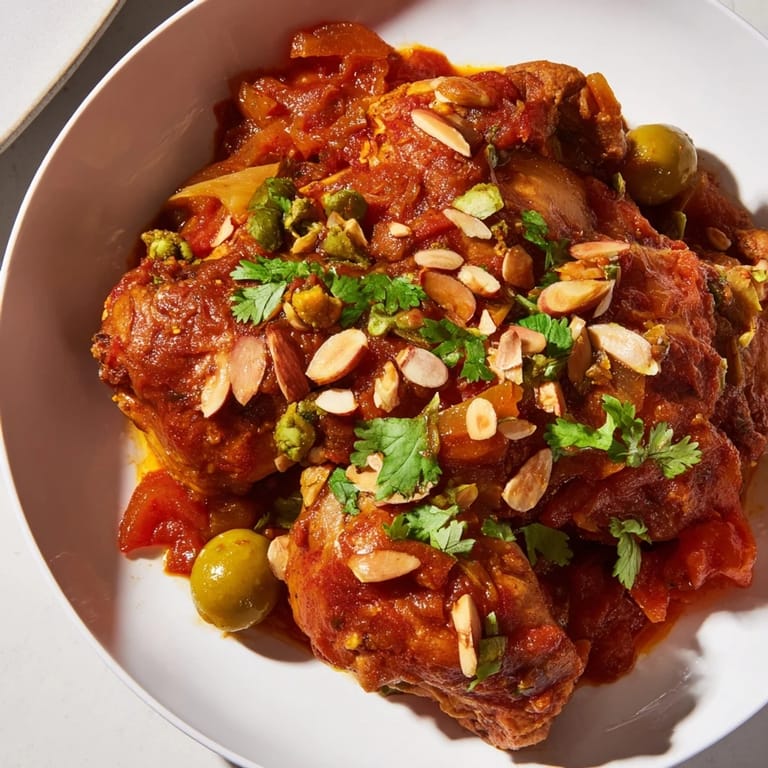
- The cilantro and almonds are best added fresh right before serving rather than storing them in the dish.
 Save
Save This is the kind of recipe that teaches you something new every time you make it. It's forgiving, it's nourishing, and it fills a house with the kind of warmth that makes people linger at the table.
Recipe FAQs
- → What cut of chicken works best?
Bone-in, skin-on chicken thighs are ideal for rich flavor and tender results during slow cooking.
- → Can I make this dish vegetarian?
Yes, substitute chickpeas and root vegetables for a hearty vegetarian alternative with similar spice profiles.
- → What is the role of preserved lemon?
Preserved lemon adds a distinctive tangy brightness enhancing the dish’s complex flavors but can be omitted if unavailable.
- → How should I serve this dish?
Traditionally, it pairs well with steamed couscous, rice, or warm flatbread to soak up the flavorful sauce.
- → Can I add heat to the dish?
Yes, harissa or a pinch of cayenne can be added to introduce a spicy kick if desired.