 Save
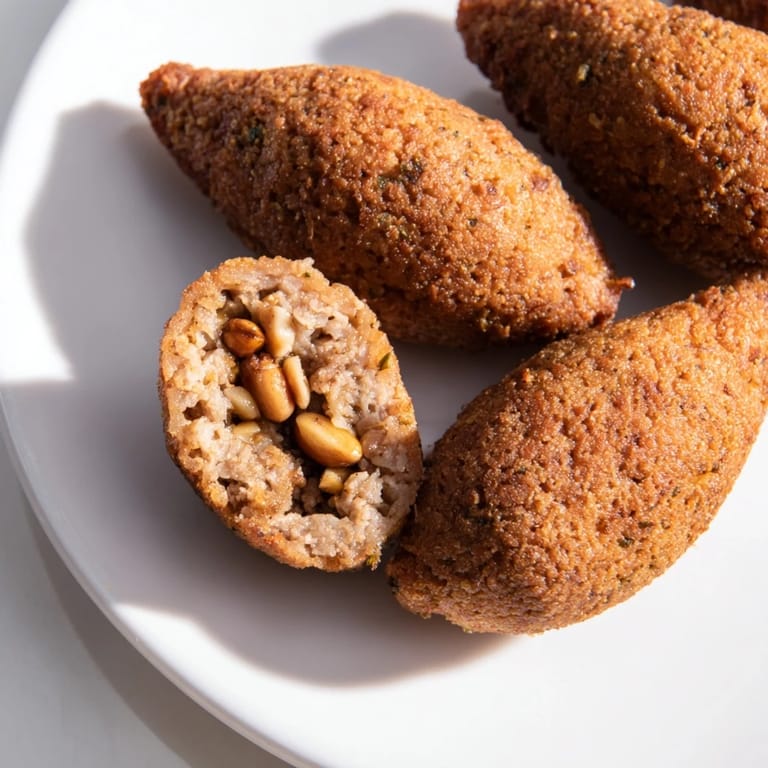
Save The first time I shaped kibbeh, my hands were slick with cold water and my grandmother was watching from across the kitchen table, arms crossed with that knowing smile. She didn't say much, just nodded when the meat and bulgur finally came together smooth and willing, like they'd been waiting for the right touch. There's something about holding warm spiced dough in the palm of your hand that makes you understand why this dish has traveled through generations, why people still gather around tables to make it together.
I made a double batch last winter for a small dinner party, worried that the frying would go wrong in front of my guests. Instead, the oil found the perfect temperature, and as each kibbeh turned golden and crisp, the whole room filled with this incredible nutty, spiced aroma that made everyone lean toward the kitchen. My friend Sarah kept sneaking them straight from the cooling plate, barely letting them drip on a napkin, and I realized that some dishes don't just feed people—they create moments.
Ingredients
- Fine bulgur wheat: This is the backbone of your dough—it absorbs liquid beautifully and creates that tender crumb that's essential to kibbeh. Don't skip the rinsing step; it removes excess starch and ensures the right texture.
- Lean ground beef or lamb: Lamb gives a more traditional, deeper flavor, but beef works perfectly well and is often easier to source. Either way, keeping it cold before mixing helps you achieve a smoother dough.
- Allspice and cinnamon: These warm spices are what make kibbeh unmistakable; they're not subtle, so don't be timid with them. The combination creates this golden, almost sweet undertone that balances the meat.
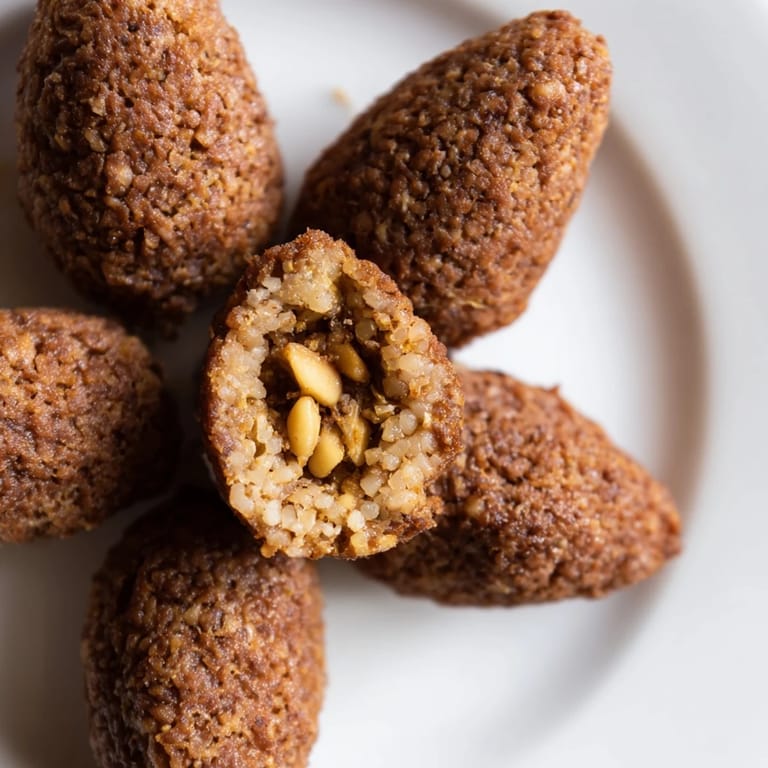
- Pine nuts: These should be golden and toasted before the filling comes together; they add that crucial crunch and richness that makes people ask for the recipe.
- Salt and pepper: Taste as you go when making the filling—this is where bold seasoning matters, since the outer dough is already seasoned.
Tired of Takeout? 🥡
Get 10 meals you can make faster than delivery arrives. Seriously.
One email. No spam. Unsubscribe anytime.
Instructions
- Soften your bulgur with care:
- Rinse the bulgur in cold water, then let it sit for 10 minutes—this gentle soaking is what makes the difference between dough that's crumbly and dough that holds together. You want it tender but not mushy.
- Build your dough with cold hands:
- Combine the softened bulgur with ground meat, onion, and spices, adding cold water just a little at a time until the mixture feels like cool play-dough. Refrigerate it while you work on the filling; cold dough is infinitely easier to shape.
- Create the filling with a light touch:
- Toast those pine nuts in the pan first until they're golden and fragrant, then add the browned meat with spices and cook just until the flavors meld—3 to 4 minutes is all you need. Let it cool before you use it, so the heat doesn't compromise your dough.
- Shape with wet hands and intention:
- Take a piece of dough about the size of a golf ball, flatten it into a thin oval in your palm, add filling to the center, then pinch and shape into that classic torpedo form. If the edges crack, just smooth them gently with a wet finger.
- Choose your method wisely:
- For frying, heat oil to 350°F and work in batches—overcrowding the pan drops the temperature and you'll end up with greasy kibbeh instead of crispy ones. For baking, brush generously with olive oil and turn halfway through for even golden color.
 Save
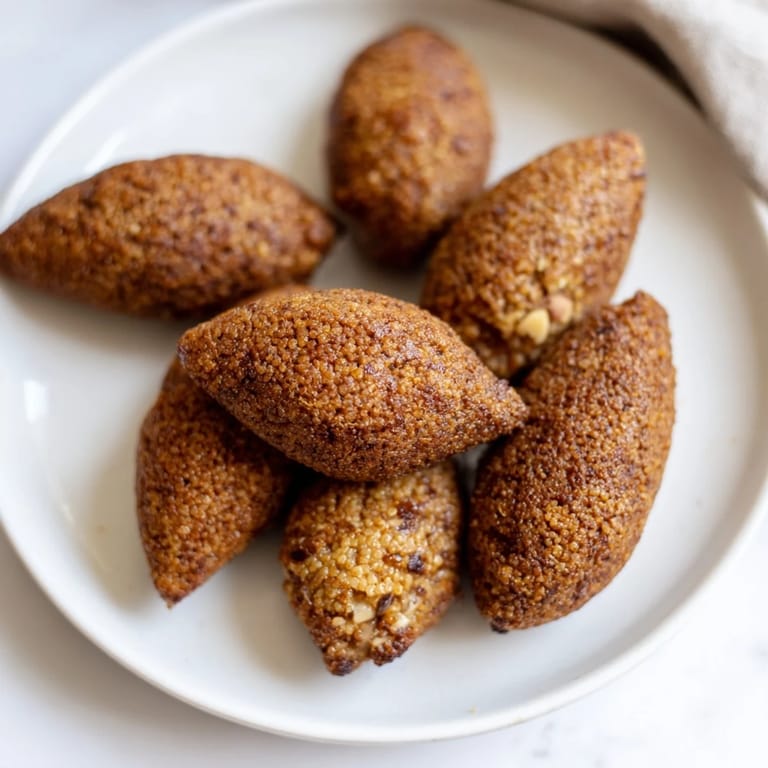
Save There was a moment during that dinner party when someone bit into one and just closed their eyes, savoring it slowly. That's when I understood that kibbeh isn't just about technique or ingredients—it's about creating something that makes people stop and pay attention to what they're eating.
Serving and Pairing
Kibbeh deserves companions that complement its richness without competing with it. Serve with thick yogurt mixed with garlic and lemon, or creamy tahini sauce that cools your palate between bites. A bright, sharp salad—crisp cucumber, tomato, and red onion tossed with lemon and olive oil—cuts through the richness beautifully and feels authentic to how these are traditionally eaten in Lebanese homes.
The Freezer Secret
I've learned that shaped kibbeh can live happily in your freezer for up to three months, which means you can make a whole batch on a quiet afternoon and fry them fresh whenever the mood strikes. There's something deeply satisfying about opening your freezer and finding golden potential waiting there, ready to transform into something warm and fragrant in just minutes.
Variations and Personal Touches
While tradition is beautiful, your kitchen is where you get to make this dish your own. Some people add a pinch of sumac to the filling for brightness, others mix in fresh mint or parsley for color and freshness. If you want to lighten things up, baking works just as well as frying, though the texture shifts slightly—you lose that deep crispy exterior but gain something lighter and less oil-heavy that still tastes wonderful.
- For a vegetarian version, use cooked lentils with sautéed mushrooms and walnuts in place of the meat filling—the spices do all the heavy lifting.
- Keep wet hands and cold dough nearby; shaping gets easier with practice, and your hands are your best tool.
- Make extra; they're addictive, and your freezer will thank you later.
 Save
Save Every time I make kibbeh, I'm cooking someone else's memory alongside my own, creating something that tastes like home to people I care about. That's the real gift of this dish.
Recipe FAQs
- → What type of meat is used in Kibbeh?
Lean ground beef or lamb works best to complement the bulgur and spices.
- → Can Kibbeh be baked instead of fried?
Yes, it can be brushed with olive oil and baked at 200°C for a crispy, golden texture.
- → How is the bulgur prepared for the dough?
Bulgur is rinsed in cold water and left to soften for about 10 minutes before mixing.
- → What spices enhance the filling's flavor?
Allspice, cinnamon, salt, and black pepper add warmth and balance to the filling.
- → Are pine nuts essential in the filling?
Yes, they provide a rich, crunchy texture that distinguishes the filling.
- → Is there a vegetarian alternative for the filling?
Cooked lentils and sautéed mushrooms can replace the meat for a vegetarian variation.