 Save
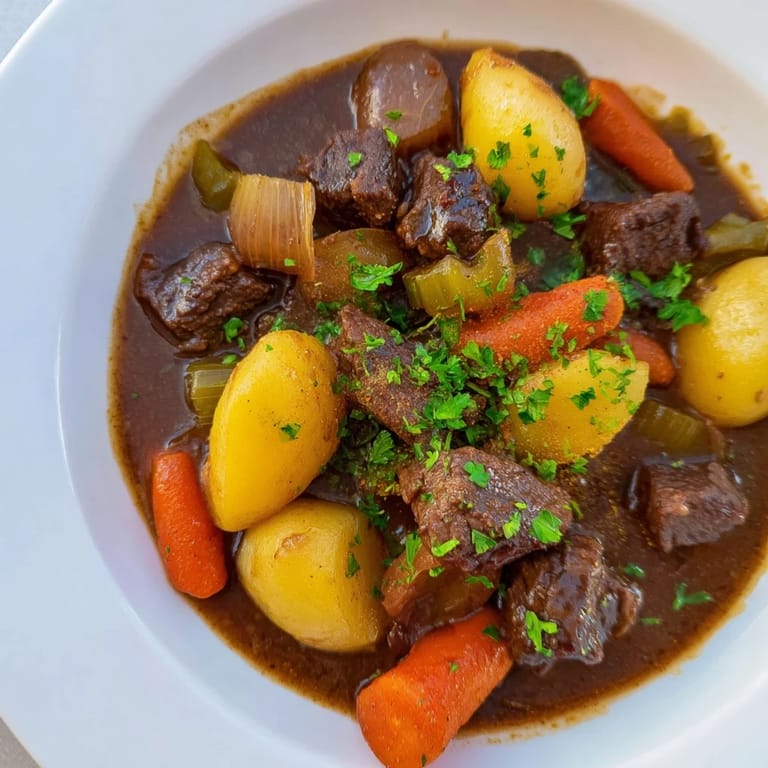
Save There's something about the first bite of a proper Irish stew that takes you straight to a kitchen that isn't yours—one I visited years ago on a grey afternoon, watching my friend's grandmother stir a pot with the kind of patience only time and practice teach. She never consulted a recipe, just knew when the beef had surrendered enough to the heat, when the broth had turned that deep, glossy brown. I've been chasing that exact flavor ever since, and this is the version I finally got right.
I made this for my sister on a Sunday when she needed comfort more than conversation, and watching her face soften with that first spoonful was worth every minute of stirring. The potatoes had broken down into the broth just enough to thicken it naturally, and the house smelled like home in a way store-bought soup never quite manages. That's when I knew I'd finally nailed it.
Ingredients
- Beef chuck (1.5 kg / 3.3 lbs), cut into 2-inch cubes: Chuck is forgiving—it's marbled with fat that keeps the meat juicy through the long simmer, and it's affordable enough that you don't feel guilty making a huge batch.
- Potatoes (4 large), peeled and chunked: Waxy varieties hold their shape better than floury ones, though I've stopped being precious about this; some breakdown is welcome because it thickens the broth naturally.
- Carrots (4 large), sliced: They should be thick enough to stand up to 2.5 hours of heat without dissolving into mush, and they add a gentle sweetness that balances the savory depth.
- Onions (2 large), chopped: They soften and almost disappear, becoming the sweet foundation that everything else builds on.
- Celery (2 stalks), sliced: Don't skip this—it adds an earthy undertone that makes people wonder what your secret ingredient is.
- Garlic (3 cloves), minced: Fresh garlic makes all the difference; I learned this the hard way after trying jarred once and feeling disappointed.
- Beef stock (1.2 liters / 5 cups): Homemade is ideal, but a good quality store-bought works fine; just taste it first because some brands are saltier than others.
- Guinness stout (330 ml / 1 bottle), optional: It adds a subtle bitterness and depth that regular water or stock alone can't deliver, though the stew is still excellent without it.
- Tomato paste (2 tbsp): This is your umami secret—it deepens the savory notes without making the stew taste tomatoey.
- Worcestershire sauce (2 tbsp): A small amount adds complexity; too much and it takes over, so measure carefully.
- Bay leaves (2): They must be removed before serving, or you'll have an unpleasant surprise in someone's spoon.
- Dried thyme (1 tsp) and rosemary (1 tsp): These are subtle markers of Irish cooking; if you have fresh herbs, use them near the end instead of the beginning.
- Salt and black pepper: Taste as you go because the stock, tomato paste, and Worcestershire are all salty already.
- Vegetable oil (3 tbsp) for searing: High heat is your friend here; you're building flavor by browning the meat, not just cooking it.
- Fresh parsley (2 tbsp), chopped: Sprinkle this just before serving for brightness and a small pop of color.
Tired of Takeout? 🥡
Get 10 meals you can make faster than delivery arrives. Seriously.
One email. No spam. Unsubscribe anytime.
Instructions
- Prep and Season:
- Pat your beef cubes completely dry with paper towels—this is the step that makes browning possible instead of steaming. A generous pinch of salt and pepper on each piece now means you won't have to oversalt the liquid later.
- Sear the Beef:
- Get your Dutch oven screaming hot with the oil, then add the beef in batches so you're not crowding the pan and dropping the temperature. You're looking for a deep golden crust on each piece, which takes maybe 3-4 minutes per side; don't rush this because that's where half the flavor lives. Let each batch rest on a plate while you do the others.
- Build the Base:
- In the now-empty pot, soften the onions and celery for about 5 minutes, scraping up all those brown crusty bits from the bottom—that's liquid gold for flavor. Add the garlic and cook just until fragrant, maybe a minute, or it'll turn bitter.
- Bloom the Paste:
- Stir in the tomato paste and let it sit in the heat for a full minute, which deepens its flavor instead of just thinning it out in the liquid. You'll notice the smell shift to something richer.
- Deglaze and Simmer:
- If you're using Guinness, pour it in now and let it bubble for 2 minutes while you scrape up every fleck of caramelized beef from the bottom. If you're skipping it, just move straight to the next step.
- Combine Everything:
- Return the beef to the pot and add the carrots, potatoes, bay leaves, thyme, rosemary, stock, and Worcestershire sauce, stirring gently so nothing sticks to the bottom. The liquid should mostly cover the solids; add a splash more stock if needed.
- Low and Slow:
- Bring it to a gentle boil, then cover and drop the heat to a simmer—you want just the occasional quiet bubble, not an aggressive rolling boil that toughens the meat. Stir every 20 minutes or so, and set a timer for 2 hours; check at that point and cook up to 30 minutes more if the beef isn't fork-tender yet.
- Finish and Taste:
- Fish out the bay leaves, then taste a spoonful of both the broth and beef; adjust salt and pepper as needed, keeping in mind that the flavors will meld a bit more as it cools. If you want a thicker stew, mash a few potato pieces against the side of the pot.
- Serve:
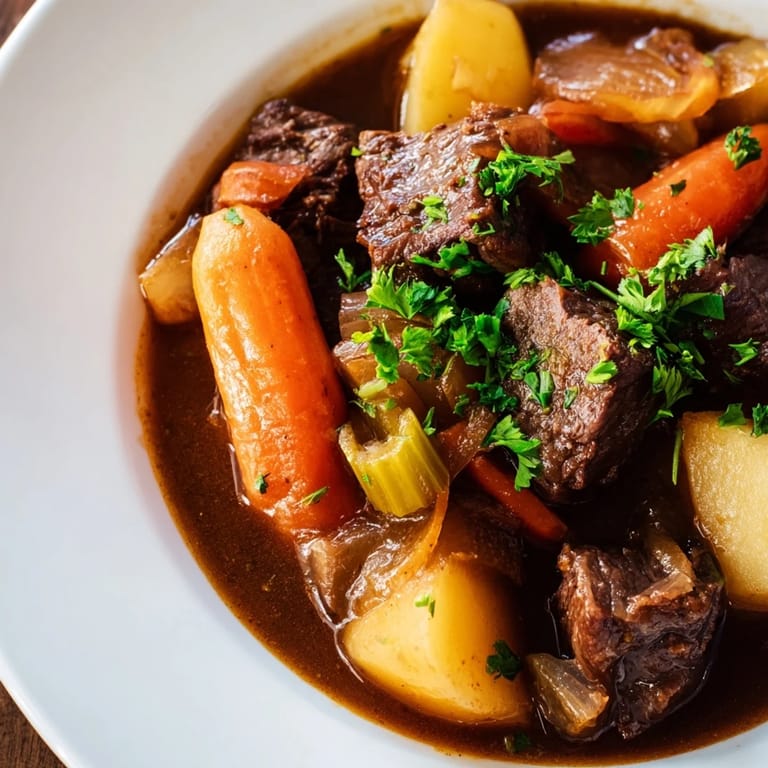
- Ladle into deep bowls and scatter fresh parsley across the top for a flash of green and a hint of brightness. A chunk of crusty bread on the side or a dollop of mashed potatoes underneath is the right move here.
 Save
Save The real magic happens the next day when you reheat it and the flavors have had time to truly know each other. I've spooned this stew into containers thinking of friends who needed feeding, and somehow it always tastes better when there's care behind it.
Why This Stew Works
Irish stew isn't about flash or technique—it's about respecting simple ingredients and giving them time. The beef releases collagen into the broth, which becomes that silky mouthfeel you can't fake with cornstarch or flour, and the vegetables surrender their sweetness so gradually that you barely notice when the broth turned from amber to deep mahogany. Once you've made it once, you'll understand why this dish has endured for centuries; it's nearly impossible to mess up if you just let it sit on the stove undisturbed.
About the Optional Guinness
The Guinness adds a subtle bitterness and richness that rounds out the stew, making it taste more restaurant-quality without tasting like beer. If you're cooking gluten-free or just don't have it on hand, the stew is absolutely complete without it—the Worcestershire sauce and tomato paste give you enough depth. If you do use it, let it bubble for those two minutes so the alcohol cooks off and you're left with just the complex malt notes.
Variations and Add-ons
This stew welcomes gentle changes depending on what you have or what you're craving. Swap the beef for lamb if you want something slightly more tender and delicate, add a parsnip or two for earthiness, or throw in a splash of red wine instead of Guinness. Some cooks finish the pot with a knob of butter or a swirl of cream, which is lovely but not necessary if you've built the broth properly.
- If you want it thicker, mash some of the cooked potatoes into the broth instead of adding flour or cornstarch.
- Make a double batch and freeze half—it keeps beautifully for up to three months, and there's real magic in pulling dinner from the freezer on a night when you have nothing left to give.
- Serve it over creamy mashed potatoes, with crusty bread, or even nestled in a pie crust if you're feeling ambitious.
 Save
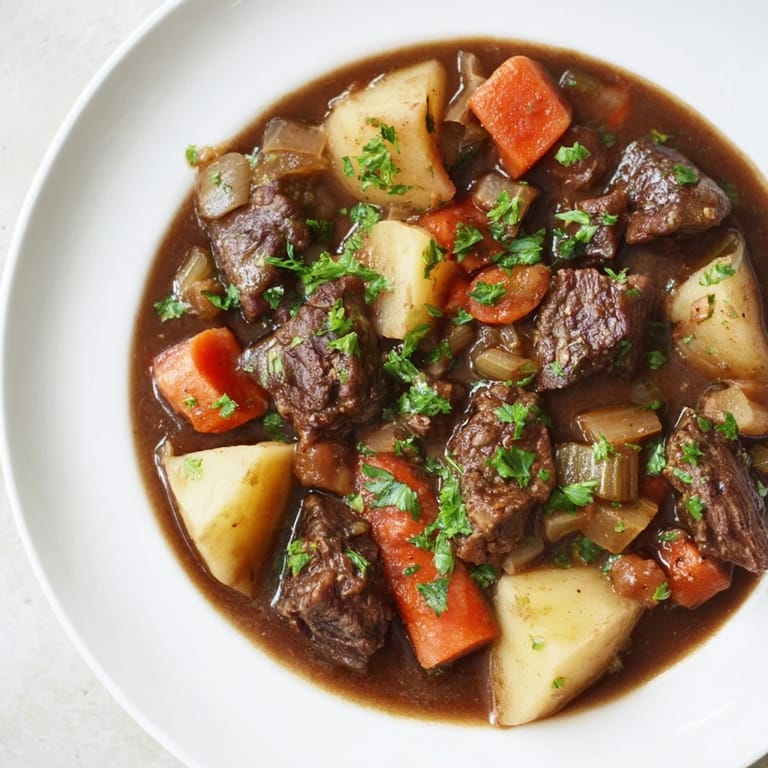
Save This is the kind of stew that makes a house feel like a home, and it's worth every minute of your time. Make it once and you'll understand why people keep coming back to it, again and again.
Recipe FAQs
- → What cut of beef works best?
Beef chuck is ideal for this stew due to its marbling and ability to become tender after slow cooking.
- → Can I substitute other vegetables?
Potatoes, carrots, onions, and celery provide classic flavors, but you may add parsnips or turnips for variation.
- → Is Guinness necessary for flavor?
Guinness adds depth and richness, but you may omit it or replace with beef stock for a gluten-free option.
- → How long should the stew simmer?
Simmer gently for 2 to 2.5 hours until the beef is fork-tender and flavors are well developed.
- → What herbs suit this dish best?
Bay leaves, thyme, and rosemary complement the beef and vegetables with earthy, aromatic notes.
- → Can I thicken the broth?
To thicken, mash some of the cooked potatoes into the broth or gently reduce the liquid by simmering uncovered.