 Save
Save My friend's grandmother sent a box of hojicha tea leaves from Kyoto, and I stood in my kitchen wondering what to do with them besides the usual afternoon cup. That's when it hit me—why not steep that toasty, nutty flavor into tiramisu? The first time I made this, my kitchen smelled like a Japanese tea house colliding with an Italian bakery, and I knew I'd stumbled onto something special. Now it's become my answer to the question, 'What should we bring to dinner?'
I made this for a dinner party on the first cold night of autumn, and everyone went quiet for a moment after the first bite—the kind of quiet that means you've gotten it right. One guest asked if it was from a fancy restaurant, which felt like the highest compliment my kitchen could receive. That's when I realized this dessert does something most recipes can't: it brings people together across cultures in a single spoonful.
Ingredients
- Hojicha loose leaf tea: This roasted green tea has an incredible toasty, almost chocolatey depth that regular green tea can't match; loose leaf steeps better than bags and gives you more control over flavor intensity.
- Mascarpone cheese: It needs to be softened to room temperature or it'll be impossible to fold smoothly into the other components without deflating all your whipped cream work.
- Heavy cream: Keep it cold and whip it to stiff peaks right before folding; this is what gives the cream that cloud-like texture that makes tiramisu feel luxurious.
- Egg yolks: The double boiler step might seem fussy, but it actually cooks the eggs safely while creating a pale, mousse-like base that makes the whole dessert airy.
- Ladyfinger biscuits: Look for savoiardi specifically; they're denser and absorb the tea syrup perfectly without falling apart like softer ladyfingers would.
- Water for hojicha syrup: Quality matters here because it's essentially the only liquid besides the tea itself, so filtered water makes a noticeable difference in the final taste.
Tired of Takeout? 🥡
Get 10 meals you can make faster than delivery arrives. Seriously.
One email. No spam. Unsubscribe anytime.
Instructions
- Brew your hojicha moment:
- Boil the water and pour it over the hojicha tea, letting those leaves unfurl and release all their toasty character for exactly five minutes. Strain while it's still hot, add the sugar to dissolve it fully, then walk away and let it cool completely—I usually do this first so it has time to chill while I work on everything else.
- Create the silky egg base:
- Get your bowl positioned over barely simmering water and whisk those yolks with sugar constantly for five to seven minutes until they transform into something pale and thick enough to hold a ribbon shape when you lift the whisk. This is the magic moment where raw eggs become completely safe and incredibly fluffy.
- Build your cream layers:
- In one bowl, whip that cold heavy cream until stiff peaks form—it should look almost cloud-like. In another, soften the mascarpone with vanilla until it's perfectly smooth with no lumps hiding in there, then gently fold in the egg mixture, and finally fold in the whipped cream with the lightest hand you can manage.
- Dip with intention:
- This is where people usually mess up by oversaturating their ladyfingers; a quick one-second dip in the cooled hojicha syrup is all you need because these biscuits are thirsty and will keep absorbing moisture as the tiramisu chills. Line them up in your baking dish in a neat single layer.
- Layer your masterpiece:
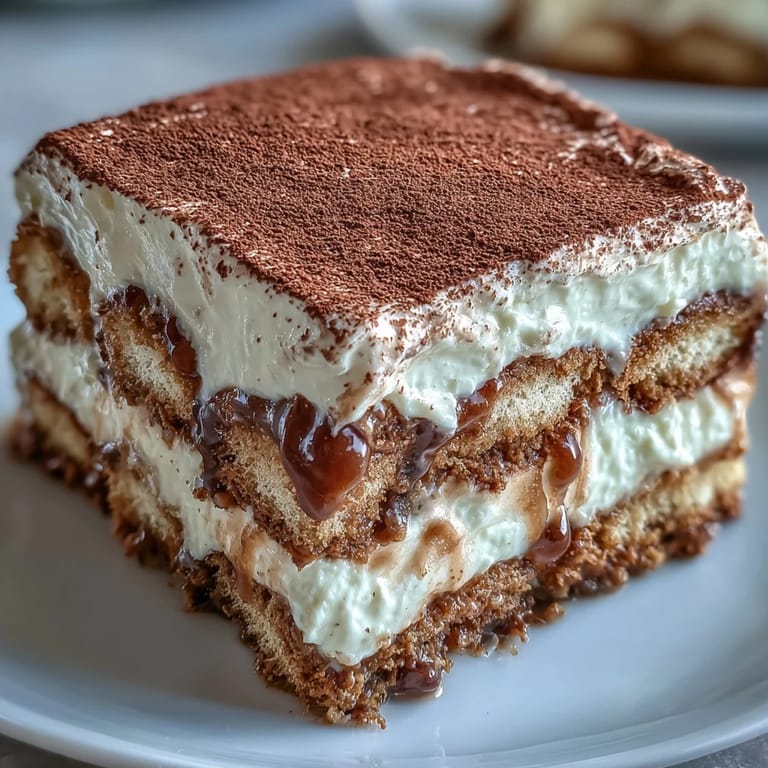
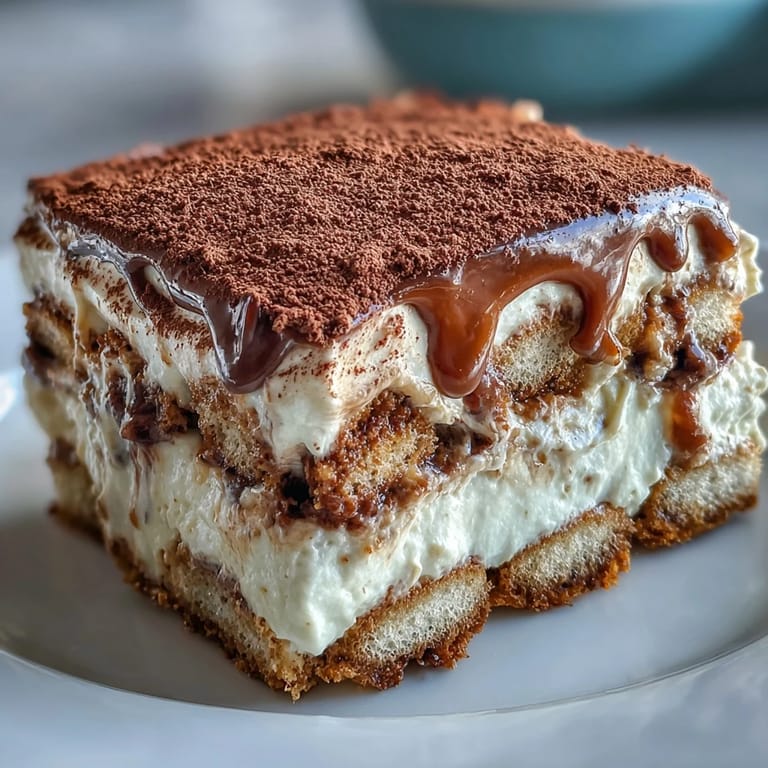
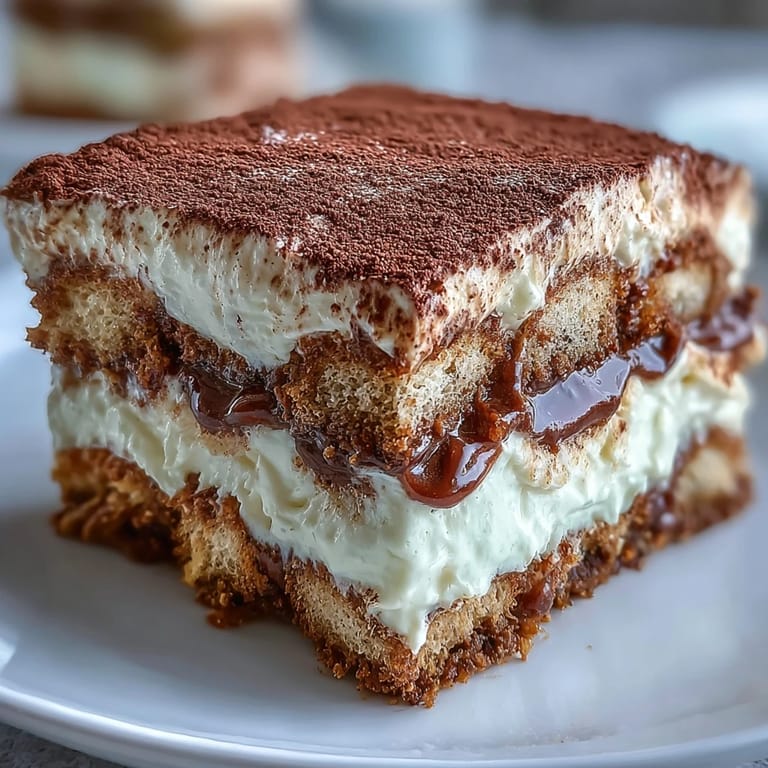
- Spread exactly half of your mascarpone cream over that first layer of ladyfingers, then repeat the whole thing—another layer of dipped biscuits followed by the remaining cream. The cream will nestle between the layers and create this incredible texture contrast.
- Let time do its work:
- Cover this and slide it into the fridge for at least four hours, though overnight is honestly the move because everything sets and the flavors meld in the most wonderful way. Your patience gets rewarded with a perfectly sliceable, creamy dessert.
- The final flourish:
- Just before serving, dust the top generously with either cocoa powder or hojicha powder—this adds both visual appeal and a little burst of flavor that ties everything together.
 Save
Save There's something almost meditative about assembling this dessert—the rhythm of dipping biscuits, spreading cream, layering it all in the dish. My grandmother used to say that the best dishes are the ones you make with calm hands, and this one taught me exactly what she meant.
The Magic of Hojicha
Hojicha is a completely different beast from the bright, vegetal green teas most people know—it's been roasted over charcoal, which transforms it into something deeper and more complex. When you steep it, the flavor is warm and toasty with hints of nuttiness and caramel that somehow feel both exotic and comforting at the same time. In tiramisu, it replaces the traditional coffee syrup, and instead of overpowering the dessert, it creates this beautiful understated backdrop that lets the creamy layers shine.
Customizing Your Version
I've made this recipe at least two dozen times now, and I'm still experimenting with small changes that keep it interesting. A friend suggested adding a tablespoon of coffee liqueur to the hojicha syrup once, and suddenly it became even more sophisticated—the coffee and hojicha together created a depth I didn't know was possible. You could also swap the hojicha for matcha if you want something brighter, or even add a touch of rum or Marsala for something with an edge.
Storage and Make-Ahead Magic
This is one of those desserts that actually improves overnight as all the layers meld together and the flavors deepen in the fridge. You can make it up to two days ahead, which means it's perfect for dinner parties because you can check that task off your list early. It doesn't freeze well because of the texture changes that happen in the freezer, but honestly, it never lasts long enough to become a storage problem.
- Cover it tightly with plastic wrap or a lid to prevent it from absorbing other flavors from your fridge.
- Slice it with a sharp knife dipped in hot water and wiped clean between cuts for the prettiest presentation.
- Dust with the powder right before serving rather than ahead of time, so it stays visible and vibrant on top.
 Save
Save Making this dessert has taught me that the best recipes are the ones that bring together different worlds and somehow make them taste like they were always meant to be together. I hope it brings as much joy to your table as it has to mine.
Recipe FAQs
- → What does hojicha taste like in tiramisu?
Hojicha brings a warm, toasty flavor with earthy notes and subtle caramel undertones. Unlike matcha's grassiness, roasted hojicha has a nutty profile that complements the rich mascarpone cream beautifully.
- → Can I make this dessert ahead of time?
Absolutely. In fact, hojicha tiramisu tastes better after resting overnight in the refrigerator. This allows the ladyfingers to absorb the tea syrup fully and the flavors to develop depth.
- → What can I substitute for ladyfingers?
You can use sponge cake cut into rectangles, pound cake slices, or even soft biscotti. For a gluten-free version, look for gluten-free ladyfingers or use a gluten-free sponge cake base.
- → Why cook the egg yolks in a double boiler?
Gently cooking the yolks with sugar creates a stable, safe base while achieving a thick, glossy texture. This method prevents the eggs from scrambling and ensures the filling holds its structure properly.
- → How do I prevent ladyfingers from becoming soggy?
Dip each ladyfinger quickly into the hojicha syrup—just 1-2 seconds per side. They should be moistened but not soaked. The biscuits will continue absorbing liquid as they chill.
- → Can I use matcha instead of hojicha?
Yes, matcha works well in this preparation and will provide a brighter, grassier flavor profile. The vibrant green color also creates a striking visual presentation when dusted on top.