 Save
Save My aunt kept a jar of guava cheese on her kitchen shelf in Goa, tucked between spice containers, and I'd sneak pieces whenever we visited. Years later, watching her stir that pot with a wooden spoon, I realized it wasn't magic—just ripe fruit, sugar, and patience. The aroma alone could fill an entire house, sweet and slightly tart, announcing something special was happening. Now I make it myself, and that same anticipation hits when I peel the first guava.
I made this for a friend's afternoon tea gathering, nervous because I'd only tried it once before. When she bit into a piece and closed her eyes, then immediately asked for the recipe, I knew I'd gotten it right. That quiet moment of someone genuinely enjoying something you made by hand stays with you differently than applause ever could.
Ingredients
- Ripe guava (800 g, about 4 cups), peeled and deseeded: The fruit needs to be genuinely ripe—soft enough that your thumb sinks in slightly—because underripe guavas will taste astringent and never quite develop that tropical sweetness.
- Water (1/2 cup): Just enough to help the fruit break down and release its flavors without drowning the batch.
- Granulated sugar (450 g): This seems like a lot, but it's what transforms the puree into something with body and shelf life; you can adjust down by 50g if your guavas are particularly sweet, though tasting as you go is your best guide.
- Fresh lime juice (2 tbsp): Never skip this—it brightens everything and prevents the candy from tasting one-dimensional and cloying.
- Unsalted butter (2 tbsp): Added near the end, it gives the cheese a silky, luxurious finish that makes people wonder if you've done something more complicated than you actually have.
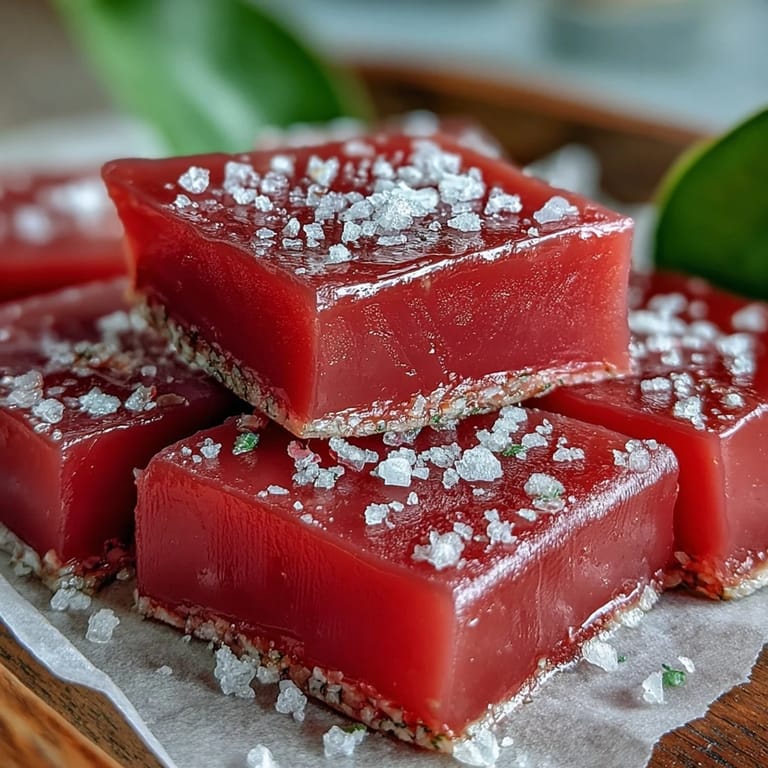
- Superfine sugar for coating (1/4 cup, optional): A light dusting makes it look like something from a fancy shop, though honestly it's delicious plain too.
Tired of Takeout? 🥡
Get 10 meals you can make faster than delivery arrives. Seriously.
One email. No spam. Unsubscribe anytime.
Instructions
- Set up your pan:
- Grease an 8x8-inch square baking pan generously with butter, then line it with parchment paper, leaving some hanging over the edges so you can lift the whole thing out later. This matters more than you'd think—the overhang becomes your handle.
- Cook the guava into softness:
- Place chopped guava and water in a heavy-bottomed saucepan and let it simmer over medium heat for about 15 minutes, until the fruit completely falls apart. You'll know it's ready when you stir and the fruit dissolves rather than holds its shape.
- Make it smooth:
- Blend the cooked guava until completely smooth, then push it through a fine-mesh sieve to catch any stubborn seeds or fiber. This step feels tedious, but smooth texture is what separates homemade guava cheese from a lumpy paste.
- Measure and combine:
- Return 2 cups of the puree to your cleaned saucepan, add sugar and lime juice, and stir over medium heat with a wooden spoon. The mixture will seem loose at first, like jam, but keep your patience and keep stirring.
- Watch for the transformation:
- After 30 to 40 minutes of constant stirring, the mixture will darken slightly, thicken dramatically, and start pulling away from the sides of the pan when you run your spoon through it. Add the butter and keep stirring until everything looks glossy and thick enough to hold a shape.
- Pour and cool:
- Transfer the hot mixture immediately to your prepared pan, smooth the top with a spatula, and let it sit at room temperature for a full hour. Patience here prevents cracking and ensures it sets properly.
- Cut and serve:
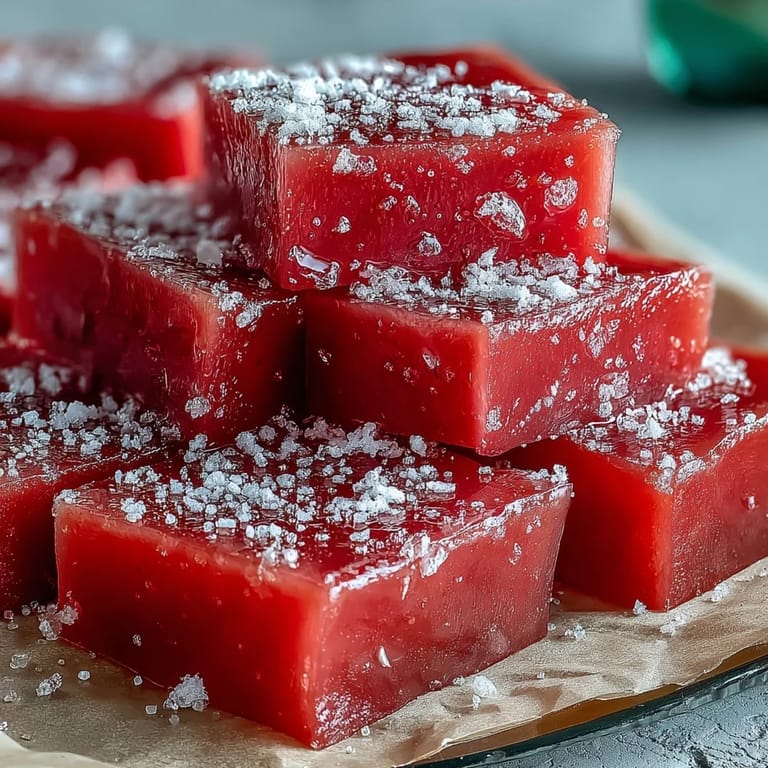
- Once completely cool and set, lift the whole sheet out using the parchment overhang and cut into squares or diamonds with a greased knife, wiping the blade between cuts. If you like, roll the pieces in superfine sugar for that polished finish.
 Save
Save There's something deeply satisfying about turning fresh fruit into something that lasts weeks, something you can offer to someone without much fuss. My neighbor tasted mine and started bringing her own guavas over, and suddenly we were making batches together on Saturday afternoons, talking about nothing important while our hands stayed busy. That's when I realized this wasn't just a recipe—it was an excuse to slow down.
Texture and Consistency Secrets
The consistency of your guava cheese depends entirely on how long you cook it after adding sugar. I learned this by accident when I stopped stirring too early once—the result was delicious but spoonable, almost like a thick paste. If you like it firmer, closer to actual candy that snaps when you bite it, keep cooking for those extra 5 to 10 minutes until it truly resists the spoon. For a softer, almost melt-in-your-mouth version, you can reduce the cooking time by 10 minutes, though it will need longer to set and may never be quite as solid.
Choosing and Preparing Your Guavas
Pink guavas are sweeter and more perfumed than white varieties, though honestly both work beautifully—the lime juice adjusts for any difference. Ripe guavas should give slightly to pressure and smell almost overwhelming when you hold them close. If your market only has firm ones, you can buy ahead and let them sit in a paper bag for a few days; they'll ripen faster than you expect, especially if you toss in a banana or apple to speed things along.
Storage and Serving Suggestions
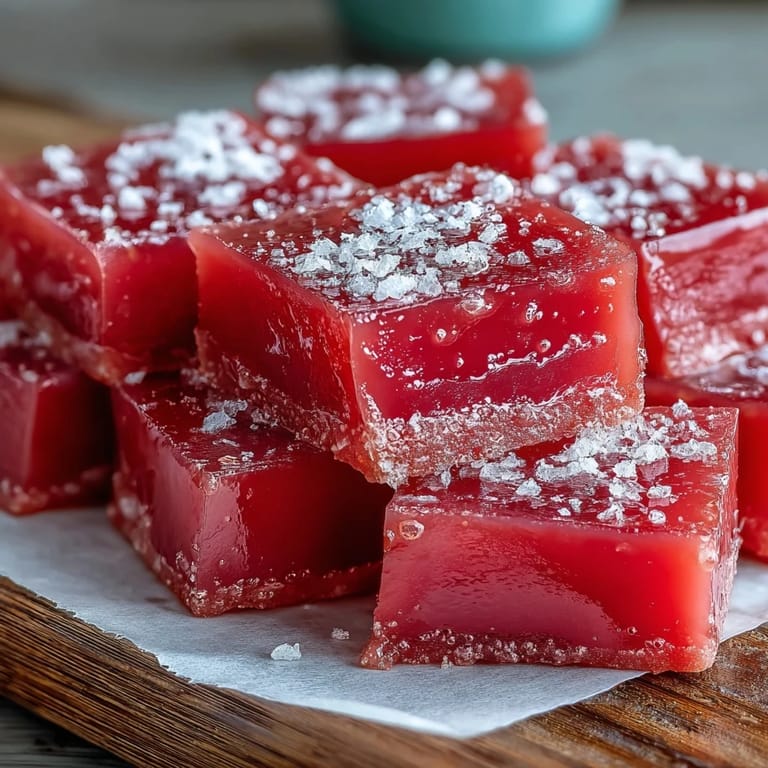
Once cut and completely cooled, store your guava cheese in an airtight container at room temperature where it will last up to two weeks, though it rarely lasts that long in my house. It's stunning served after dinner with tea, alongside soft cheeses like mascarpone or ricotta, or simply as a gift to someone who appreciates small, handmade things.
- A thin slice with sharp cheddar or queso fresco makes an elegant cheese board addition that surprises people.
- Wrapped individually in wax paper, these pieces make wonderful gifts that feel infinitely more thoughtful than store-bought sweets.
- Keep a small container in your fridge to eat straight from—cold and concentrated, it's almost like a fruit leather, just richer.
 Save
Save Making guava cheese is one of those rare kitchen projects that looks impressive but forgives imperfection, rewarding patience over precision. Give yourself permission to make it slowly, taste as you go, and know that however it turns out, it will taste like effort and care.
Recipe FAQs
- → What makes guava cheese different from guava paste?
Guava cheese typically includes butter and has a softer, fudge-like texture compared to denser guava paste. The addition of lime juice adds brightness, while butter creates a creamier mouthfeel. Both start with guava puree and sugar, but cheese yields a more luxurious confection.
- → Can I use frozen guava instead of fresh?
Frozen guava works perfectly if fresh isn't available. Thaw completely before cooking, and drain any excess liquid. You may need to adjust cooking time slightly since frozen fruit can be more watery. The flavor remains excellent, making this accessible year-round.
- → How do I know when the mixture is ready to set?
The mixture is ready when it thickens considerably, pulls away from the pan sides, and forms a mass that holds its shape. A simple test: drop a small amount onto a plate—it should set firmly without being sticky. This usually takes 30-40 minutes of patient stirring.
- → What's the best way to store guava cheese?
Keep in an airtight container at room temperature for up to two weeks. For longer storage, refrigerate for a month or freeze for three months. If refrigerating, bring to room temperature before serving as the texture firms when cold. Dusting with sugar helps prevent sticking.
- → Can I make this dairy-free?
Absolutely. Substitute unsalted butter with vegan butter or coconut oil. The texture remains excellent, though coconut oil adds a subtle coconut note. The rest of the ingredients are naturally plant-based, making this adaptable for various dietary preferences.