 Save
Save My neighbor brought over a tin of hojicha nougat from a tiny Tokyo confectionery, and I became absolutely obsessed with how the roasted tea flavor danced with the marshmallow-like texture. The earthy, almost nutty taste of hojicha felt nothing like the vanilla nougats I'd grown up eating, and I spent weeks trying to reverse-engineer it in my kitchen. One afternoon, while waiting for the sugar syrup to hit temperature, I realized this candy wasn't just about following numbers on a thermometer—it was about understanding when the egg whites knew they were ready to hold something hot and dangerous. That's when I decided to master it myself.
I made a batch for my book club one winter evening, and three people immediately asked for the recipe before tasting it—they just saw me wrapping these jewel-colored squares and assumed I'd ordered them from somewhere fancy. By the end of the night, the tin was empty, and someone whispered that hojicha nougat deserved to be a thing more people knew existed. That moment stuck with me.
Ingredients
- Roasted almonds and pistachios: These need to be toasted fresh in your skillet to wake up their flavors—pre-toasted nuts from the store won't have the same brightness that makes each bite memorable.
- Honey: Use real honey, not the squeezable kind with additives, because it adds subtle floral notes that complement the tea beautifully.
- Granulated sugar: This is the backbone of your nougat structure, and precision matters here since you're aiming for that specific temperature.
- Egg whites at room temperature: Cold egg whites won't incorporate the hot syrup smoothly, so pull them out of the fridge and let them sit for 20 minutes.
- Hojicha powder: This is non-negotiable—it's what makes this nougat distinctly yours, and it should smell like a toasted grain field.
- Cream of tartar: This stabilizes the egg whites and keeps them from breaking down, which I learned only after a batch collapsed into graininess.
- Unsalted butter: Softened butter folded in at the end adds richness and keeps the nougat tender rather than tough.
Tired of Takeout? 🥡
Get 10 meals you can make faster than delivery arrives. Seriously.
One email. No spam. Unsubscribe anytime.
Instructions
- Set up your workspace:
- Line your baking pan with parchment paper so the nougat slides out cleanly later. If you have edible wafer paper, use that instead—it prevents sticking beautifully.
- Toast the nuts:
- Let almonds and pistachios warm in a dry skillet until they smell like they've been kissed by heat, about 2–3 minutes. You want them fragrant but not darkened.
- Cook the syrup:
- Combine honey, sugar, water, and salt in a saucepan over medium heat, stirring gently until the sugar melts. Once it's dissolved, stop stirring—let the mixture boil undisturbed until your thermometer reads exactly 140°C (285°F).
- Whip the egg whites:
- In your stand mixer, beat egg whites with cream of tartar on medium speed until soft peaks form, about 2–3 minutes. This should look pillowy and light.
- Pour the hot syrup:
- Lower the mixer speed and pour the syrup in a very thin, steady stream while beating—think of it like you're writing with honey. If you pour too fast, you'll scramble the eggs instead of incorporating the syrup.
- Beat to glossy peaks:
- Increase speed to high once all the syrup is in and keep beating for 5 minutes until the mixture turns glossy, thick, and pale. The nougat should look like fluffy meringue at this stage.
- Add the hojicha and vanilla:
- Gently fold in hojicha powder and vanilla extract using a spatula, stirring just until the color is even and the tea flavor is distributed.
- Fold in the butter and nuts:
- Add your softened butter and fold it in completely, then add the toasted nuts. Be gentle—you want to keep the nougat airy.
- Spread and set:
- Pour the mixture into your prepared pan and smooth the top with an offset spatula or the back of a spoon. If using wafer paper on top, press it on gently and let everything sit at room temperature for at least 30 minutes until completely firm.
- Cut and wrap:
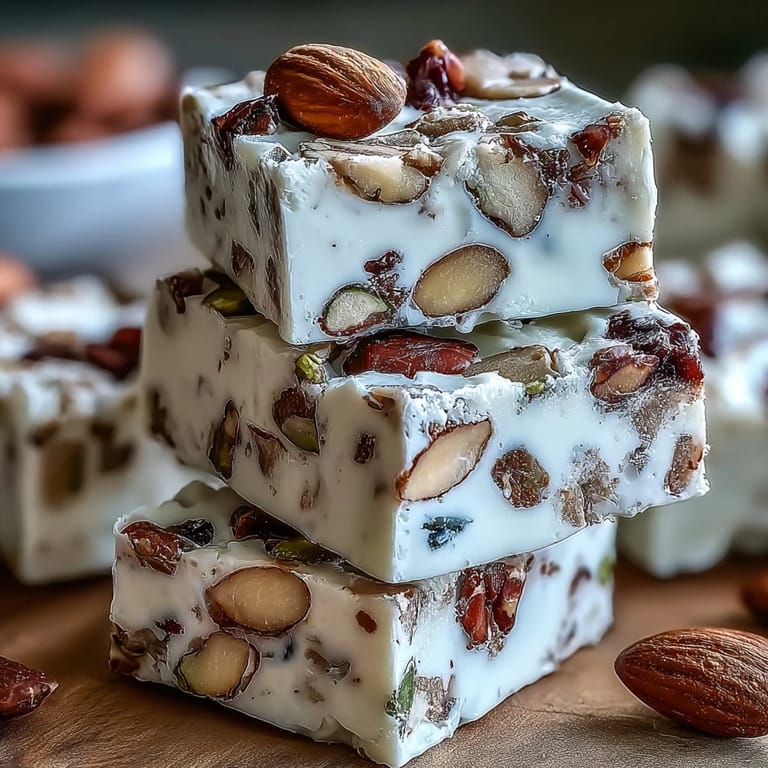
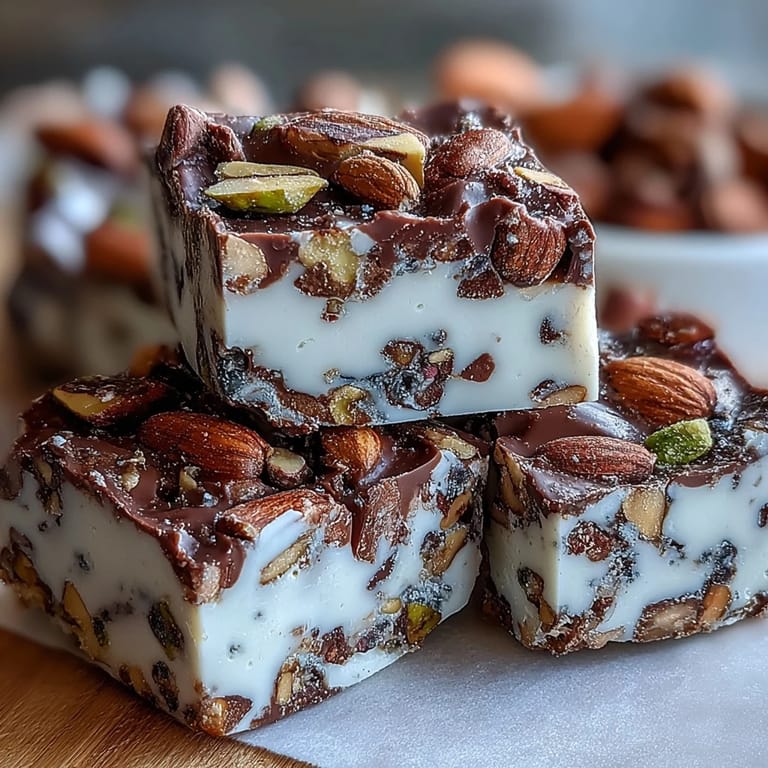
- Once set, remove the nougat from the pan and cut into bite-sized pieces using a sharp knife dipped in oil to prevent sticking. Wrap each piece in parchment or cellophane to keep them from clumping together.
 Save
Save I learned something unexpected while making this candy: nougat rewards calmness in a way few things do. The entire process asks you to move slowly, listen to the mixer's whir, watch the syrup bubble, and trust the thermometer. By the time you've wrapped the first few pieces, you feel like you've been meditating in chocolate chip form.
The Magic of Hojicha Tea in Candy
Hojicha is roasted green tea, which means it's lost some of the grassy sharpness that regular green tea has, leaving behind something deeper and almost coffee-like. When you use hojicha powder in nougat, it brings an earthy sophistication that makes people pause and ask what that flavor is. It's not sweet, not bitter—it's gentle and thoughtful, which is why this candy feels more like a gift than an indulgence.
Why Room Temperature Matters More Than You'd Think
I discovered the hard way that cold egg whites refuse to incorporate hot syrup properly—they scramble instead of emulsify, leaving you with a grainy mess. Room temperature eggs, on the other hand, relax and stretch, becoming flexible enough to accept the heat and transform into nougat. This single detail changed everything about my success rate.
Storing, Pairing, and Sharing
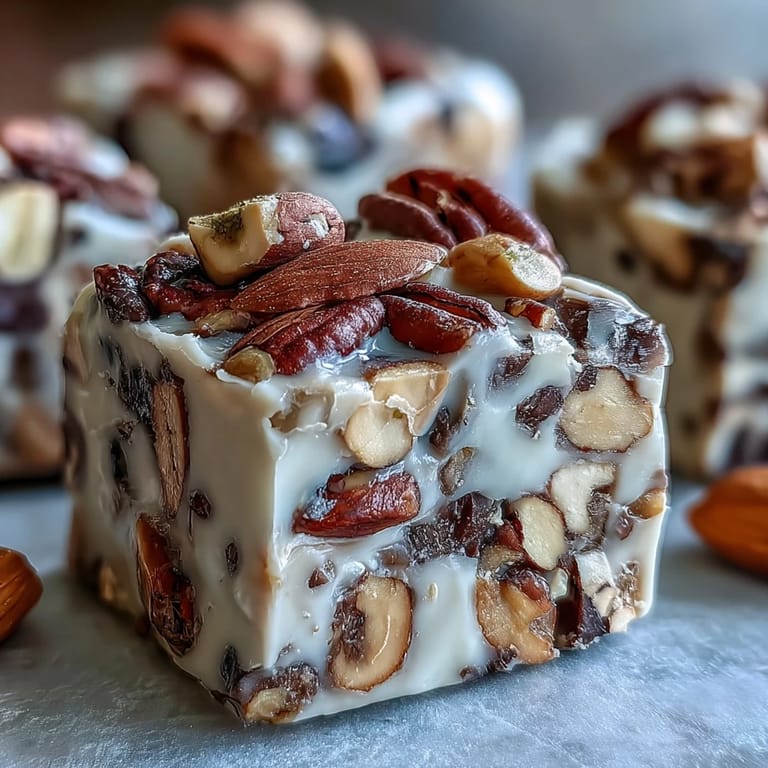
These nougat pieces stay soft and chewy for about a week if you keep them in an airtight container at room temperature away from humidity. Pair them with a cup of hojicha tea for an afternoon break, or tuck them alongside a light Japanese whisky for something unexpected. Gift wrapping them in pretty cellophane makes them feel elegant enough for any occasion, and watching someone's face light up when they taste homemade nougat never gets old.
- Individual wrapping in parchment keeps pieces from sticking together and makes them look intentional and special.
- Store them away from direct sunlight and humidity, because moisture is the only real threat to their texture.
- If you live somewhere hot or humid, a thin silica gel packet in the container helps them stay fresh longer.
 Save
Save Making hojicha nougat is one of those small kitchen projects that teaches you something beyond just candy-making—it teaches you about patience, precision, and the quiet satisfaction of creating something delicate with your own hands. Once you've made a batch, you'll understand why people hoard these little treasures.
Recipe FAQs
- → What makes hojicha nougat different from regular nougat?
Hojicha adds distinctive roasted, earthy notes with caramel undertones that set this confection apart from traditional vanilla versions. The roasted green tea powder creates a deeper, more complex flavor profile while maintaining the classic chewy texture.
- → Can I substitute the nuts in this nougat?
Absolutely. Cashews, hazelnuts, or walnuts work beautifully. Consider toasted pecans for added richness or macadamias for a buttery twist. Maintain the total weight and roughly chop for even distribution throughout the mixture.
- → Why is a candy thermometer essential for making nougat?
Precise temperature control determines texture. At 140°C, the sugar syrup reaches the soft-ball stage, creating that perfect chewy consistency. Lower temperatures produce sticky results, while higher heat yields hard, brittle pieces that won't set properly.
- → How long does homemade nougat stay fresh?
Stored in an airtight container at room temperature, this confection remains perfectly chewy for up to one week. Individual wrapping in parchment or cellophane prevents sticking and maintains freshness. Avoid refrigeration as it alters the texture.
- → What's the best way to cut nougat without it sticking?
Use a sharp knife lightly coated in neutral oil or butter. Make firm, decisive cuts through the entire slab rather than sawing motions. Wipe and re-oil the blade between every few slices. For cleaner edges, briefly chill the nougat for 10 minutes before cutting.
- → Can I make this without a stand mixer?
While possible, hand-whipping egg whites to incorporate hot syrup requires significant effort and speed. A stand mixer ensures proper aeration and consistent texture. If using a hand mixer, work quickly and have everything prepared before starting the syrup.