 Save
Save My neighbor Maria showed up one afternoon with a bag of guavas from her tree, insisting I had to learn to make paste the way her abuela did. I was skeptical at first—how could something so simple be worth the hour of stirring—but the moment that glossy amber mixture started pulling away from the pan, I understood. Now whenever I make it, the whole kitchen fills with this tropical sweetness that somehow makes everything feel a little brighter.
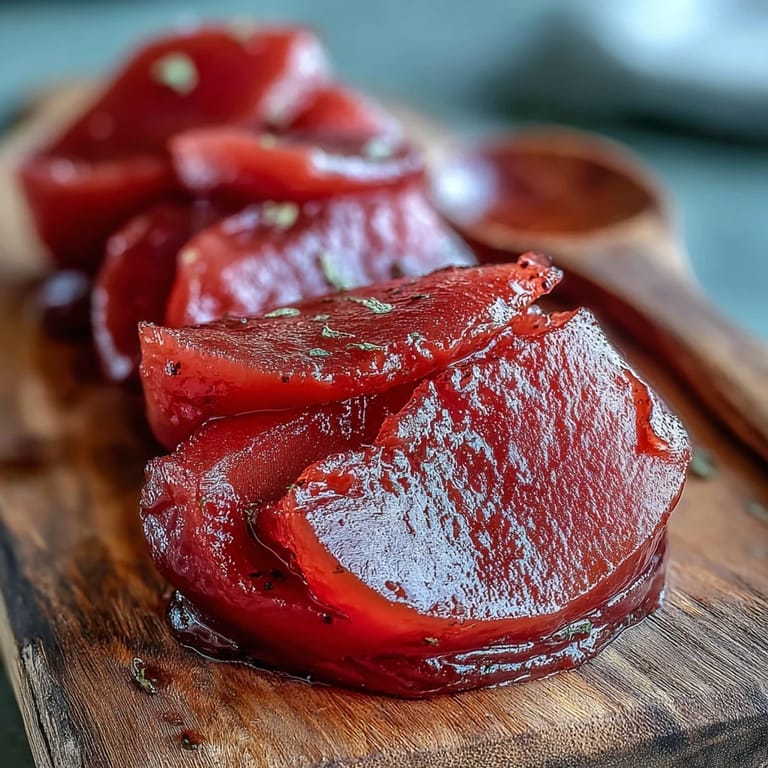
Last winter I brought a jar to a potluck, sliced thin and arranged on a board with Manchego cheese, and watched people's faces light up the moment they tasted it. Someone asked if I'd bought it from a bakery, and that's when I realized this wasn't just a condiment anymore—it was something I could actually make myself, something that felt like a small gift to give.
Ingredients
- Ripe guavas (1 kg or 2.2 lbs): The fresher and softer they are, the easier they'll break down and the more fragrant your paste becomes—avoid hard or underripe ones, as they'll take longer to cook and taste less sweet.
- Granulated sugar (450 g or 2 1/4 cups): This is your binding agent and preservative, so don't skimp, though you can adjust slightly if your guavas taste particularly sweet or tart.
- Fresh lemon juice (2 tbsp): A little brightness cuts through the richness and keeps the paste from tasting one-dimensional.
- Water (120 ml or 1/2 cup): Just enough to get everything moving in the pot without making the paste watery.
Tired of Takeout? 🥡
Get 10 meals you can make faster than delivery arrives. Seriously.
One email. No spam. Unsubscribe anytime.
Instructions
- Prep Your Guavas:
- Wash them under cool water, trim the bumpy ends, and cut each one into quarters. You can leave the seeds in if you don't mind a slightly grainier texture, but removing them gives you that silky smoothness that feels almost luxurious.
- Soften the Fruit:
- Put your guava quarters and water in a large saucepan and bring it to a boil over medium heat, then cover and let it simmer for 15 to 20 minutes until the guavas are completely soft and collapsing slightly. You'll notice the water turning this beautiful pink color—that's your first hint that magic is happening.
- Puree Everything:
- Remove the pan from heat and let it cool just enough to handle, then pass the guava mixture through a food mill or fine mesh strainer, pushing the pulp through and leaving behind the seeds and skins. This step is worth the extra effort because it's what gives the final paste that smooth, almost velvety texture.
- Measure and Balance:
- Count how much puree you ended up with—for every cup of guava puree, you'll use about one cup of sugar. This ratio is flexible depending on how sweet your guavas are, so taste as you go if you want to adjust.
- Cook Down the Paste:
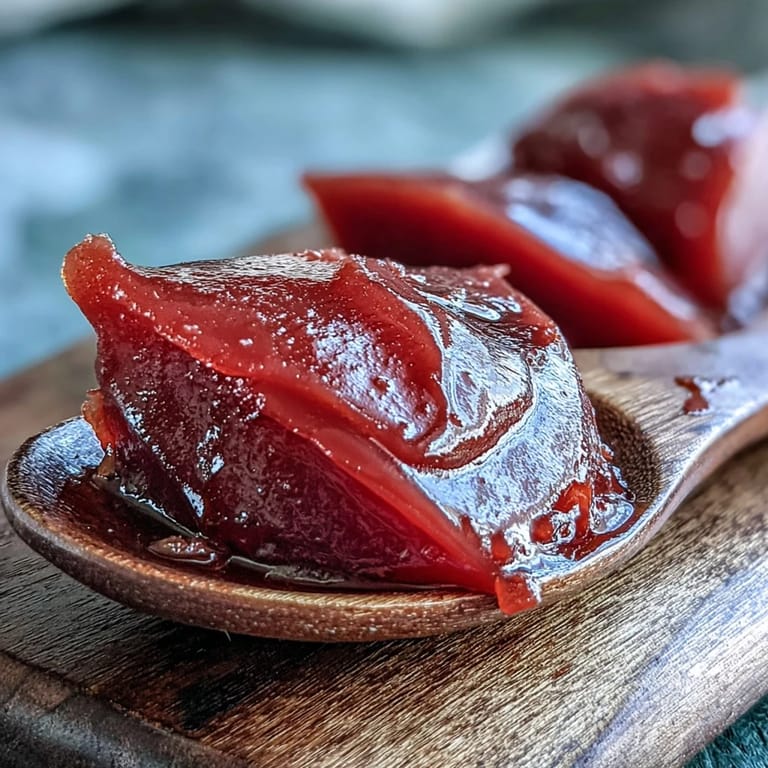
- Return the puree to the pot with sugar and lemon juice, then turn the heat to low and stir almost constantly for 40 to 50 minutes. This is the meditative part—the mixture will gradually thicken, darken to a deeper amber, and start pulling away from the sides of the pan when you run your spoon through it.
- Set and Cool:
- Once the paste is thick enough to hold its shape on a spoon and looks glossy like jam, pour it into a parchment-lined loaf pan and smooth the top gently. Let it sit at room temperature for 2 to 3 hours until it's completely firm, then run a knife around the edges and turn it out onto a cutting board to slice.
 Save
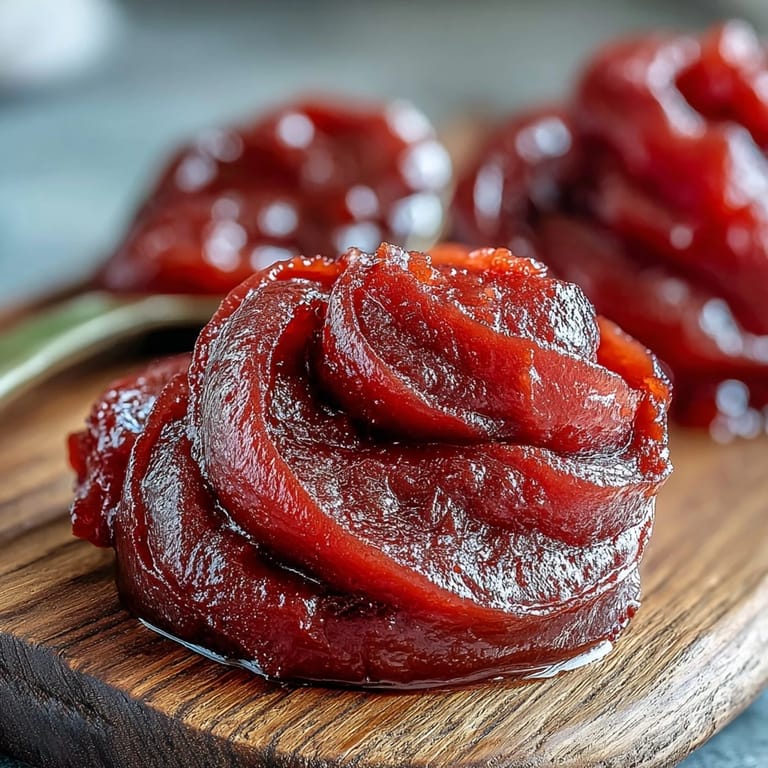
Save There's something deeply satisfying about filling a beautiful glass jar with something you made yourself, knowing it'll last for months in the fridge and improve every cheese board, pastry, or quiet snack moment it graces. It feels like capturing the essence of late summer and keeping it around for whenever you need a little reminder.
Storage and Keeping
Once your paste is completely cooled and sliced, it keeps beautifully in an airtight container in the refrigerator for up to three months, though I rarely have any left that long. The texture stays perfect, and the flavor actually deepens and mellows a bit as it sits, which means your later slices sometimes taste even better than the first ones.
Serving Suggestions
I've learned that guava paste is almost too versatile—it works equally well as a thin layer in pastries, a filling for cookies, a topping for plain vanilla ice cream, or simply sliced and served alongside a good Manchego cheese and some crackers for an effortless, show-stopping appetizer. Even just a small spoonful stirred into plain yogurt in the morning transforms breakfast into something special.
Making It Your Own
Once you've made it once, you'll start noticing variations that feel natural—some people add a whisper of cinnamon or vanilla, others infuse it with a vanilla bean, and I've had it made with a touch of rum. The base recipe is so forgiving that you can really play with it once you understand how it works.
- Taste your guavas before you start cooking and adjust the sugar amount slightly if they're particularly sweet or tart, since every batch is a little different depending on ripeness and variety.
- If your paste seems too thick after cooling, you can always thin it slightly with a tiny bit of lemon juice or water when you're ready to serve it.
- Save any scraps or bits that don't make it into the final loaf—they're perfect swirled into cocktails or stirred into sparkling water for a tropical drink.
 Save
Save Making guava paste is one of those small kitchen skills that feels disproportionately rewarding—a little patience and constant stirring transform simple fruit and sugar into something that tastes and feels like a delicacy. Once you've tasted your own, it's hard to go back to anything else.
Recipe FAQs
- → What is guava paste used for?
Guava paste is incredibly versatile in sweet and savory applications. Spread it on crackers with cream cheese, use as a filling for pastries and empanadas, pair with Manchego or other firm cheeses on charcuterie boards, or melt it into glazes for roasted meats. Its sweet-tart profile complements both rich cheeses and buttery pastry doughs.
- → How do I know when the paste is ready?
The paste is ready when it becomes thick, glossy, and holds its shape on a spoon. You'll notice it pulling away from the sides of the pan as you stir. Another test: drag your spoon through the mixture—the trail should remain visible rather than filling back in immediately. The paste should have a jam-like consistency that firms further as it cools.
- → Can I use frozen guavas?
Frozen guavas work perfectly for making paste. Thaw them completely before starting, and drain any excess liquid that accumulates during thawing. You may need to adjust the cooking time slightly since frozen fruit can be softer after thawing, but the final result will be just as delicious.
- → Why add lemon juice to guava paste?
Lemon juice serves two important purposes: it balances the intense sweetness of the sugar and guava with bright acidity, and it helps the paste set properly through natural pectin activation. The acid also enhances the guava's natural floral notes and helps preserve the vibrant pink color of the finished paste.
- → How long does homemade guava paste last?
Stored properly in an airtight container in the refrigerator, homemade guava paste keeps for up to 3 months. For longer storage, cut it into portions and freeze for up to 6 months. Wrap pieces tightly in plastic wrap and place in a freezer bag. Thaw in the refrigerator before using.
- → Should I remove the seeds before or after cooking?
It's easier to remove seeds after the initial cooking step when the fruit has softened. Cooking the guavas whole with water first softens the flesh, making it simple to pass through a food mill or fine-mesh strainer. This method extracts maximum pulp while efficiently separating seeds and skins.