 Save
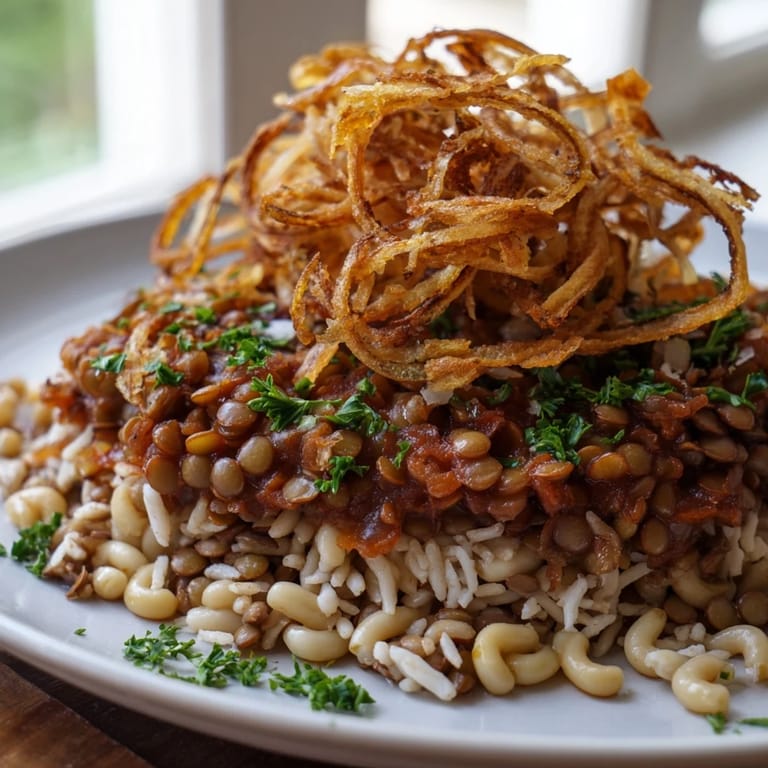
Save The first time I tasted koshari was at a bustling Cairo street cart at dusk, watching the vendor layer rice, lentils, and pasta with the precision of someone who'd done it ten thousand times. The crispy onions scattered on top caught the last rays of sunlight, golden and impossibly crunchy, and when he poured that vibrant tomato sauce over everything, I knew I'd found something special. Years later, I still chase that exact feeling every time I make it at home, and somehow, with patience and the right spices, I get pretty close.
I remember feeding this to a group of friends who were skeptical about eating the same bowl of rice and lentils, until they took their first spoonful and went completely quiet. That silence meant everything—the kind of moment when food stops being just food and becomes a conversation starter, a memory, something you actually talk about the next week.
Ingredients
- Medium-grain rice: The slightly shorter grain holds up beautifully when layered and doesn't turn mushy, which is crucial for koshari's texture.
- Brown or green lentils: These keep their shape better than red lentils and add an earthy depth that's essential to the dish's identity.
- Elbow macaroni or ditalini: The small tubes catch sauce perfectly and feel satisfying in every bite.
- Crushed tomatoes: Start with good quality; the sauce is your star player, and it shows.
- Cumin and coriander: These warm spices are what make this taste authentically Egyptian rather than just pasta with tomato sauce.
- Crispy onions: They're the textural magic—golden, crunchy, and worth every minute of frying.
- Garlic vinegar: The optional drizzle at the end brightens everything and adds a tangy punch that ties the layers together.
Tired of Takeout? 🥡
Get 10 meals you can make faster than delivery arrives. Seriously.
One email. No spam. Unsubscribe anytime.
Instructions
- Simmer the lentils gently:
- Cover them with water and let them bubble away for 20–25 minutes until they're tender but still hold their shape. You want them cooked through, not falling apart into mush.
- Cook the rice until fluffy:
- Use the standard two-to-one water ratio, cover the pot, and let it steam undisturbed once it reaches a simmer. Fluff it with a fork when it's done, breaking up any clumps.
- Boil the pasta to al dente:
- Don't overcook it here—it'll soften further when it sits with the sauce, so aim for just barely tender with a slight firmness in the center.
- Build the tomato sauce with care:
- Sauté your onions until they're soft and translucent, then add garlic for just one minute so it doesn't burn. The cumin and coriander bloom beautifully once you add the tomatoes, filling your kitchen with that warm, spiced aroma that says you're cooking something real.
- Fry onions until deeply golden:
- Work in batches so they have room to crisp up rather than steam. They'll continue to darken slightly as they cool, so pull them off when they're still a shade lighter than you think they should be.
- Optional garlic vinegar:
- Mix minced garlic with vinegar and let it sit for 10 minutes so the flavors marry together, creating a sharp, aromatic condiment.
- Layer and serve:
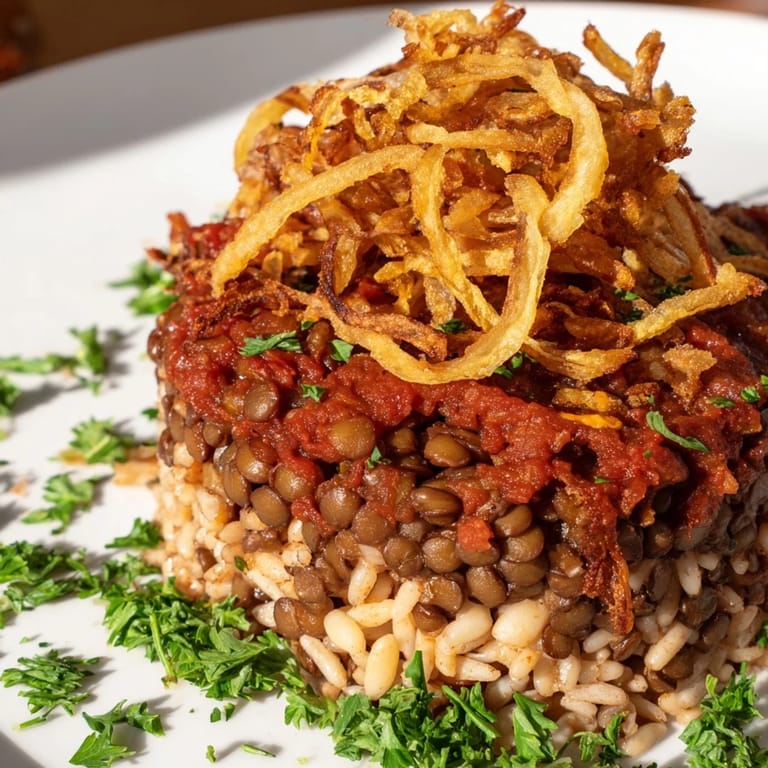
- Start with rice as your base, then lentils, then pasta, then that glorious tomato sauce cascading over the top. The crispy onions go on at the very end so they stay crunchy, and a drizzle of garlic vinegar just before eating brings the whole thing into focus.
 Save
Save There's something almost meditative about standing over a skillet watching onions transform from pale and limp to bronze and crackling. I've burned them before, distracted by something else, and the dish was never the same—just sad and bitter.
The Soul of the Spice Mix
Cumin and coriander are what separate koshari from every other tomato-sauced rice bowl you've ever had. They're warm and slightly floral, giving the sauce an almost savory sweetness that feels both familiar and exotic. When you first smell them hitting hot oil, you'll understand why this dish has survived decades of Egyptian street food tradition.
Texture Is Everything
This dish lives and dies on contrast—the creamy rice against crunchy onions, soft lentils against al dente pasta, all of it brought together by a thick, coated sauce. Every layer adds something different to your spoon, which is why eating it feels like an experience rather than just eating. The moment those crispy onions lose their snap, the magic starts to fade, so serve it immediately and pass extra onions on the side for those who want to add more as they eat.
Customizing Your Bowl
The beauty of koshari is how adaptable it is to what you have on hand and what your taste buds crave that day. Some nights I make it spicy with extra chili flakes, other times I skip them entirely because I want to taste the spices more clearly. The garlic vinegar is optional but honestly transformative—it cuts through the richness and wakes everything up.
- Swap the macaroni for orzo or vermicelli if you want a different pasta experience.
- Use vegetable broth instead of water if you want deeper flavor in the grains.
- Make extra crispy onions and serve them on the side so people can add as much crunch as they want.
 Save
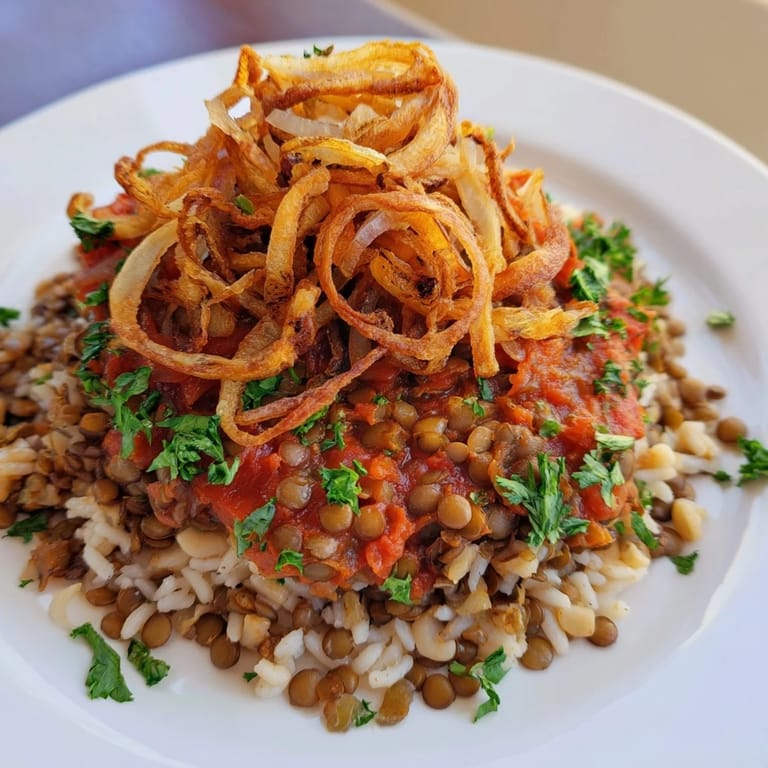
Save Koshari taught me that sometimes the most beloved dishes aren't the most complicated—they're just honest, flavorful, and made with care. Make this when you want to feel a little bit like you're standing at that Cairo street cart, and share it with people you actually want to feed.
Recipe FAQs
- → What type of lentils work best for this dish?
Brown or green lentils are ideal as they hold their shape well during simmering and add a nutty flavor.
- → Can I substitute the pasta used here?
Yes, small pasta shapes such as orzo or ditalini work well, maintaining the texture balance.
- → How do I get crispy onions without burning them?
Slice onions thinly, coat lightly with flour and salt, then fry in hot oil in batches. Remove once golden brown to avoid burning.
- → Is garlic vinegar essential for the dish?
It’s optional but adds a tangy, aromatic layer that complements the rich tomato sauce and crunchy onions.
- → Can I prepare this dish ahead of time?
Yes, components can be cooked in advance and layered just before serving to preserve freshness and texture.
- → How spicy is the tomato sauce?
The sauce can be adjusted by adding or omitting chili flakes according to your heat preference.