 Save
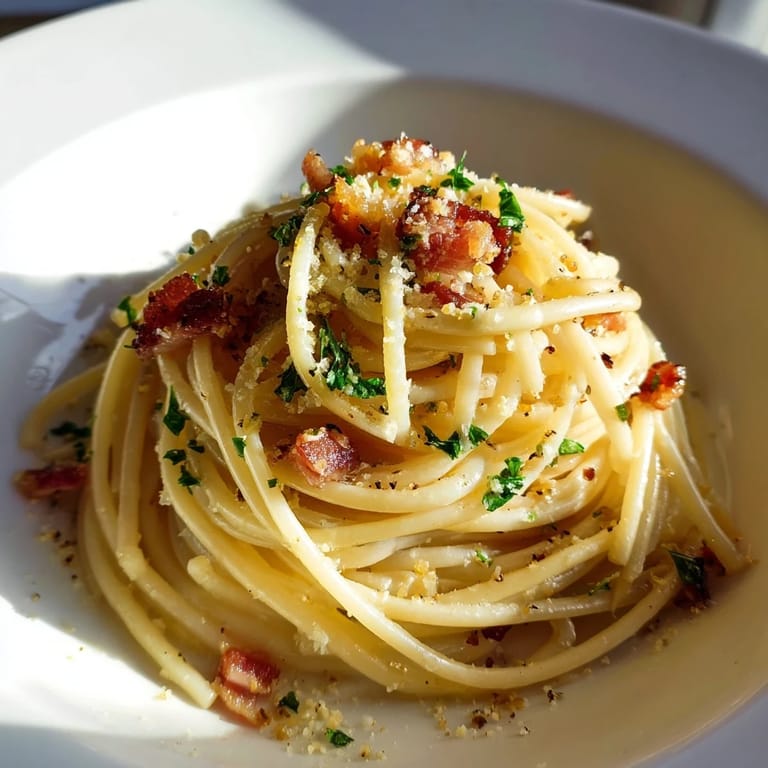
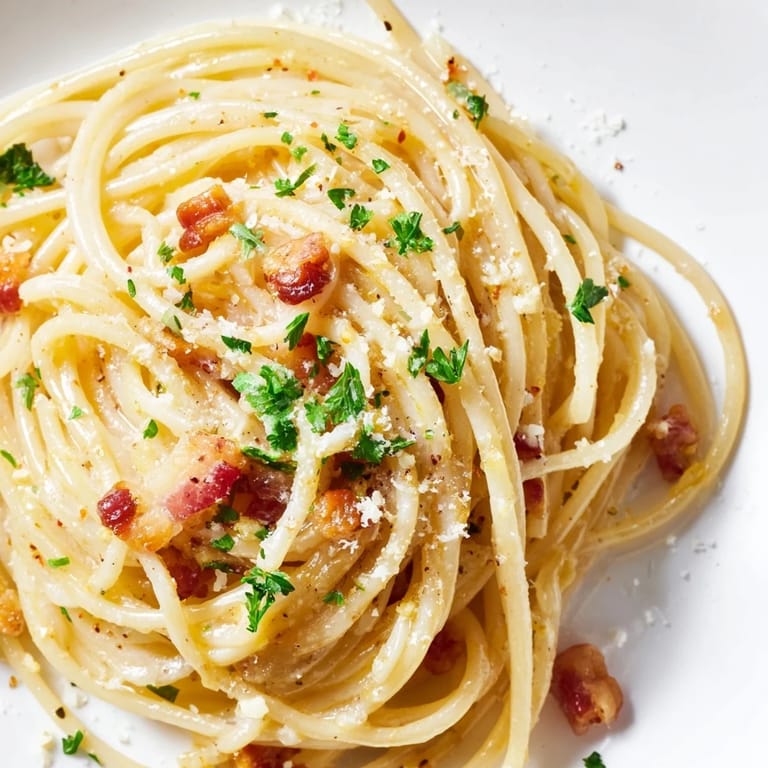
Save My kitchen smelled like a smoky dream the afternoon I discovered that pasta water could do the impossible—transform bacon fat and garlic into something silky without a drop of cream. It was one of those happy accidents, really; I'd forgotten the heavy cream at the grocery store and refused to make a second trip, so I grabbed the starchy water from the pot instead. Ten minutes later, I was twirling linguine on my fork, amazed at how the sauce clung to every strand with almost effortless elegance.
I made this for my sister on a random Thursday evening when she dropped by unannounced, arms full of wine and stories. She watched me work with that patient curiosity of someone who actually wants to learn how things are made, and by the time I plated it, she was already leaning over the counter with her fork ready. She took one bite, closed her eyes, and said simply, 'This is dangerous'—because once you know how easy it is, you'll make it constantly.
Ingredients
- Linguine, 400 g: The long, flat noodles catch the sauce beautifully, but spaghetti works just as well if that's what you have on hand.
- Bacon, 200 g diced: Use good quality bacon with decent thickness; thin bacon gets lost in the heat, and you want those crispy, substantial pieces.
- Olive oil, 2 tbsp: This helps render the bacon gently and prevents sticking—don't skip it even though the bacon releases its own fat.
- Garlic, 3 cloves finely chopped: Mince it small so it distributes evenly and won't overpower; burnt garlic tastes bitter and ruins everything, so watch it carefully.
- Black pepper, 1/2 tsp freshly ground: Fresh grinding makes a genuine difference in flavor; pre-ground pepper tastes dusty by comparison.
- Red pepper flakes, 1/4 tsp optional: A whisper of heat that won't dominate unless you want it to—start small and taste as you go.
- Reserved pasta water, 1/2 cup (120 ml): This starchy liquid is the secret ingredient that creates the sauce, so don't drain it down the sink.
- Parmesan cheese, 40 g grated: Freshly grated melts into the sauce smoothly; pre-grated cheese has anti-caking agents that make it grainy.
- Fresh parsley, 2 tbsp chopped: A final brightness that lifts the dish above being just bacon and cheese, adding color and freshness.
- Lemon zest, from 1/2 lemon optional: The citrus cuts through richness and adds sophistication; a microplane grater gets the zest without the bitter white pith.
Tired of Takeout? 🥡
Get 10 meals you can make faster than delivery arrives. Seriously.
One email. No spam. Unsubscribe anytime.
Instructions
- Boil the pasta:
- Fill a large pot with water, salt it generously (it should taste like the sea), and bring it to a rolling boil before adding linguine. Cook until just tender with a slight resistance when you bite it, checking the package time but always tasting a strand yourself—this is where you decide what 'al dente' means to you.
- Render the bacon:
- While pasta bubbles away, heat olive oil in your skillet and add the bacon pieces, stirring occasionally as they turn golden and crispy. You'll know it's ready when it stops sizzling quite so aggressively and smells absolutely irresistible, usually around 6 to 8 minutes depending on your heat.
- Toast the garlic:
- Lower the heat to prevent any burning, add your chopped garlic and pepper directly into the hot bacon fat, and let it become fragrant for just a minute. This is the most delicate step—your nose will tell you when it's perfect, a warm garlicky smell that's inviting rather than acrid.
- Unite everything:
- Drain the pasta (saving that water!) and pour it directly into the skillet with the bacon, then add a quarter cup of the reserved pasta water, tossing constantly as the starch thickens into a glossy coating. Keep adding pasta water a splash at a time until you have a sauce that clings to the noodles without pooling at the bottom—this takes observation and patience.
- Finish with cheese and herbs:
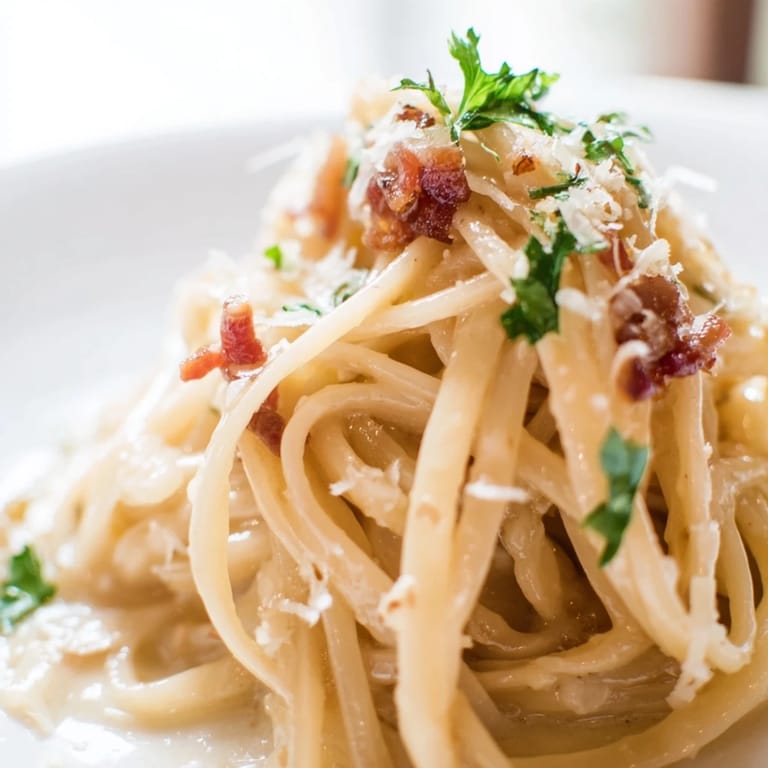
- Pull the skillet off heat, sprinkle in the grated Parmesan, and toss gently until the cheese melts into silky threads throughout the pasta. Stir in the parsley and lemon zest if using, adjusting seasoning with salt and pepper before it hits the plate.
 Save
Save There was something profound about serving this dish to people I cared about and watching their surprised delight when I told them there was no cream. It became a small act of kindness—a reminder that the best meals don't require complicated technique or a lengthy ingredient list, just attention and good instincts. That's when I realized this recipe wasn't really about pasta; it was about the confidence that comes from understanding how simple ingredients behave.
The Starch Sauce Secret
What makes this dish work is understanding that starch molecules in pasta water act like a microscopic thickener and emulsifier, binding the bacon fat, cheese, and pasta into something luxuriously smooth without any cream needed. Once you realize this, you see it everywhere in Italian cooking—risotto uses the same principle, and so do many traditional pasta sauces that predate modern kitchens. It's actually the more authentic approach, rooted in resourcefulness and real knowledge rather than relying on heavy ingredients to do the heavy lifting.
Timing and Temperature Matter
The entire dish hinges on managing heat correctly, which sounds intimidating until you do it once and realize it's just about attention. Medium heat for the bacon ensures it crisps gradually and evenly; low heat for the garlic prevents burning; and removing from heat before adding Parmesan keeps the sauce silky. This isn't about perfection—it's about listening to your food and knowing when things sound and smell right.
Variations and Simple Additions
While this recipe is perfect as written, the beauty of a simple base is how easily it welcomes additions based on what's in your kitchen or what you're craving. Frozen peas stirred in at the end add sweetness and color; sautéed mushrooms become earthy and luxurious; a handful of spinach wilts into green flecks throughout. The foundation stays strong no matter what you add, as long as you respect the core technique and don't overcomplicate the sauce itself.
- Turkey bacon works if you prefer leaner meat, though it won't render quite as much flavorful fat—compensate with an extra tablespoon of olive oil.
- Lemon zest is optional but genuinely transformative, cutting through richness and making the dish feel brighter and less heavy.
- Always taste before serving and adjust salt and pepper; some Parmesan brands are much saltier than others, so go easy at first.
 Save
Save This pasta has become my go-to when I want something that feels like home cooking without the fuss, proof that the simplest dishes often carry the most joy. Make it once and it becomes yours—that's the real magic of a good recipe.
Recipe FAQs
- → Can I use a different pasta shape?
Yes, any long pasta like fettuccine, spaghetti, or pappardelle works well. The key is using starchy pasta water to create the sauce, so fresh pasta water is essential regardless of shape.
- → What makes the sauce creamy without cream?
The starch in reserved pasta water emulsifies with olive oil and Parmesan to create a silky, creamy texture. This traditional Italian technique is called 'mantecatura' and requires vigorous tossing off the heat.
- → How do I prevent the garlic from burning?
Reduce heat to low before adding garlic and sauté for only one minute. Keep a close eye, as garlic burns quickly and becomes bitter. Add it when the bacon fat is hot but not smoking.
- → Can I make this vegetarian?
Replace bacon with sautéed mushrooms, walnuts, or sun-dried tomatoes for umami depth. You'll lose the smoky flavor but can add smoked paprika or nutritional yeast for complexity.
- → How much pasta water should I reserve?
Reserve at least 1/2 cup before draining. The pasta water's starch is crucial for the sauce. You may not use it all, but having extra prevents the dish from becoming dry.
- → What wine pairs well with this dish?
Crisp white wines like Pinot Grigio, Vermentino, or Sauvignon Blanc complement the richness of bacon and Parmesan while cutting through the fat with acidity.