 Save
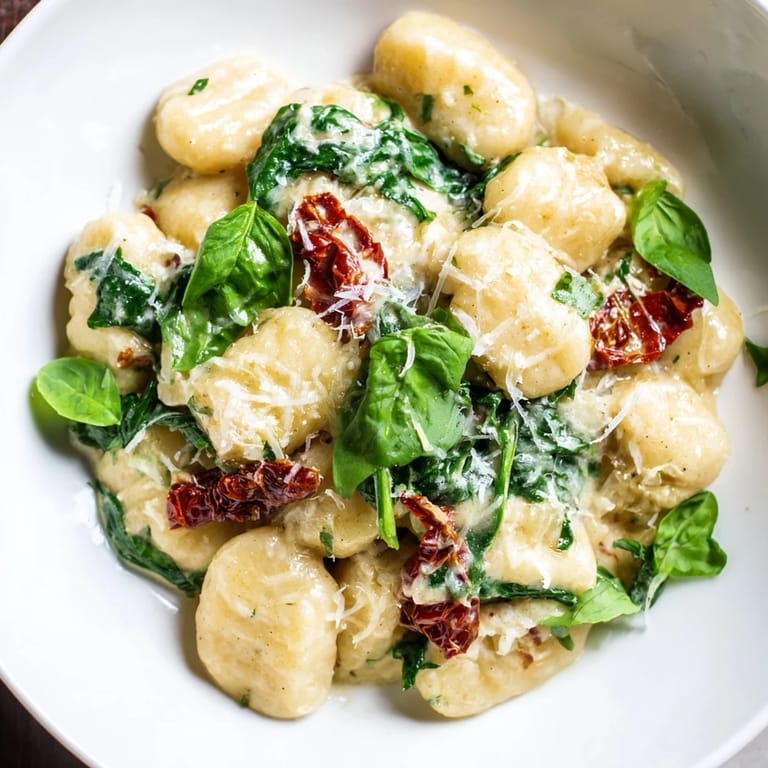
Save There's something about the smell of garlic hitting hot olive oil that immediately transports me to a tiny trattoria near the Arno River, where I watched a chef toss gnocchi with the kind of casual confidence that only comes from making the same dish a thousand times. I came home that evening and tried to recreate it, armed with store-bought gnocchi and pure optimism, and somehow ended up with something even better—creamy, tangy with sun-dried tomatoes, and finished with a whisper of fresh basil. This Tuscan-style skillet has become my go-to when I need comfort food that doesn't demand hours in the kitchen, yet still feels like I've taken you somewhere special.
I made this for my sister one rainy Tuesday when she'd had a rough day at work, and I watched her face change after the first bite—that subtle softening that happens when food does more than fill your stomach. She looked up from her bowl and said it tasted like Italy, which made me laugh because I'd never been further than our kitchen, but somehow that's what mattered less than the fact that she came back for seconds and stayed for tea.
Ingredients
- Potato gnocchi: Use store-bought if you're short on time; they cook in minutes and give you that satisfying cloudlike texture without the fuss of making them from scratch.
- Olive oil: Good quality here makes a quiet difference in the depth of flavor, especially since it's doing the heavy lifting in the first few minutes.
- Yellow onion: Finely chopped so it melts into the sauce and sweetens it ever so slightly, acting as the foundation for everything that comes next.
- Garlic cloves: Minced small and cooked just until fragrant—this is where you need to pay attention, because burnt garlic will haunt your dish in the worst way.
- Sun-dried tomatoes: The secret ingredient that adds concentrated sweetness and a subtle tang; make sure to drain them well or your sauce becomes too thin.
- Baby spinach: Wilts down to almost nothing, which means you can use more than you think and still maintain that silky sauce texture.
- Heavy cream: The soul of this dish; don't skimp or substitute unless you're comfortable with a thinner, less luxurious result.
- Vegetable broth: Keeps the sauce from becoming too thick and heavy, and adds a gentle savory note that balances the richness.
- Parmesan cheese: Freshly grated, not the pre-shredded kind, which contains anti-caking agents that cloud your sauce.
- Italian herb mix: Dried oregano, basil, and thyme in harmony; it's humble but essential to the whole Tuscan illusion.
- Red pepper flakes: Optional, but they add a whisper of heat that makes the cream taste even creamier by contrast.
- Fresh basil: For finishing; it brings brightness and a hint of anise that lifts the whole dish at the last second.
Tired of Takeout? 🥡
Get 10 meals you can make faster than delivery arrives. Seriously.
One email. No spam. Unsubscribe anytime.
Instructions
- Boil the gnocchi:
- Bring a large pot of salted water to a rolling boil—the salt matters, because the gnocchi themselves need to taste good from the start. Drop them in and wait; they'll bob to the surface when they're done, which is the magic moment to fish them out with a slotted spoon.
- Build the flavor base:
- Warm olive oil in a large skillet over medium heat and watch it shimmer slightly. Add your finely chopped onion and let it turn translucent and soft, then add the minced garlic and breathe in that moment—it's the smell of something good about to happen.
- Introduce the sun-dried tomatoes:
- Toss them in and let them warm through for a couple of minutes, releasing their concentrated sweetness into the oil. Then add the spinach and watch it transform from a crumpled pile into silky strands as it wilts.
- Create the cream sauce:
- Pour in the heavy cream and vegetable broth slowly, stirring as you go to avoid lumps. Sprinkle in the grated Parmesan, Italian herbs, and red pepper flakes if you're using them, then let it simmer gently until it thickens just slightly—you're not looking for coating-the-back-of-a-spoon thickness, but something that will cling to the gnocchi.
- Bring it all together:
- Add the cooked gnocchi to the skillet and toss everything gently so each piece gets coated. Let it warm through for a few minutes, tasting and adjusting the salt and pepper until it feels right.
- Serve with intention:
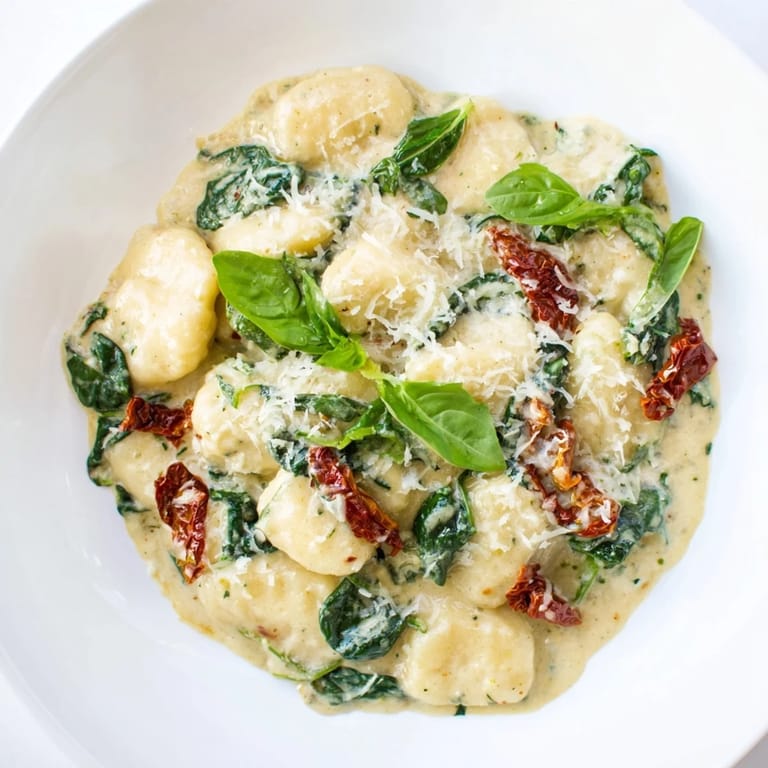
- Spoon into bowls while the sauce is still warm and creamy, and finish with a scatter of fresh basil leaves and a small handful of grated Parmesan on top. The basil will release its oils into the heat and perfume each bite.
 Save
Save I learned years ago that food is just the beginning of what happens at the table, and this dish proved it again when my neighbor came over expecting soup and left with the recipe written on the back of an old receipt. That small moment of connection—of someone tasting something you made and wanting to recreate it in their own kitchen—that's when a recipe stops being instructions and becomes a small bridge between two people.
Why This Dish Works in Every Season
In summer, serve it cool with fresh basil and a squeeze of lemon to cut the richness. In autumn, add a handful of toasted pine nuts for texture. Winter calls for the full creamy embrace, maybe with a splash of white wine stirred into the sauce. Spring asks for lighter cream substitution and extra fresh herbs if spinach still feels too heavy. The bones of the dish stay the same, but it bends gracefully to whatever your season demands.
Variations and Permission to Adapt
The most important thing I've learned about cooking is that recipes are suggestions, not laws, and this one especially invites you to play. Brown some Italian sausage in the pan before adding the onion if you want the vegetarian description to become optional. Swap the spinach for arugula, kale, or even roasted broccoli if that's what's in your fridge. Use half-and-half instead of heavy cream and accept that it will taste lighter but still good. The architecture stays the same; the details are yours to decide.
Pairing and Serving Suggestions
This dish is best with a crisp white wine like Pinot Grigio, which cuts through the cream and keeps each bite from feeling too heavy. A simple green salad on the side gives you something fresh to offset the richness, and crusty bread for soaking up any sauce that lingers at the bottom of the bowl is not optional—it's required. Serve it immediately after tossing, because gnocchi are happiest when warm and the sauce is still at its most luxurious.
- A squeeze of fresh lemon juice over the top at the very last moment brightens everything without overwhelming the delicate Tuscan flavors.
- If you're making this for guests, prep all your ingredients ahead of time so the actual cooking becomes a calm five-minute process instead of a scramble.
- Leftovers will keep for two days in the refrigerator, though the texture changes slightly—reheat gently in a warm skillet with a splash of broth to restore some of the sauce's flow.
 Save
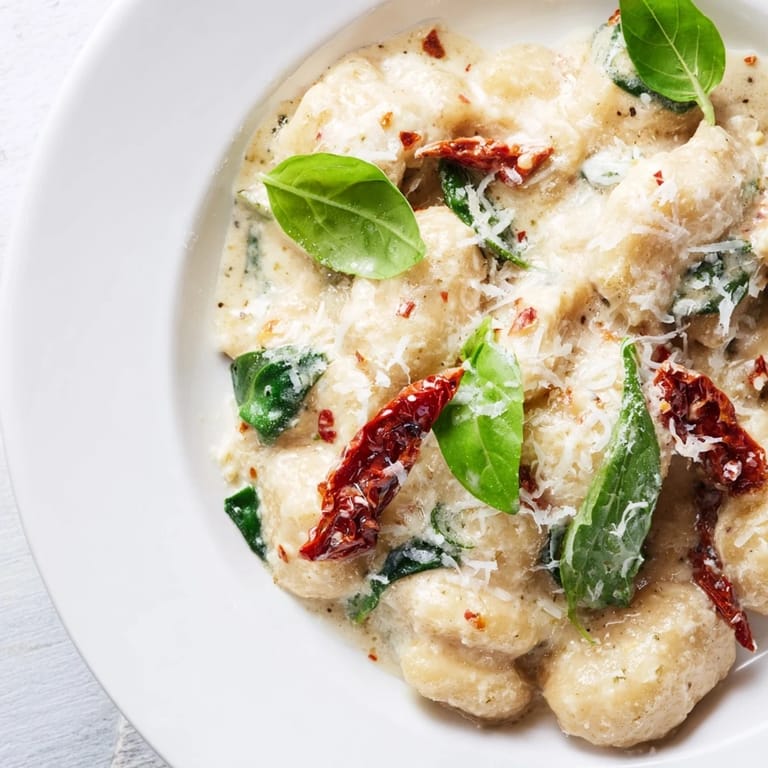
Save This recipe found its way into my regular rotation because it proves that comfort doesn't need to be complicated, and elegance doesn't require hours of work. When you sit down with a bowl of this, you're tasting something that tastes like care even when it took you barely half an hour to make.
Recipe FAQs
- → What type of gnocchi works best?
Potato gnocchi, either store-bought or homemade, cooks quickly and yields a pillowy texture ideal for coating in creamy sauce.
- → Can I substitute the spinach?
Kale can be used in place of spinach for a slightly heartier bite and added nutrients without altering the flavor balance.
- → How do I make the cream sauce thicker?
Simmer gently allowing the cream and Parmesan to reduce and thicken. Adding less broth or more cheese will also enrich the sauce consistency.
- → Is it possible to add protein to this dish?
Yes, cooked diced chicken or Italian sausage can be incorporated during the vegetable sauté step for added heartiness.
- → What wine pairs well with this dish?
A crisp Pinot Grigio or a light-bodied red complements the creamy sauce and herbaceous notes perfectly.