 Save
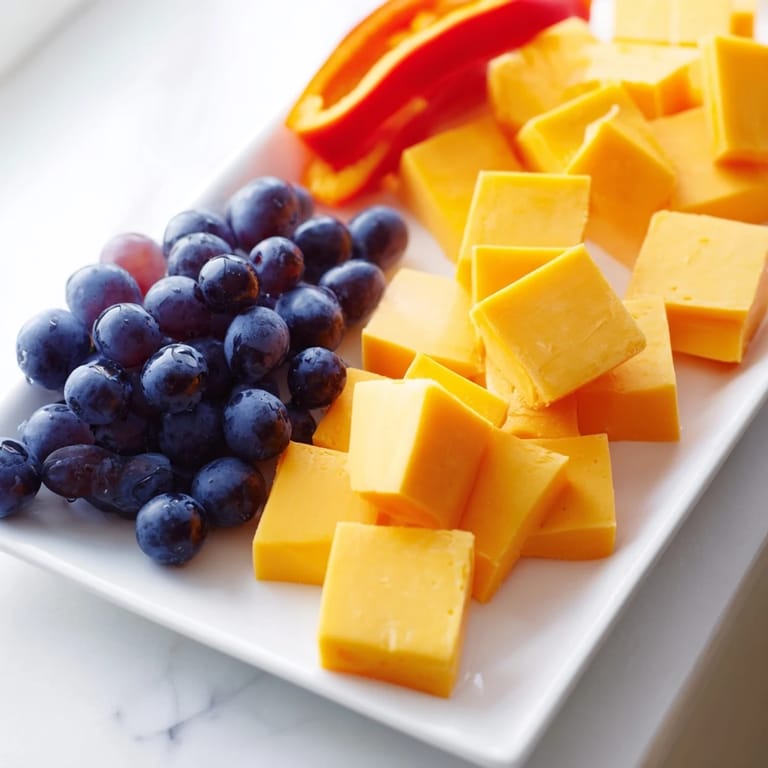
Save I stumbled onto this dish at a gallery opening in Berlin, watching a server arrange cheese and peppers on a platter while chatting with guests. What struck me wasn't just how effortless it looked, but how the colors seemed to *vibrate* against each other—red, gold, deep purple. I came home that evening and immediately started playing with blocks of cheddar and bell pepper in my kitchen, trying to capture that same visual rhythm. The first attempt looked chaotic, but then I remembered a Mondrian painting I'd seen that morning and suddenly the arrangement clicked into place. Now whenever I need something that feels both impressive and ridiculously simple, this is what I make.
A friend once brought her architect boyfriend to my place, and I set this out as an appetizer almost as a joke. He stood there for a solid minute, studying the pattern with actual concentration, then asked if I'd taken a design course. I hadn't—I'd just been rearranging the pieces until my eye felt satisfied. That moment taught me that sometimes the most thoughtful designs come from simply paying attention to what feels balanced.
Ingredients
- 1 large red bell pepper, cut into 1-inch square strips: The best peppers feel heavy for their size and have thick walls that don't fall apart when you cut them; look for ones with flat sides so your squares actually sit upright.
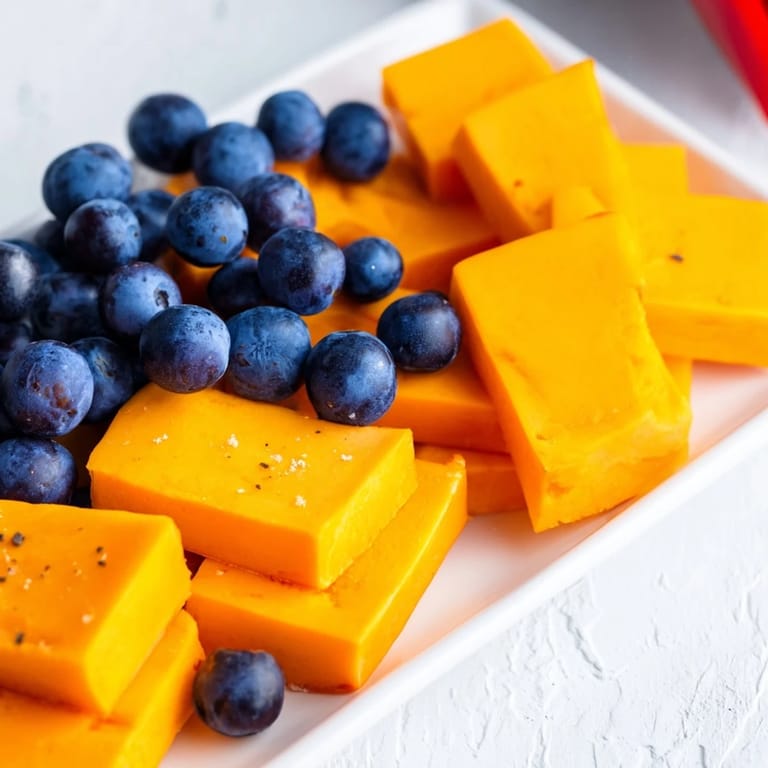
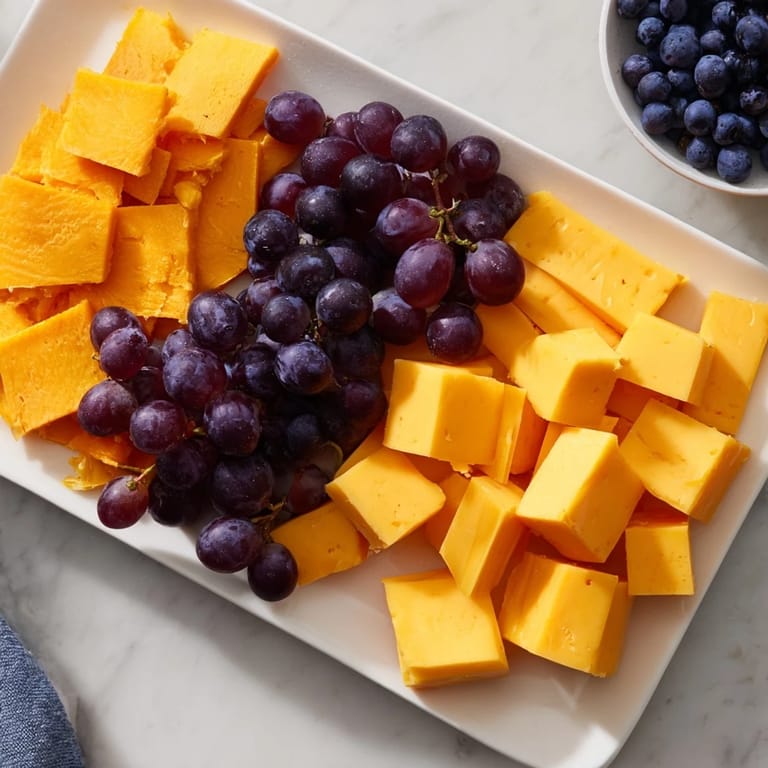
- 120 g yellow cheddar or Gouda, cut into 1-inch rectangular blocks: Room temperature cheese cuts cleaner than cold cheese, and the slight softness keeps the blocks from shattering or looking rough.
- 24 blue or black seedless grapes: These provide the cool accent and a soft sweetness that balances the sharp cheese and bright pepper.
- 1 tbsp extra-virgin olive oil (optional, for brushing): A light brush adds shine and keeps the peppers from drying out if you're serving over time.
- Sea salt and freshly ground black pepper, to taste: Just a whisper—you want to taste the ingredients, not dominate them.
Tired of Takeout? 🥡
Get 10 meals you can make faster than delivery arrives. Seriously.
One email. No spam. Unsubscribe anytime.
Instructions
- Prepare your canvas:
- Wash and dry the red bell pepper thoroughly, then cut it into strips and square them up into 1-inch pieces. Take your time here because uneven cuts throw off the whole visual rhythm.
- Cut the cheese into blocks:
- Slice your cheese into uniform 1-inch rectangular blocks, and let them sit at room temperature for a few minutes so they're easier to handle and arrange.
- Clean the grapes:
- Rinse and dry the grapes completely; any water sitting on them will blur your presentation and make the colors muddy.
- Build your pattern:
- On your rectangular serving platter, start arranging the three elements in a grid or alternating pattern, rotating the colors so each block catches the eye and leads to the next. Step back and adjust until it feels balanced, then trust your instincts.
- Season and finish:
- If you're using the olive oil, brush it lightly over the peppers, then give everything a gentle pinch of salt and pepper. Serve right away or chill for up to 30 minutes.
 Save
Save My five-year-old niece once pointed at this and called it "the fancy snack," then asked if she could help arrange the grapes. We spent an afternoon rearranging that platter, and she taught me that perfection is less important than the moment you share making it. Every time I make this now, I think of her hands moving the pieces around.
Why Presentation Becomes Flavor
There's something almost scientific about how color and arrangement influence taste. When food is arranged with intention, your brain registers it as more thoughtful, which somehow makes it taste better. I've served this exact combination in a bowl and on a patterned platter, and people respond differently to each—the platter version always gets more compliments, not because the cheese tastes different, but because the eye prepares the palate.
Playing with Variations
Once you understand the basic principle—solid colors, geometric arrangement, balance—you can play. I've made versions with orange peppers and white mozzarella, or purple grapes and smoked cheddar. The formula stays the same: three elements that create visual contrast, arranged with intention. The most interesting version I've made included thin slices of radish for a peppery edge and a pop of white that made the whole thing feel fresh.
Serving and Storage Wisdom
This is the rare appetizer that gets better the more casually you approach it. Set it on the counter and let people graze, or present it as a structured course—it works both ways. If you're making it ahead, keep the components separate and assemble no more than an hour before serving, since peppers will eventually weep and the whole thing loses its crispness. Pair it with something light and dry, like a Sauvignon Blanc or even a crisp sparkling water with fresh herbs if you're keeping it alcohol-free.
- Prep all components the day before and store them separately in the fridge, then arrange fresh on serving day.
- If your peppers feel soft, soak them in ice water for 10 minutes before cutting to regain their crunch.
- This recipe doubles or triples easily—just follow the visual balance rule and let the platter size guide how much you need.
 Save
Save This dish taught me that sometimes the most impressive food is the one that gets out of its own way and just *looks* beautiful. There's real kindness in that simplicity.
Recipe FAQs
- → How do I prepare the bell pepper for this dish?
Wash and dry the bell pepper, then cut it into 1-inch square strips for even presentation and easy picking.
- → What types of cheese work best for this appetizer?
Yellow cheddar or Gouda, cut into uniform rectangular blocks, provide great color and texture balance.
- → Can I substitute the grapes with other fruits?
Blue or black seedless grapes are ideal for color contrast, but small firm fruits like blueberries work well too.
- → Is there a way to add extra flavor to the vegetables?
Brushing the bell pepper blocks lightly with extra-virgin olive oil and seasoning with sea salt and black pepper enhances taste.
- → How should this appetizer be served for best results?
Arrange the ingredients in a geometric grid on a flat platter and serve immediately, or chill up to 30 minutes to refresh flavors.
- → Are there options for dietary preferences?
For vegan needs, substitute the cheese with plant-based alternatives while maintaining the colorful blocks layout.