 Save
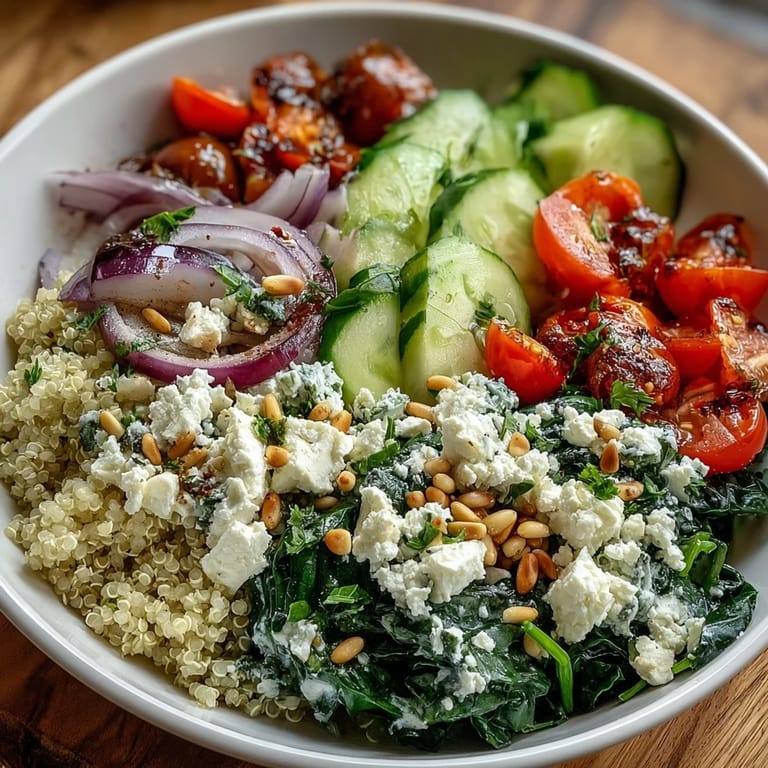
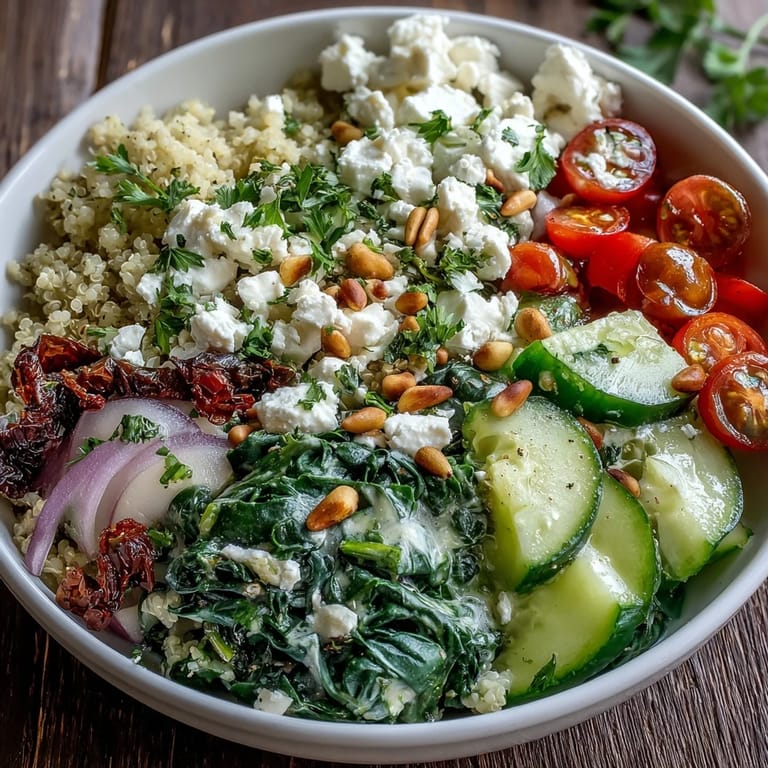
Save There's a Tuesday afternoon I keep coming back to, when my coworker brought this exact bowl to lunch and I spent more time staring at it than my own sandwich. The way the emerald spinach pooled against the golden grains, how the feta crumbles caught the light like little clouds—it looked too good to be something you could actually make at home in under an hour. Turns out, it was, and now it's become my go-to when I need to feel like I'm eating something that genuinely matters.
I made this for my sister when she was going through a phase of trying to eat better, and watching her go back for seconds without thinking about it told me everything I needed to know. She's not someone who gets excited about vegetables, but something about this combination just works—maybe it's the creaminess of the feta cutting through the earthiness, or the lemon dressing waking everything up. Now when she visits, it's what she asks me to make.
Ingredients
- Quinoa or brown rice: The foundation that keeps you full; quinoa cooks faster and has a slightly nutty bite, while brown rice is earthier and more forgiving if you're not watching the clock.
- Fresh spinach: Wilting it in olive oil for just a few minutes softens the rawness without turning it into mushy nothing—the smell alone is worth it.
- Cherry tomatoes: Halve them so they don't roll around like tiny escape artists, and their sweetness balances the salty feta beautifully.
- Cucumber and bell pepper: These stay crisp and fresh, adding texture and preventing the whole bowl from feeling heavy.
- Red onion: Thin slices cut the richness and add a gentle sharpness that makes you reach for another bite.
- Feta cheese: Crumble it by hand if you have time—it breaks apart more naturally and the pieces catch the dressing better than pre-crumbled.
- Extra-virgin olive oil: The good stuff matters here since it's doing most of the flavor work in the dressing.
- Fresh lemon juice: Never use bottled; a real lemon's brightness changes everything about how this tastes.
- Honey or maple syrup: Just enough to round out the acidity without making it sweet; this is the move nobody expects.
- Garlic: One clove minced into the dressing gives it depth without overwhelming the vegetables.
Tired of Takeout? 🥡
Get 10 meals you can make faster than delivery arrives. Seriously.
One email. No spam. Unsubscribe anytime.
Instructions
- Start the grains first:
- Bring your broth to a boil and stir in the grain—this is your anchor ingredient, so get it going before anything else. The kitchen will smell like something wholesome is happening, and you'll have 15 to 20 minutes to handle the rest without rushing.
- Wilt the spinach gently:
- Heat olive oil in a large skillet over medium heat, then add the spinach and let it soften for just 2 to 3 minutes, stirring occasionally so it wilts evenly. You want it tender but not collapsed, still holding onto some of its vibrant green.
- Build your dressing:
- Whisk together the oil, lemon juice, honey, garlic, salt, and pepper in a small bowl—taste it as you go and adjust the lemon or salt if it needs it. This is where you can be brave; if something tastes flat, it's almost always because it needs more salt or acid.
- Assemble with intention:
- Divide the cooked grains among your bowls, then layer the warm spinach on top while the grains are still slightly warm. Scatter the raw vegetables around, letting them create little pockets of color and texture.
- Add the feta and dress:
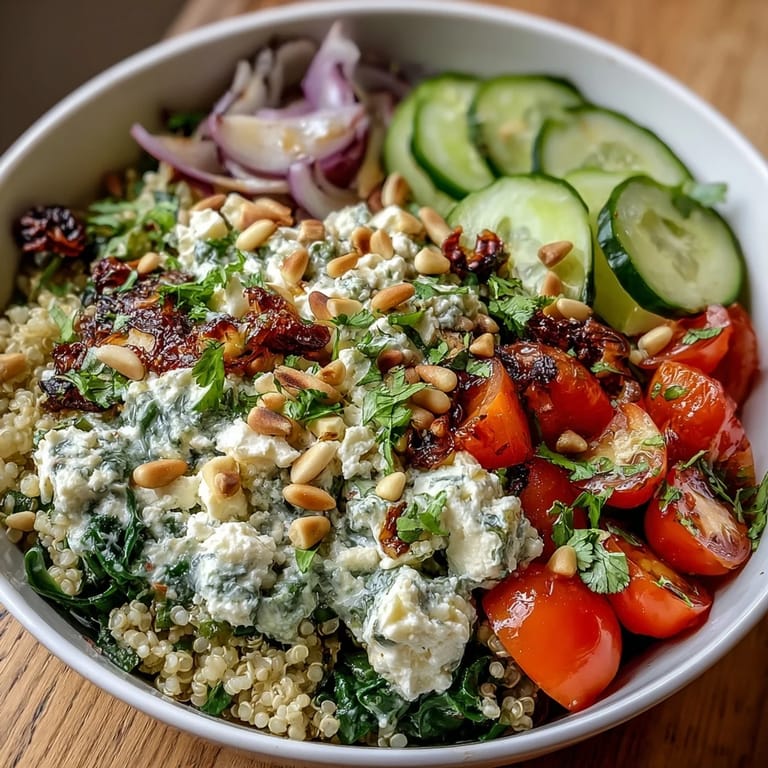
- Sprinkle the crumbled feta over everything while the bowl is still warm enough that it softens slightly at the edges. Drizzle the dressing evenly and finish with pine nuts or seeds if you have them, plus fresh parsley if you want to feel fancy.
 Save
Save There's something almost meditative about the ritual of chopping vegetables and layering them into a bowl that actually looks like you care. My kitchen got quieter that day, the knife hitting the board in a steady rhythm, and by the time everything was ready, I'd somehow left the stress of the morning somewhere between the cutting board and the skillet.
Why This Bowl Became My Favorite
It's vegetarian without feeling like a compromise, satisfying without making you sluggish, and different enough every time you make it that you don't get bored. I've made it with arugula instead of spinach when I was feeling adventurous, added chickpeas when I needed more protein, and even thrown in some leftover roasted chicken when I had it. The grain base is flexible, the vegetables adapt to what's in season, and the dressing is so simple you can practically make it blind by now.
Temperature and Timing
This bowl is good warm, at room temperature, and even cold the next day if you keep the dressing separate until you're ready to eat. That's the real gift of this recipe—it works for meal prep, for taking to work, for pulling together a last-minute lunch when you realize it's already noon. If you're making it ahead, just store the components separately and assemble when you're ready to eat so nothing gets soggy.
Making It Your Own
The beauty of grain bowls is that they're more of a format than a rigid recipe, which means you can swap almost anything and it'll work. Mediterranean flavors are forgiving that way—they're built on principles rather than exact measurements. Use this as your template and build from there, trusting your instincts about what sounds good on any given day.
- If you don't have pine nuts, toasted sunflower seeds or even crushed walnuts work just as well and add a satisfying crunch.
- Fresh herbs like dill or oregano would be equally at home here if you want to shift the flavor slightly.
- This pairs beautifully with a crisp white wine or just a cold glass of water with lemon if you want to keep it simple.
 Save
Save This bowl has become my answer to 'what's for lunch' more often than not, a reliable friend that shows up when I need it. There's comfort in that consistency, in knowing exactly how to build something that tastes good and makes me feel better for eating it.
Recipe FAQs
- → Can I make this grain bowl ahead of time?
Absolutely! The cooked grains and sautéed spinach keep well in the refrigerator for 3-4 days. Store components separately and assemble when ready to serve, adding fresh dressing just before eating.
- → What other grains work well in this bowl?
Farro, bulgur, couscous, or barley all make excellent substitutes for quinoa. Cooking times may vary slightly depending on your chosen grain.
- → How can I add more protein to this dish?
Try adding cooked chickpeas, lentils, or grilled chicken slices. A dollop of Greek yogurt or hemp seeds also boosts protein content while keeping it vegetarian.
- → Can I use different greens instead of spinach?
Yes! Arugula adds a peppery bite, kale provides hearty texture, or Swiss chard offers beautiful color. Adjust cooking time accordingly—kale and chard need a few extra minutes.
- → Is this bowl served warm or cold?
It's delicious either way! Serve it warm right after assembling, or let it cool to room temperature for a refreshing lunch option. The flavors actually meld beautifully after chilling.