 Save
Save There's something about the smell of roasted cauliflower that fills my kitchen with this unexpected warmth, like something simple just became elegant. I stumbled onto this bowl during a phase where I was tired of heavy meals but still wanted something that felt complete and satisfying. The first time I made it, I honestly just threw together what was in my fridge, and somehow it turned into this vibrant, colorful thing that tasted intentional. My roommate walked in mid-prep and asked what fancy restaurant I was recreating, which made me laugh because it's genuinely one of the easiest dishes I've ever put together.
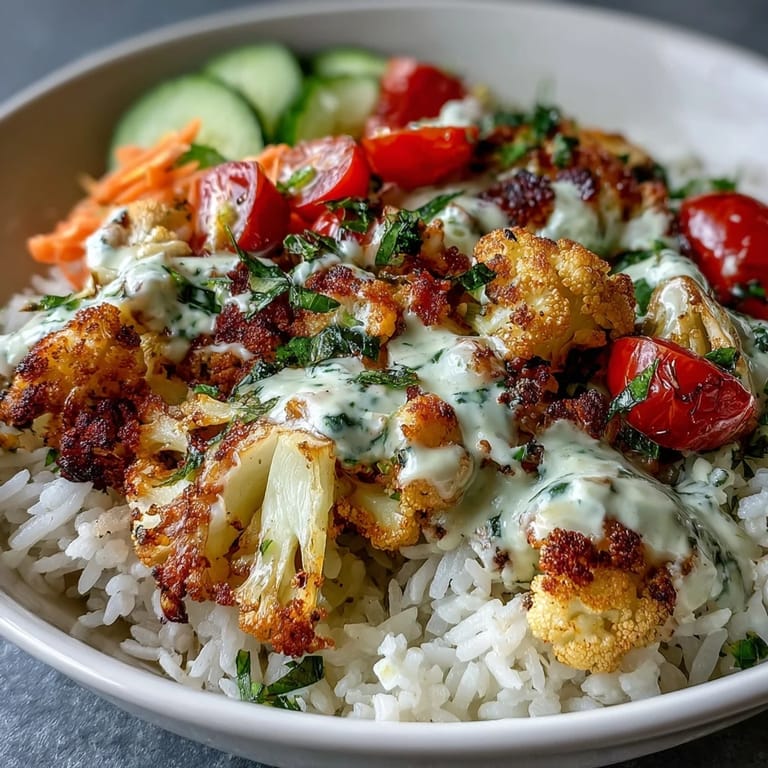
I made this for my friend who'd just started eating more plant-based, and watching her actually finish the bowl and ask for the recipe felt like a small victory. The cauliflower came out of the oven crackling and golden, almost caramelized at the edges, and I remember thinking how the kitchen smelled like an herb garden had decided to take up residence on my counter. That afternoon shifted something for both of us about what vegetarian meals could actually be.
Ingredients
- Cauliflower florets (1 large head): The real star here—those florets turn into something almost crispy on the outside when roasted hot enough, which I learned after undercooking it the first time and wondering why it tasted steamed.
- Olive oil (2 tbsp for cauliflower, 1 tbsp for sauce): Quality oil makes a noticeable difference in the final taste, especially in the sauce where it actually matters.
- Dried oregano and thyme (1 tsp each): These dried herbs bloom beautifully when they hit the hot oil, releasing flavors that fresh herbs sometimes miss in this type of cooking.
- Smoked paprika (1/2 tsp): This is the secret ingredient that keeps people asking what's different about your roasted cauliflower—don't skip it.
- Garlic powder (1/2 tsp for cauliflower, 1/2 tsp for sauce): Ground garlic distributes evenly across every floret, something whole garlic cloves can't always do.
- Basmati or jasmine rice (1 cup): These varieties stay fluffy and absorb the tahini sauce without becoming mushy, which matters more than you'd think.
- Tahini (1/4 cup): Buy the good stuff from somewhere you trust—cheap tahini can taste bitter and separated, which completely changes the sauce.
- Lemon juice (2 tbsp): Fresh lemon, not bottled, because the sauce relies on that brightness to come alive.
- Cherry tomatoes, cucumber, carrots, red onion, and greens: These are your texture and color anchors—vary them by season or mood, they're forgiving.
- Maple syrup or honey (1 tsp): Just enough sweetness to round out the tahini's earthiness without making it dessert.
Tired of Takeout? 🥡
Get 10 meals you can make faster than delivery arrives. Seriously.
One email. No spam. Unsubscribe anytime.
Instructions
- Set your oven to hot and get prepared:
- Preheat to 425°F and line your baking sheet with parchment paper so cleanup doesn't become the worst part of cooking. This temperature is important—anything cooler and your cauliflower steams instead of roasting.
- Coat the cauliflower in seasoned oil:
- In a large bowl, toss your florets with olive oil and all the spices until every piece is lightly coated and smells incredible. Take a moment to actually smell this—it's the moment you know you're doing it right.
- Let it roast and turn golden:
- Watch for the color change:
- Spread everything on your sheet and roast for about 25 to 30 minutes, stirring halfway through so it browns evenly on all sides. You'll know it's ready when the edges start to look almost crispy and the whole thing has taken on a caramelized golden color.
- Cook the rice while cauliflower roasts:
- Rinse your rice under cold water, then add it to a saucepan with water and salt, bring to a boil, cover, reduce heat, and let it simmer for 15 minutes until the water absorbs completely. The timing works perfectly with the cauliflower if you start both at roughly the same time.
- Make the tahini sauce creamy and bright:
- Whisk together tahini, lemon juice, water, olive oil, maple syrup, and garlic powder in a bowl until it's smooth and pourable, adding more water a tablespoon at a time if it's too thick. This sauce should taste balanced—if it's too earthy, add more lemon; if it's too thin, add a splash more tahini.
- Assemble your bowl with intention:
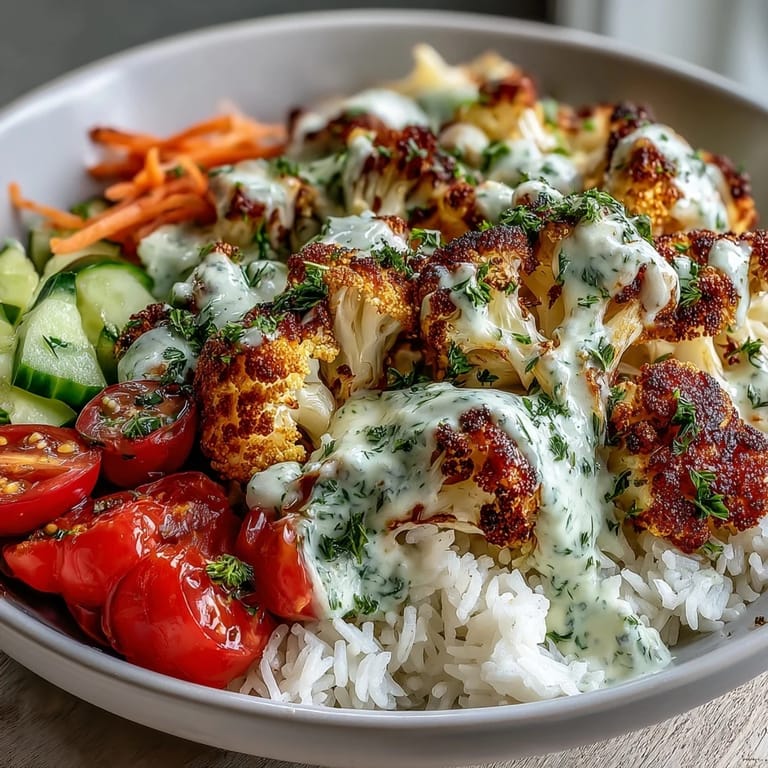
- Start with a bed of fluffy rice, layer on some greens, then arrange your roasted cauliflower, tomatoes, cucumber, carrots, and red onion in sections so it looks as good as it tastes. The colors matter here—they're half the experience.
- Finish with the tahini drizzle:
- Drizzle that creamy sauce over everything and serve right away while the cauliflower is still warm and the greens haven't started to wilt into the rice.
 Save
Save This bowl became my answer to so many days—the kind where you need something nourishing but don't want to think too hard, or when you're cooking for someone with different dietary needs than yours. There's something grounding about assembling it, like you're creating something whole from distinct, colorful pieces.
Why This Works as a Complete Meal
The combination of roasted cauliflower, rice, and fresh vegetables creates balance that actually satisfies—you get warm and cool, creamy and crunchy, all on one plate. The tahini sauce brings everything together with a richness that feels indulgent even though it's fundamentally simple. I've noticed that meals constructed this way, with distinct components that you can taste individually but that work together, tend to feel more memorable than when everything's mixed into one homogeneous texture.
Customizing It to Your Mood
One of the reasons this became a regular rotation item is how flexible it is without losing its identity. You can swap the rice for quinoa or farro if you want something earthier, add chickpeas or crispy tofu if you need more protein, or throw in feta if you're in a Mediterranean mood. I've made versions with different greens depending on the season, and it's never felt like I was straying too far from the original idea.
Storage and Make-Ahead Magic
This is one of those bowls that actually improves slightly if components are prepped a day ahead, though I'd assemble just before eating so the greens don't get sad. The tahini sauce lasts about three days in the fridge and honestly tastes fine cold if you're having it for lunch at your desk. I've also discovered that roasted cauliflower keeps for a few days and can be reheated gently, which means weekend prep becomes a genuinely helpful thing instead of a chore.
- Make the tahini sauce first since it actually gets better as flavors meld overnight.
- Roast your cauliflower and cook rice while you're cutting vegetables, and everything stays warm enough to not need reheating.
- Keep all the components separate until assembly so textures stay where they're supposed to be.
 Save
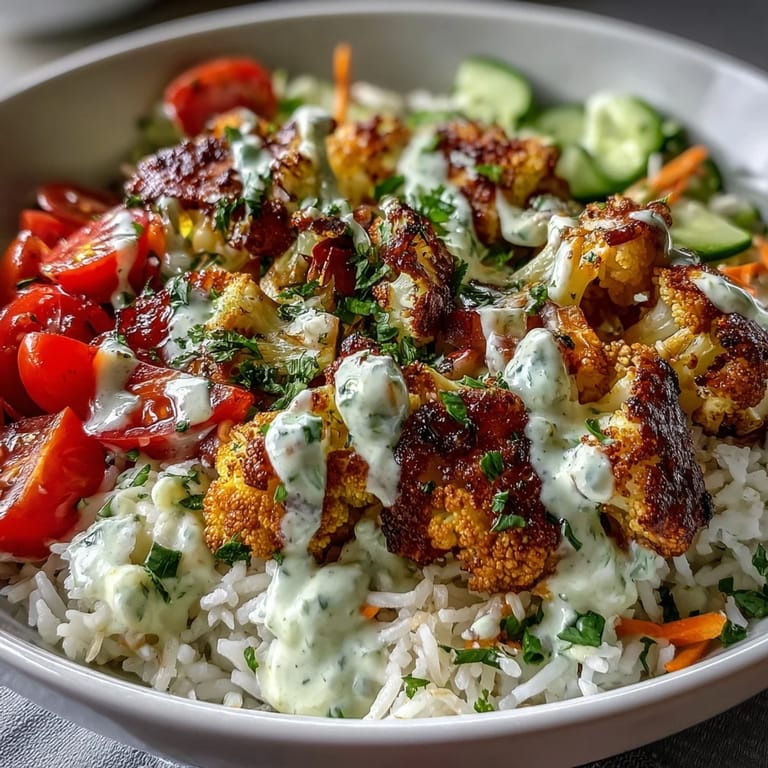
Save This bowl has become my quiet proof that food doesn't need to be complicated to be nourishing, both for your body and the cooking experience itself. It's the kind of meal that leaves you feeling good, and that's worth something.
Recipe FAQs
- → How do I achieve perfectly crispy roasted cauliflower?
Cut florets into uniform sizes so they roast evenly. Spread them in a single layer on the baking sheet without overcrowding—this allows proper air circulation for browning. Roast at 425°F and toss halfway through cooking for golden edges on all sides.
- → Can I make this bowl ahead for meal prep?
Absolutely. The roasted cauliflower, rice, and tahini sauce can all be prepared up to 3 days in advance. Store components separately in airtight containers. When ready to serve, warm the cauliflower and rice, then assemble with fresh vegetables and sauce.
- → What other grains work well in this bowl?
Quinoa adds extra protein and cooks similarly to rice. Brown rice provides a nuttier flavor and chewier texture though requires longer cooking time. Farro or wheat berries would also complement the roasted flavors nicely.
- → How can I add more protein to this bowl?
Chickpeas roasted alongside the cauliflower work beautifully. Grilled tofu cubes, pan-seared tempeh, or even a poached egg on top would boost protein content. Shredded rotisserie chicken works if you're not vegetarian.
- → My tahini sauce keeps separating—what am I doing wrong?
Tahini naturally separates. Whisk vigorously while adding water gradually—a tablespoon at a time—until the sauce emulsifies into a smooth, creamy consistency. The sauce will thicken initially then thin out. Keep whisking past the thick stage.
- → Can I roast the vegetables alongside the cauliflower?
Cherry tomatoes can roast with the cauliflower for the last 10-15 minutes. However, cucumber and carrots are best kept fresh for their crisp texture and cooling contrast to the warm roasted elements.