 Save
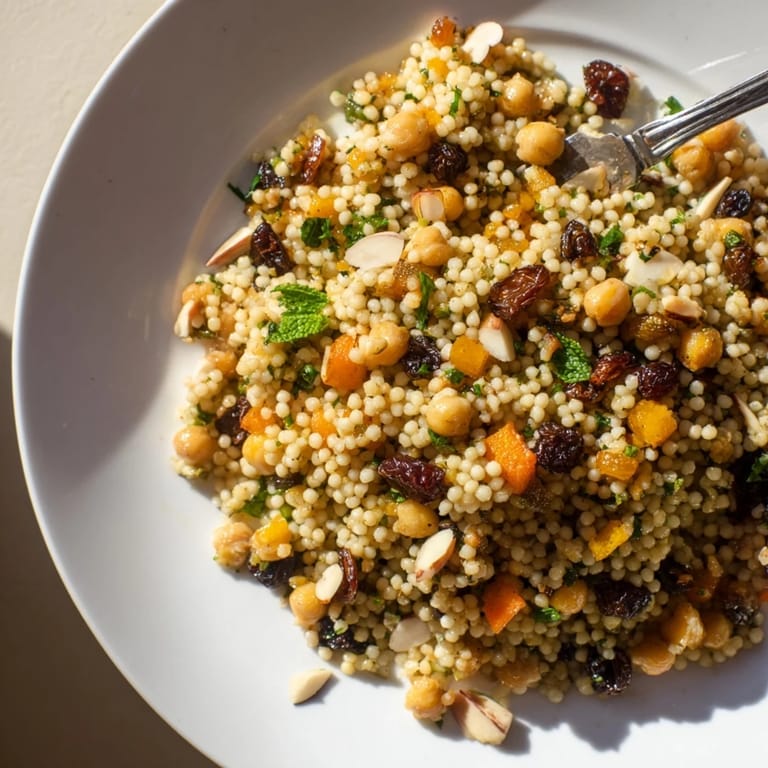
Save There's something about the aroma of cumin and coriander hitting warm couscous that instantly transports me to a sun-soaked afternoon in a friend's kitchen, flour dusting the countertop as we experimented with North African flavors. That day, we didn't follow any recipe—just threw together what felt right, what smelled good, what made us laugh when my attempt at toasting almonds nearly burned the whole batch. The result was this Moroccan couscous salad, bright and forgiving, the kind of dish that rewards curiosity rather than perfection.
I made this for a potluck once, slightly nervous it would disappear unnoticed among the heavier casseroles and desserts. Instead, I watched people come back for thirds, scraping the bottom of the bowl with their spoons, asking if there was garlic in the dressing. That's when I realized this salad doesn't need to be fancy or complicated—it just needs to taste alive, which it does.
Ingredients
- Couscous: Use the regular pearl variety, not the Israeli kind—it hydrates quickly and has that fluffy, delicate texture you're after.
- Vegetable broth: Boiling it releases the couscous grain individually, which is the whole secret to avoiding clumpy results.
- Zucchini, red bell pepper, carrot, red onion: Dice them small enough that each forkful has a mix, not so small they disappear into the couscous.
- Ground cumin and coriander: Buy these whole and toast them if you have time—the flavor is noticeably deeper—but don't skip the spice toss; that's where the personality lives.
- Smoked paprika: It adds color and a subtle sweetness without overpowering anything else.
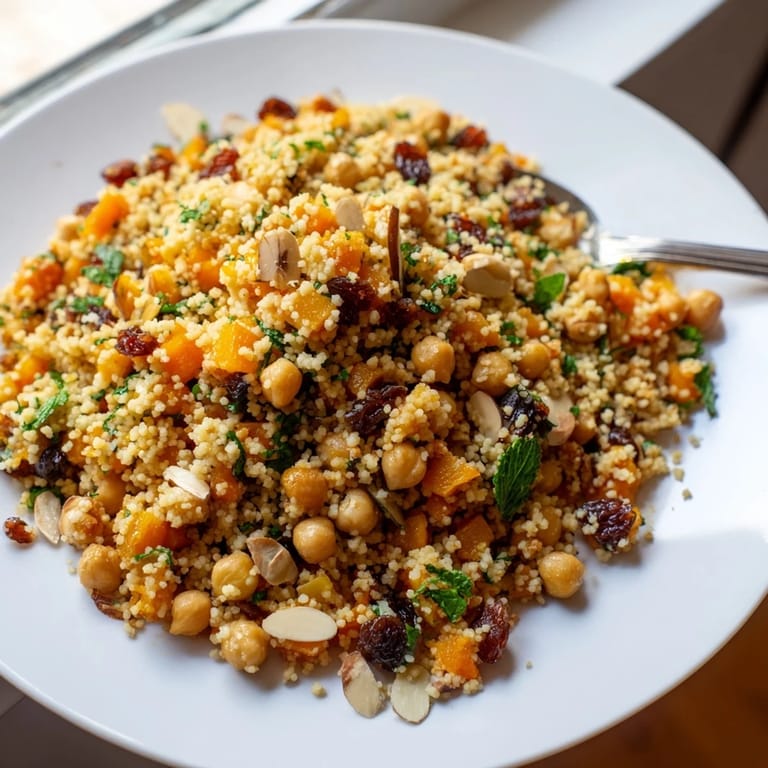
- Chickpeas: Canned and rinsed work perfectly; they soften the salad and add protein without requiring extra cooking steps.
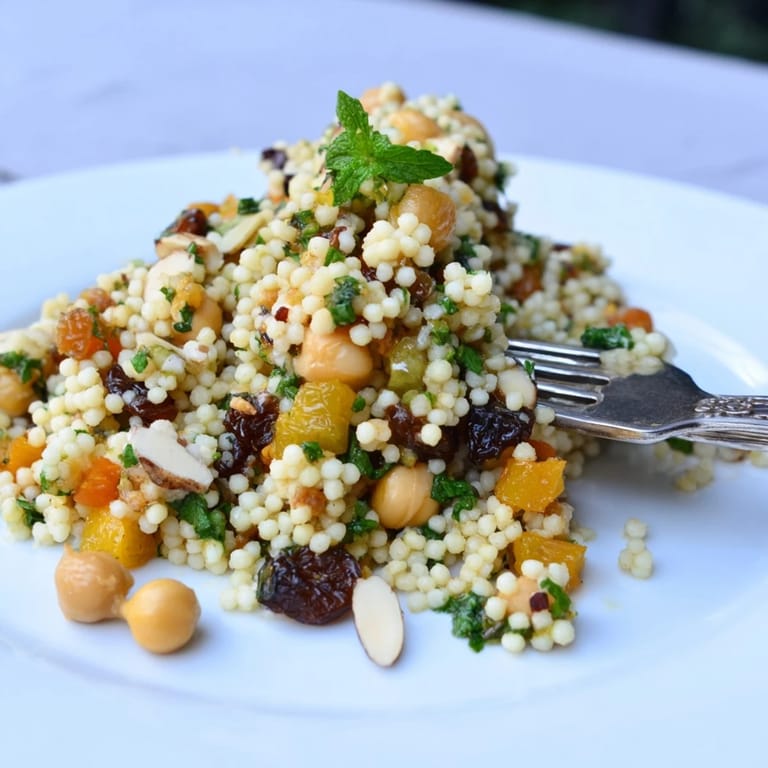
- Raisins or golden sultanas: They plump up slightly as they sit in the warm couscous, adding pockets of sweetness that balance the herbs and acidity.
- Fresh parsley and mint: Don't be shy—herbs are what turn this from side dish to conversation piece.
- Toasted slivered almonds: Optional but worth it for texture; they stay crisp even after the salad sits.
- Lemon juice, extra-virgin olive oil, garlic, honey: The dressing is simple, which means each ingredient matters—use good olive oil and fresh lemon juice, not the bottled stuff.
Tired of Takeout? 🥡
Get 10 meals you can make faster than delivery arrives. Seriously.
One email. No spam. Unsubscribe anytime.
Instructions
- Set your oven and prep:
- Preheat to 425°F and line a baking sheet with parchment paper so cleanup is effortless and nothing sticks.
- Toss and roast the vegetables:
- Combine diced zucchini, bell pepper, carrot, and red onion in a bowl with olive oil, cumin, coriander, smoked paprika, salt, and pepper. Spread them single-layer on the sheet and roast for 20–25 minutes, stirring halfway through. You want them golden at the edges and tender enough to bite through easily.
- Hydrate the couscous:
- While vegetables roast, put couscous in a large bowl with boiling vegetable broth and a tablespoon of olive oil. Cover it immediately with a plate—this traps steam and does all the work for you. Let it sit exactly five minutes, then fluff vigorously with a fork to separate every grain.
- Make the dressing:
- Whisk together fresh lemon juice, extra-virgin olive oil, minced garlic, honey or maple syrup, salt, and pepper in a small bowl. Taste it and adjust—it should taste bright and slightly sweet, pulling everything together.
- Bring it all together:
- Once vegetables have cooled slightly, combine them with the couscous along with rinsed chickpeas, raisins, chopped parsley, mint, and almonds if using. Pour the dressing over everything and toss gently but thoroughly, making sure the dressing coats every surface.
- Chill or serve:
- Eat it warm if you can't wait, or let it cool to room temperature and refrigerate until you're ready. Both work beautifully.
 Save
Save I remember serving this at a summer gathering where everyone was too hot to eat much of anything heavy, and this salad became the star of the table. Light, refreshing, full of color and texture—it reminded me that good food doesn't require effort or complexity, just thoughtfulness about flavor and freshness.
Variations and Substitutions
If almonds aren't your thing, try pistachios or pine nuts for a different crunch. Dried apricots or cranberries work beautifully in place of raisins, lending tartness instead of pure sweetness. Some people add a handful of pomegranate seeds for bursts of juice and acidity. For richness, crumbled feta or goat cheese transforms it into something more substantial—not vegan, but unforgettable.
Serving Suggestions
Serve it as a standalone lunch with a piece of warm bread and it's entirely satisfying. Alongside grilled chicken or lamb, it acts as the perfect bright counterpoint to something smoky and rich. Pile it onto a mezze platter with hummus, olives, and pickled vegetables and suddenly you have a feast without having cooked three separate dishes.
Storage and Make-Ahead Tips
This salad keeps beautifully in the refrigerator for up to three days in an airtight container, making it ideal for meal prep or bringing to work lunches. The flavors actually deepen as it sits, so don't hesitate to make it a day ahead. If it dries out slightly, a splash of extra lemon juice and olive oil brings it right back to life.
- Store the dressing separately if you're packing it for tomorrow and don't want soggy couscous.
- Let everything come to room temperature before serving if it's been chilled—cold couscous tastes muted.
- Toast fresh almonds right before serving to keep them crisp rather than soft.
 Save
Save This salad is the kind of recipe that teaches you more about intuition than precision—how to taste as you go, how to balance brightness with earthiness, how to make something satisfying without heaviness. Once you've made it once, you'll know exactly how to adjust it for whatever's in your kitchen or whatever mood you're in.
Recipe FAQs
- → How do I achieve fluffy couscous?
Pour boiling vegetable broth over couscous, cover, and let it steam for 5 minutes. Fluff gently with a fork before mixing.
- → What vegetables work best for roasting in this dish?
Zucchini, red bell pepper, carrot, and red onion roast nicely to bring out sweetness and depth of flavor.
- → Can I make this dish vegan?
Yes, substitute honey with maple syrup in the lemon dressing to keep it fully plant-based.
- → How should I store leftovers?
Store in an airtight container in the refrigerator for up to 2 days; serve chilled or at room temperature.
- → Are toasted almonds necessary?
They add a pleasant crunch and nutty flavor but can be omitted if preferred or for allergy reasons.