 Save
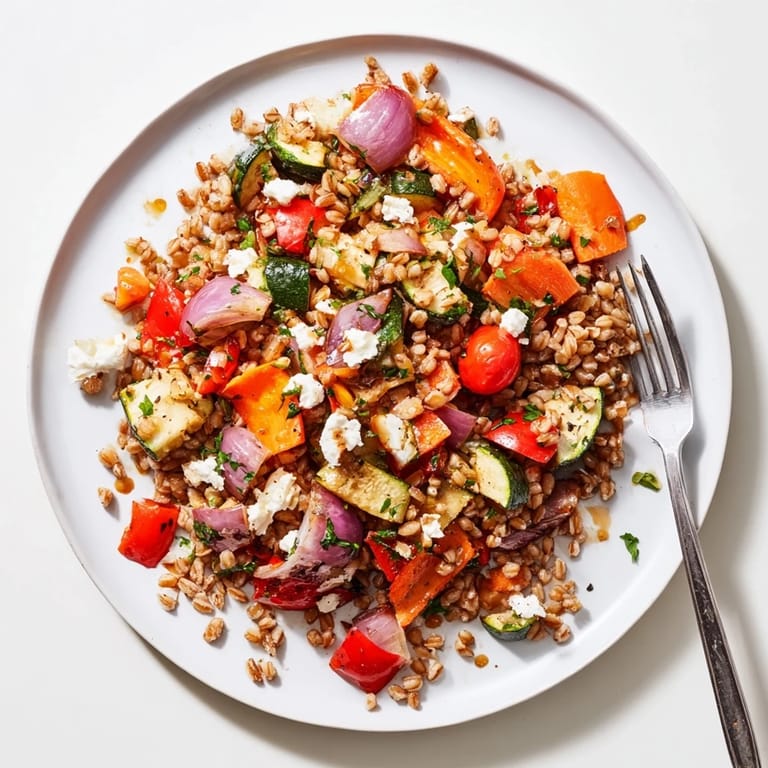
Save There was this Tuesday evening when my apartment smelled like thyme and caramelized everything, and I realized farro might just be the most underrated grain in my pantry. I had thrown whatever vegetables were languishing in my crisper drawer onto a baking sheet, not expecting much more than a decent dinner. But when those roasted edges met the chewy, nutty farro with that balsamic finish, something magical happened. My roommate wandered in, fork in hand, and basically hovered over the serving bowl until I admitted there was plenty to share. Now it is the dish I make when I want something that feels like a hug but still counts as respectable eating.
I brought this to a summer picnic last year, expecting it to be a side dish nobody noticed. Within twenty minutes, three different people had asked for the recipe, and someone literally texted me about it two days later saying their family had requested it for Sunday dinner. There is something about the combination of roasted vegetables and that balsamic dressing that makes people feel taken care of.
Ingredients
- 1 cup farro uncooked: Look for semi-pearled farro which cooks faster but still retains that satisfying chewy texture whole grain farro needs overnight soaking
- 3 cups vegetable broth or water: Broth adds subtle depth but water works perfectly fine especially if you plan to load on the vegetables
- 1 red bell pepper diced: Red peppers become sweeter when roasted and their bright color makes the whole dish look inviting
- 1 zucchini diced: Try to cut pieces similarly sized so everything roasts evenly without some pieces turning to mush
- 1 red onion cut into wedges: Red onion mellow beautifully in the oven and their slight sweetness pairs perfectly with balsamic
- 1 medium carrot sliced: Carrots add natural sweetness and a lovely orange color contrast to the finished bowl
- 1 cup cherry tomatoes halved: They burst and concentrate their juices creating little pockets of intense flavor throughout
- 2 tablespoons olive oil: This helps the vegetables caramelize properly so do not skimp here
- 1 teaspoon dried thyme: Thyme has this earthy quality that bridges the gap between the vegetables and the grain
- 1 teaspoon dried oregano: Dried oregano actually works better than fresh here since it distributes evenly throughout roasting
- 1/2 teaspoon salt: This amount seasons the vegetables before roasting but taste and adjust before serving
- 1/4 teaspoon freshly ground black pepper: Freshly ground makes a noticeable difference in depth of flavor
- 2 tablespoons extra-virgin olive oil: Save the good stuff for the finish where its fruity notes can really shine
- 1 tablespoon balsamic vinegar: The acidity cuts through the richness and ties all the flavors together
- 1/4 cup chopped fresh parsley: Fresh parsley adds a bright herbal note that lifts the heavier roasted flavors
- 2 tablespoons crumbled feta cheese optional: Even if you do not usually love feta try it here the salty creaminess is surprisingly perfect
Tired of Takeout? 🥡
Get 10 meals you can make faster than delivery arrives. Seriously.
One email. No spam. Unsubscribe anytime.
Instructions
- Get your oven ready:
- Preheat that oven to 425°F and line a large baking sheet with parchment paper because cleanup later will thank you.
- Prep the vegetables:
- In a large bowl toss all those diced vegetables with 2 tablespoons olive oil thyme oregano salt and pepper until every piece is lightly coated.
- Roast until golden:
- Spread vegetables evenly on your prepared baking sheet and roast for 25 to 30 minutes but halfway through give them a stir so everything gets those gorgeous caramelized edges.
- Cook the farro:
- While vegetables roast rinse the farro under cold water then combine it with broth in a medium saucepan bring to a boil reduce heat cover and simmer for 25 to 30 minutes until tender but still pleasantly chewy.
- Combine everything:
- In a large bowl toss the cooked farro with those roasted vegetables then drizzle with the extra-virgin olive oil and balsamic vinegar.
- Finish and serve:
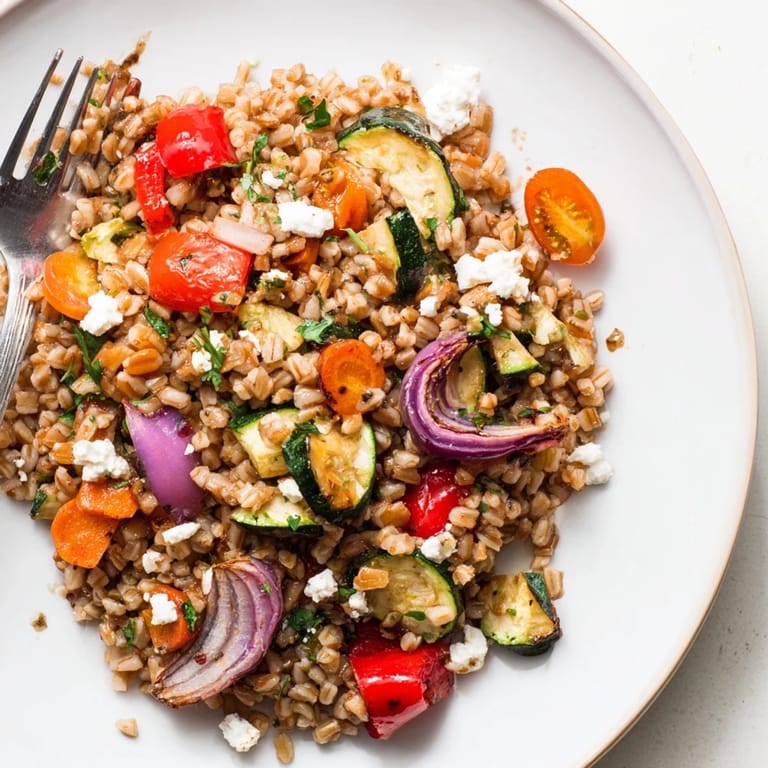
- Stir in fresh parsley and top with crumbled feta if using then serve warm or let it sit for a bit because it is just as good at room temperature.
 Save
Save This has become my go-to when friends need dinner brought over because it feels substantial without being heavy and everyone can customize their own bowl. Last month I made it for someone recovering from surgery and they told me it was the first thing that actually tasted good in days.
Making It Your Own
The beauty of this dish is how adaptable it is to whatever vegetables are in season or languishing in your refrigerator. Eggplant works beautifully in late summer while butternut squash turns it into something perfect for fall.
Make Ahead Magic
I often roast the vegetables and cook the farro up to two days ahead then just toss them with the dressing before serving. The flavors actually meld and improve overnight which is rare for grain salads.
Serving Suggestions
This works as a standalone meal but pairs wonderfully with grilled fish or roasted chicken if you want to add some protein. It also makes an unexpected but welcome addition to a brunch spread.
- Try adding toasted walnuts or pine nuts for some crunch
- A dollop of Greek yogurt can stand in for feta if you want something tangier
- Lemon juice brightens everything up if you find the balsamic too heavy
 Save
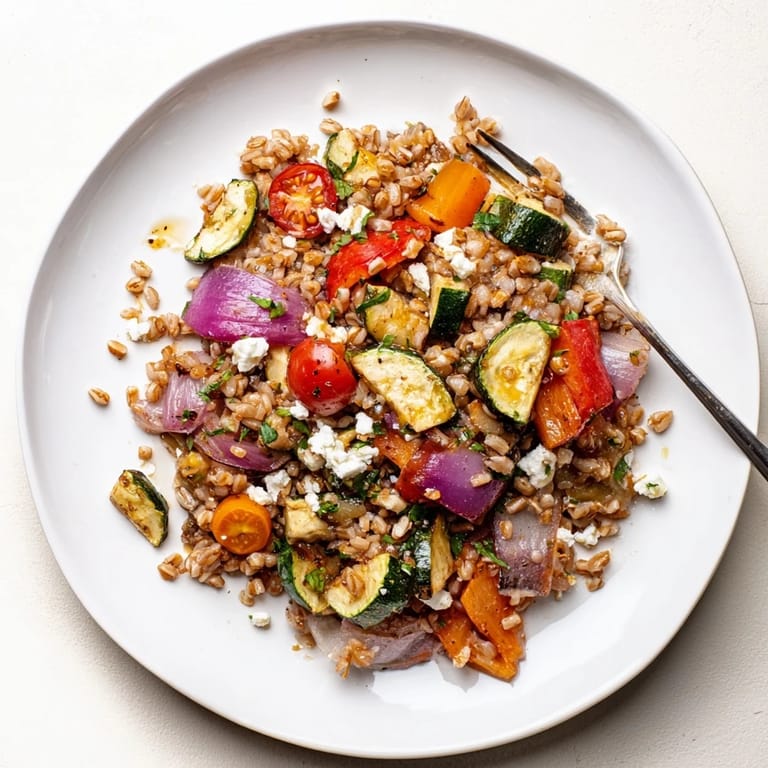
Save There is something deeply satisfying about a dish that comes together so simply but tastes like it took all day to make. This farro salad has earned its permanent place in my regular rotation and I suspect it will find its way into yours too.
Recipe FAQs
- → Is farro gluten-free?
No, farro contains gluten as it is a type of wheat. For a gluten-free alternative, try substituting with quinoa, brown rice, or millet.
- → Can I make this dish ahead?
Yes, both the farro and roasted vegetables store well for up to 4 days in the refrigerator. The flavors actually meld better after sitting, making it excellent for meal prep. Serve cold or gently reheated.
- → What vegetables work best for roasting?
Root vegetables, bell peppers, zucchini, eggplant, and cherry tomatoes all roast beautifully. Choose vegetables that cook at similar rates, or add quicker-cooking items like tomatoes halfway through roasting.
- → Should farro be rinsed before cooking?
Rinsing farro removes dust and debris and helps prevent gummy textures. A quick cold-water rinse is sufficient before adding it to your cooking liquid.
- → How do I know when farro is done?
Farro should be tender but still retain a slight chew when fully cooked. Taste test after 25 minutes—if it's still crunchy, continue cooking and add more liquid if needed.
- → Can I use vegetable broth instead of water?
Vegetable broth adds deeper flavor to the farro as it cooks. This is an excellent way to build more savory notes into the dish, especially when serving it as a main course.