 Save
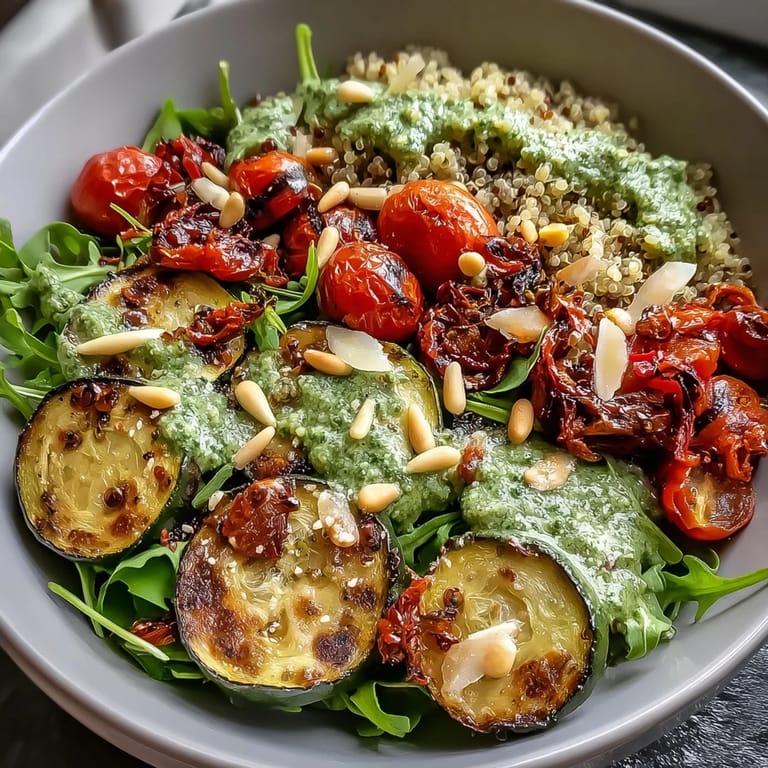
Save There's this moment right after you taste something genuinely fresh and you just stop chewing—that's what happened the first time I made this bowl. I'd been staring at a bunch of arugula at the market, wondering what to do with all that peppery bite, when it hit me: blend it into something bold and green. The idea of tossing it through warm grains felt suddenly obvious, like I'd been missing something simple all along. Roasted vegetables, a grain that actually tastes like something, and pesto you made yourself—it came together in my kitchen on a Tuesday afternoon, and somehow felt like the most satisfying thing I'd cooked in weeks.
I made this for my sister last month when she was going through a phase of wanting everything she ate to actually nourish her, not just fill her up. She stood in my kitchen watching the vegetables caramelize, asking if pesto was really the answer to everything. By the time we sat down with our bowls, she was already asking for the recipe, and I realized she wasn't just being polite—she genuinely wanted this again. That's when I knew it wasn't just good food; it was the kind of dish people remember.
Ingredients
- Quinoa (1 cup uncooked, rinsed): It has this nutty sweetness that grounds the whole bowl, and rinsing it matters more than people realize because it removes the bitter coating that makes people think they dislike quinoa.
- Water (2 cups) and salt (½ teaspoon): The ratio matters because undercooked quinoa tastes gritty and overcooked becomes mushy; salting the cooking water gives it actual flavor from the start.
- Cherry tomatoes (1 cup, halved): They collapse slightly in the oven and concentrate into something sweet and jammy, completely different from raw tomatoes.
- Zucchini (1 medium, sliced): Cut them thick enough that they don't disappear, thin enough that they roast through in the time everything else needs.
- Red bell pepper (1 medium, chopped): The natural sweetness balances the peppery arugula, and roasting makes it tender without losing structure.
- Olive oil (1 tablespoon for roasting, ½ cup for pesto): The roasting oil is just for browning; the pesto oil is what carries the flavor, so don't cheap out on the latter.
- Fresh arugula (2 cups packed for pesto, 2 cups fresh for assembly): Packed means you're really squeezing it in, which gives you intense pesto; the fresh arugula at the bottom stays crisp and provides contrast.
- Walnuts or pine nuts (¼ cup for pesto): Walnuts are earthier and more forgiving if you have them; pine nuts are buttery and luxurious but pine nuts are also expensive and people have opinions about them.
- Garlic (1 clove): Just one clove keeps the pesto green and fresh instead of turning it into garlic soup; if you love garlic, add it after tasting.
- Parmesan cheese (½ cup grated for pesto, ¼ cup shaved for serving): Grated goes into the pesto where it disappears into creaminess; shaved goes on top where you actually taste those salty crystals.
- Lemon juice (1 tablespoon): This keeps the pesto bright and stops it from tasting heavy, and it prevents browning if you make it ahead.
- Black pepper and additional salt: Taste as you go because Parmesan is already salty and you don't want to oversalt before you taste it all together.
Tired of Takeout? 🥡
Get 10 meals you can make faster than delivery arrives. Seriously.
One email. No spam. Unsubscribe anytime.
Instructions
- Heat your oven and rinse the grain:
- Get the oven to 400°F while you rinse the quinoa under cool water for about a minute—you'll see the water run clearer and that's your sign it's ready. This step prevents that slightly bitter coating from hanging around.
- Start the quinoa:
- Combine rinsed quinoa, water, and salt in a saucepan and bring it to a boil, then drop the heat down and cover it. Let it simmer for about 15 minutes until the water disappears and you see those little spiral tails pop out from each grain—that's how you know it's done.
- Prepare vegetables for roasting:
- While the quinoa is going, toss your tomato halves, zucchini slices, and bell pepper pieces with olive oil and black pepper until everything's coated. Spread them on a baking sheet in a single layer so they roast and caramelize instead of steam.
- Roast until caramelized:
- Put the vegetables in that hot oven for 18 to 20 minutes, giving them a shake halfway through if you remember. You want the edges to be slightly charred and sweet, not floppy and sad.
- Make the pesto while everything cooks:
- Put packed arugula, nuts, garlic, and Parmesan into a food processor and pulse until it looks chunky and green. Then, with the motor running, pour in the olive oil slowly and watch it transform into something silky, finishing with lemon juice and a pinch of salt.
- Combine warm components:
- In a large bowl, toss the warm cooked quinoa with the roasted vegetables and about half the pesto, mixing gently so everything gets coated without breaking apart. The warmth helps the pesto coat everything beautifully.
- Assemble and serve:
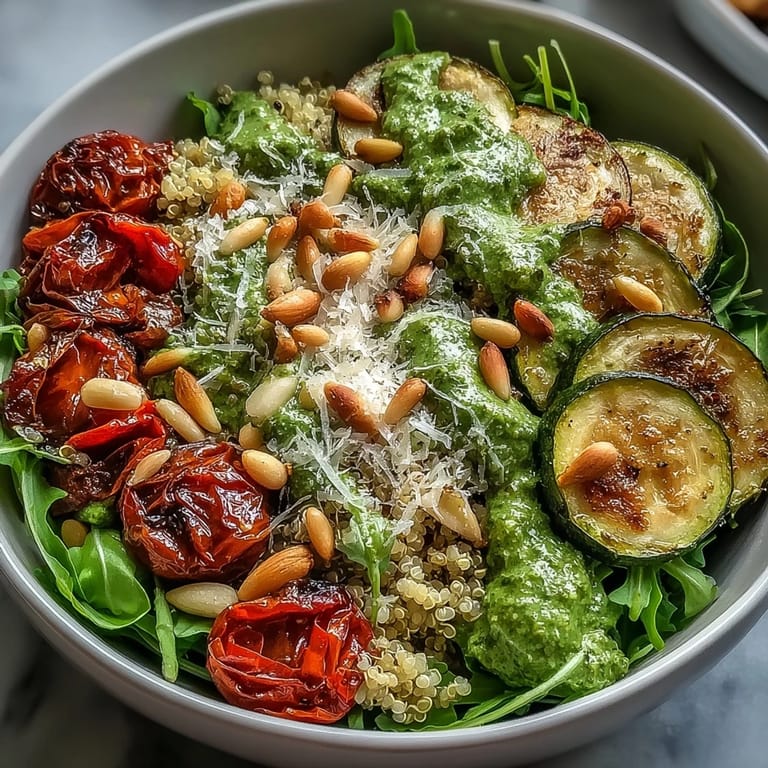
- Put a handful of fresh raw arugula in each bowl as your base—it stays crisp from the cold—then top with the warm quinoa mixture. Drizzle the remaining pesto over everything, scatter shaved Parmesan and toasted pine nuts on top, crack some black pepper over it, and eat while it's still warm.
 Save
Save There's something about eating from a bowl that makes you slow down, makes you actually notice when flavors are working together. I watched my friend twirl the arugula around the pesto-coated quinoa and say something like, "this tastes like actual summer," and I got it then—this dish is built to feel substantial without being heavy, to taste green and alive without tasting like you're being virtuous about it.
Why This Bowl Works as a Complete Meal
Quinoa has all nine amino acids, which means it's a rare grain that actually counts as protein on its own. Add the nuts and Parmesan and you've got something that keeps you satisfied for hours, not the kind of meal that leaves you hungry an hour later. The roasted vegetables bring sweetness and texture so your mouth doesn't get bored, and the pesto is rich enough to make everything feel intentional and chef-like, not like you're just eating health food.
Making It Your Own
This bowl is honestly a template more than a strict recipe, which is why it's so useful to have in your rotation. You can roast whatever vegetables you have in the crisper drawer—eggplant gets silky, broccoli gets crispy at the edges, mushrooms turn meaty and dark. Swap the quinoa for farro if you want something chewier, or use brown rice if that's what you have time for. The pesto is the constant that holds everything together, so if you master that green sauce, you can build bowls forever.
Pesto Wisdom and Kitchen Shortcuts
If you don't have a food processor, a blender works fine but you'll need to work in batches and it'll be slightly thinner. If you absolutely can't face making pesto, quality store-bought works in a pinch but it tastes noticeably different—homemade has this bright, alive quality that's hard to replicate. Some people make a big batch of pesto on Sunday when they have time and freeze it in ice cube trays, which is genuinely clever if you want pesto shortcuts all week.
- Nut allergies? Use seeds like sunflower or pumpkin instead and you'll get similar richness and texture.
- Making this vegan? Nutritional yeast tastes uncannily like Parmesan and brings that umami saltiness without the dairy.
- Cooked the grains the night before? Chill them completely and let everything come to room temperature before serving for a different feel that's equally good.
 Save
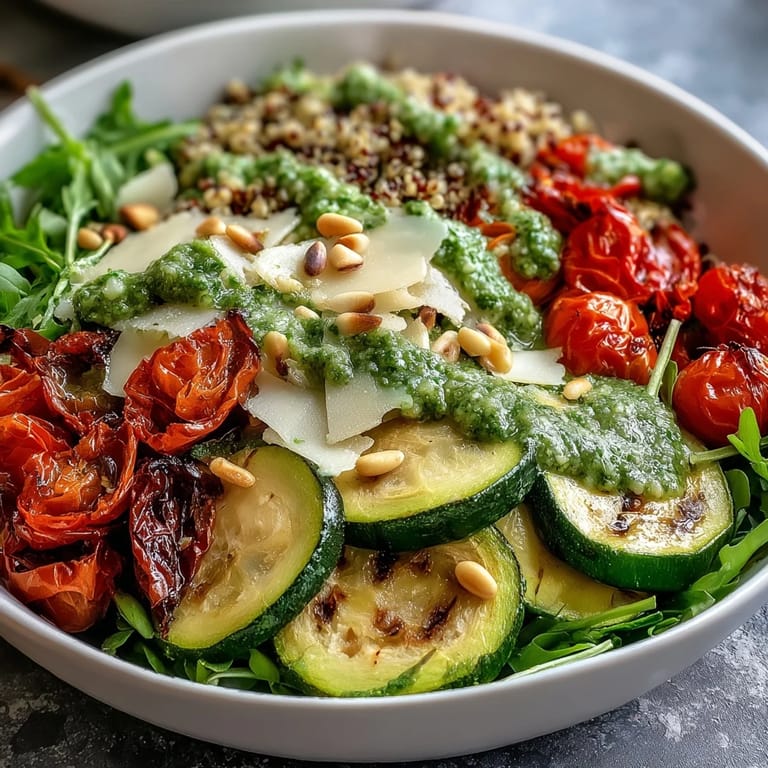
Save This bowl has become my answer to the question of what to cook when you want something that feels nourishing and alive without being complicated. Make it once and you'll understand why it keeps showing up on your table.
Recipe FAQs
- → Can I make the arugula pesto ahead of time?
Yes, prepare the pesto up to 5 days in advance and store it in an airtight container in the refrigerator. The flavors may actually develop and intensify over time.
- → What other grains work well in this bowl?
Farro, brown rice, couscous, or barley all make excellent substitutes for quinoa. Adjust cooking times according to package directions for your chosen grain.
- → Is this bowl freezer-friendly?
The roasted vegetables and quinoa freeze well for up to 3 months. However, add the fresh arugula and pesto after reheating to maintain the best texture and flavor.
- → How can I add more protein?
Grilled chicken, crispy tofu, roasted chickpeas, or even a fried egg make excellent protein additions. Simply prepare your protein of choice while the vegetables roast.
- → Can I use other nuts for the pesto?
Absolutely. Cashews, almonds, or sunflower seeds all work beautifully in place of walnuts or pine nuts. Each brings a slightly different flavor profile to the finished dish.
- → What vegetables can I substitute?
Feel free to use eggplant, yellow squash, red onion, or Brussels sprouts. The key is choosing vegetables that roast well and caramelize nicely at high heat.