 Save
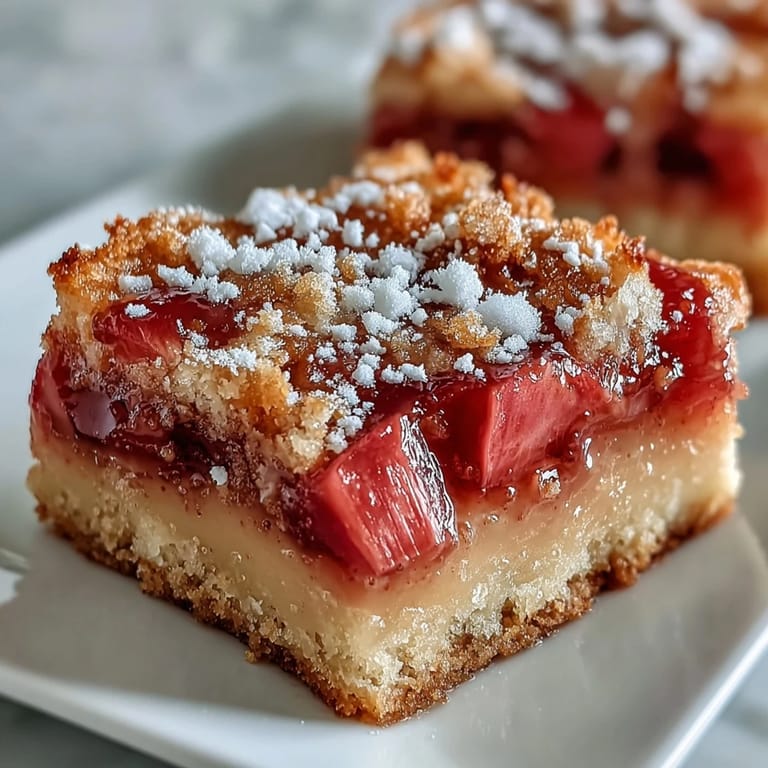
Save The sharp, tart aroma of rhubarb always seems to cut through the gentle hum of early spring, and it was that very scent drifting through my kitchen one rainy afternoon that convinced me to finally try these custard bars. I’d been staring at a bundle of ruby-red stalks on the counter, watching raindrops race each other down the window, when I remembered a friend raving about her grandmother’s infamous rhubarb desserts. With a little curiosity (and some impatience to taste something bright), I set to work, fingers dusted in flour and a playlist humming in the background. The first attempt wasn't perfect—my crust was too eager to crumble—but the combination of textures and the blushing custard filling made it utterly irresistible. Now, making these bars feels like inviting spring right into my kitchen, no matter the weather outside.
I once made a double batch of these for a garden party, only to turn around and find a group of neighbors sneaking seconds before I even served coffee. The sound of cheerful voices and clinking forks over plates of these jewel-toned bars made every bit of effort and cleanup worth it. There was a moment where my friend, the one who’d first inspired me, asked for the recipe and we exchanged a secret smile over the powdered sugar drifting onto our hands. The tray, if I’m honest, was gone before sunset, with requests already coming in for the next weekend. For a dessert that turns casual gatherings into something memorable, this one never fails.
Ingredients
- Unsalted butter: Using room temperature butter ensures the shortbread bakes up crumbly and crisp, plus I've learned it creams faster if you let it sit out for an hour.
- Granulated sugar: Essential for both crust and filling sweetness; when mixed thoroughly, it helps create that elusive soft dough for the shortbread.
- All-purpose flour: Gives structure to both crust and custard; measuring by weight keeps the texture consistent.
- Salt: Just a pinch in the crust and custard deepens all the flavors—don't skip it.
- Fresh rhubarb: Its signature tartness is what brings these bars to life, and chopping it evenly helps it bake through nicely.
- Eggs: The custard's richness comes from eggs—crack them into a separate bowl just in case you get a stubborn shell.
- Heavy cream: This is what makes the filling satiny smooth; don’t be tempted to swap for milk, as the custard might weep.
- Pure vanilla extract: Just a teaspoon rounds out the tartness with warmth and a little sweetness.
- Powdered sugar (for dusting): While optional, it gives the final bars that special touch—wait until they’re cool so it doesn’t melt away.
Tired of Takeout? 🥡
Get 10 meals you can make faster than delivery arrives. Seriously.
One email. No spam. Unsubscribe anytime.
Instructions
- Start with the prep:
- Crank up your oven to 350°F and line your pan—this makes sure you’ll have easy, nonstick results when it’s time to cut.
- Mix the crust:
- In your largest bowl, cream butter and sugar until fluffy, then stir in flour and salt; you’ll want a dough that's soft but not sticky.
- Pat and bake:
- Press the dough firmly and evenly into your pan, using your knuckles if needed, and bake until the edges just blush gold.
- Rhubarb moment:
- Toss chopped rhubarb with sugar, coating each piece, and let it sit so the juices begin to glisten.
- Whisk the custard:
- Combine eggs and sugar until glossy, then add the flour, cream, vanilla, and salt, whisking until it’s luxuriously smooth.
- Layer everything:
- Once the crust is out, scatter the rhubarb over it and pour the velvety custard so it tumbles between every bit of fruit.
- Final bake:
- Slide the pan back in and bake until the custard is set and the top is pale gold, keeping an eye on the center.
- The hardest part—cool:
- Let bars cool completely before dusting with powdered sugar and slicing; patience pays off with crisp, neat squares.
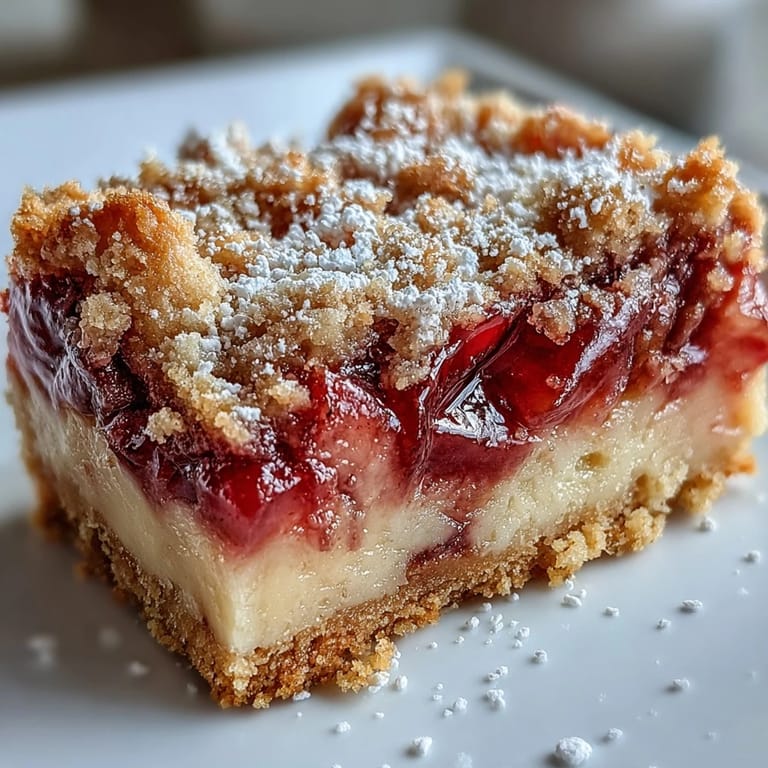 Save
Save These bars made their real debut during a family spring picnic, blossoming into more than just dessert—my brother, who claims to despise rhubarb, quietly polished off three. Watching everyone squabble good-naturedly over the last piece reminded me that sometimes, flavor has the last word. It’s rare for a humble pan of bars to inspire second helpings and lingering around the table, but these did exactly that. Even the neighbor’s dog sat at my feet, nose twitching—proof that their scent is impossible to resist. Some desserts just invite connection, and this is firmly one of them.
Keeping Your Bars Fresh
Through trial and (occasional) error, I’ve found these bars stay their best when covered loosely and chilled in the fridge, especially if your kitchen gets warm in the spring. Their flavor settles and the crust doesn’t go soggy, even on day three. That said, I’ve rarely had leftovers last more than a weekend. Slicing while cold gives the cleanest cuts, though the texture is at its dreamiest closer to room temperature. If you’re taking them for a picnic, pack a little powdered sugar and dust just before serving.
Flavor Swaps and Creative Twists
On lazy weekends, I like to swap half the rhubarb for strawberries, which turns the bars beautifully pink and mellows their tartness. A handful of chopped pistachios added to the crust once gave the whole tray a gorgeous crunch and a gentle, buttery hue. For an unexpected twist, stirring in a splash of orange zest to the custard adds a sunny edge that makes the rhubarb pop even more. The possibilities are endless because these bars welcome experimentation—after all, the best recipes grow and change in your own kitchen. Trust your taste, and don’t be afraid to play with the classics.
Little Things That Make It Perfect
Nothing beats the warm rush of vanilla that escapes the oven as these finish baking. I’ve learned to keep a timer right within earshot so I don’t overbake—they turn just golden at the edges and jiggle ever so slightly in the center. If in doubt, cover loosely with foil for the last 10 minutes to avoid browning too quickly. Every time I slice into a pan, I’m tempted to dust on extra powdered sugar, just for that pretty top. Here are my best last-minute thoughts:
- Use a sharp, long knife for neat bars and wipe it clean after each cut.
- Don’t skip lining the pan with parchment, or you’ll regret cleanup.
- The bars taste even better the next day after a night in the fridge.
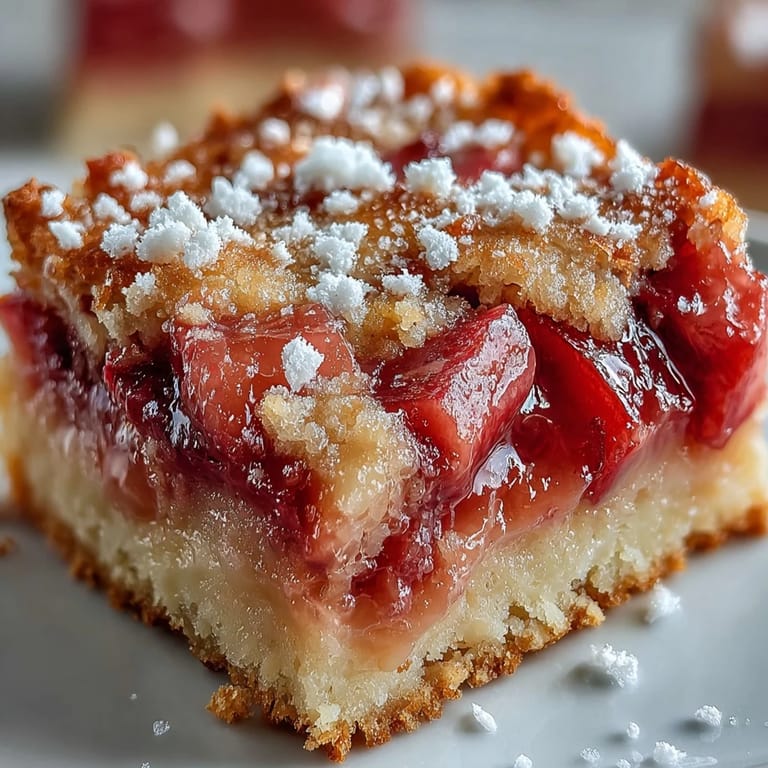 Save
Save May your kitchen smell like spring and your plate be piled high with tangy, golden slices. I hope these bars bring your table as many smiles as they have mine.
Recipe FAQs
- → How do I keep the shortbread crust tender?
Use softened but not melted butter and cream it with the sugar until light; handle the dough minimally once the flour is added. Press evenly into the pan and parbake until just turning golden at the edges to set the structure while keeping tenderness.
- → How can I tell the custard is fully set?
The custard should be mostly firm with a slight, gentle wobble in the center; edges will be set and lightly golden. It will continue to firm as it cools, so remove when the center no longer appears liquid.
- → Can I use frozen rhubarb?
Yes—thaw and drain excess liquid before tossing with sugar to avoid a soggy crust. You may need to press out moisture or increase bake time slightly to achieve a set filling.
- → What's the best way to get clean slices?
Cool completely, then chill the pan for neater cutting. Use a sharp knife warmed under hot water and wiped dry between cuts for smooth edges.
- → How should leftovers be stored?
Cover and refrigerate for up to 4 days. For longer storage, wrap individual bars tightly and freeze; thaw overnight in the refrigerator before serving.
- → Any simple variations to adjust sweetness or texture?
Swap half the rhubarb with strawberries for more sweetness, reduce sugar slightly for a tarter finish, or stir 1/2 cup chopped nuts into the crust for added crunch.